
Kanazawa
Kanazawa a échappé aux bombardements, de sorte que son quartier des samouraïs, ses districts de geisha et ses ateliers de feuille d'or sont d'origine et accessibles à pied en une seule journée. Un marché aux poissons actif et un musée d'art aux normes internationales se trouvent au cœur de la ville.
Kanazawa en bref
Kanazawa : à quoi s'attendre
Cette page s'appuie sur plus de 562 000 étapes planifiées à travers le Japon sur Stippl.
Kanazawa est une ville de deux nuits et c'est inhabituellement clair à ce sujet. Kenrokuen est l'un des trois grands jardins du Japon et ouvre assez tôt pour être parcouru presque vide. Nagamachi conserve encore ses murs en terre, ses canaux et la résidence de samouraï Nomura ; Higashi Chaya a les maisons de thé, Kaikaro parmi elles ; et Myoryuji, surnommée le Temple Ninja pour ses tunnels cachés, trappes et dédale d'escaliers, n'a aucun lien avec les ninjas. La plupart des voyageurs consacrent 2 nuits à Kanazawa sur Stippl.
Kanazawa est inhabituellement catégorique sur la durée qu'il souhaite. 44,1% des arrêts de Kanazawa prévus sur Stippl sont exactement deux nuits, et seulement 3,21% sont des visites d'une journée. La plupart des endroits du pays se divisent entre une et deux nuits ; ici les plans s'accordent, car le jardin, le quartier de samouraïs, le quartier des maisons de thé et le musée sont quatre demi-journées et ne se compressent pas.
Deux nuits, et réglez Myoryuji avant d'arriver. Le Temple Ninja nécessite une réservation téléphonique préalable et refuse les gens sans elle. Arrivez à Kenrokuen dix minutes avant son ouverture et parcourez-le vide, puis explorez Nagamachi à pied et Higashi Chaya en fin d'après-midi. Le marché Omicho fonctionne depuis trois cents ans et c'est là que vous déjeunerez. Le Musée d'art contemporain du 21e siècle abrite la Piscine de Leandro Erlich, dix centimètres d'eau sur du verre pour que les gens en dessous semblent se tenir au fond.
Planifiez Kanazawa dans Stippl
Planification jour par jour, hébergements et budget dans une seule application, avec chaque lieu de ce guide déjà sur la carte.
Télécharger l'applicationÀ qui Kanazawa s'adresse
Voyageurs d'histoire et d'artisanat
Le quartier de samouraïs, les quartiers de chaya et les ateliers de feuille d'or sont tous intacts et tous accessibles à pied en une seule journée.
Voyageurs d'art
Le Musée d'art contemporain du 21e siècle est une véritable collection de norme internationale, pas une réflexion tardive provinciale, et il ancre le centre-ville.
Voyageurs gastronomiques
Le marché Omicho est un marché aux poissons en fonctionnement plutôt qu'un marché touristique, et les plats propres à Kanazawa valent la peine de planifier un repas autour.
Quiconque emprunte le corridor des Alpes
Kanazawa figure sur 11,3% des voyages au Japon sur Stippl, presque toujours avec Shirakawa-go et Takayama, donc il mérite une place sur un itinéraire des Alpes plutôt que sur un premier voyage.
Peut-être pas fait pour vous : quiconque en première visite au Japon, car Kanazawa apparaît sur les itinéraires plus longs et plus larges plutôt que sur le parcours Tokyo–Kyoto, et une semaine est mieux dépensée ailleurs en premier.
La meilleure période pour visiter Kanazawa
Automne
Septembre à novembre
La saison des couleurs et l'époque la plus chargée de l'année à Kanazawa ; octobre a plus de débuts prévus que tout autre mois.
Saison des fleurs et saison verte
Fin mars à mai
Le début de la fenêtre recommandée, avec Kenrokuen gratuit lors de la saison des fleurs, et mai le mois le plus confortable avant les pluies.
Saison des pluies et été
Juin à août
Chaud, humide et mouillé, juillet étant le mois le plus pluvieux et août le plus chaud. Le Hyakumangoku Festival le premier week-end de juin est la seule raison de venir tôt dans la saison.
Hiver
Décembre à février
Neige, humidité et les cônes de corde yukitsuri au-dessus des pins de Kenrokuen. L'époque la plus froide, la plus tranquille et la plus vide de l'année.
- Octobre est le mois pour lequel la plupart des voyageurs planifient Kanazawa sur Stippl, environ 116 jours à l'avance, plus longtemps que le Japon dans son ensemble. Seulement 7,46 % des plans pour Kanazawa sont faits en moins de deux semaines ; la ville repose sur les routes des Alpes planifiées des mois à l'avance.
- Le Hyakumangoku Festival se déroule le premier vendredi, samedi et dimanche de juin. Des samouraïs en marche, du taiko, des danses du lion et une danse de rue de dix mille personnes commémorent l'entrée du seigneur au château, et la ville affiche complet pour le week-end.
- Kenrokuen est gratuit pendant la saison des fleurs de cerisier. De fin mars à avril, le jardin renonce à ses frais d'entrée, et il est le moins fréquenté à l'ouverture de 07h00.
Ajoutez vos dates pour Kanazawa et nous vous signalerons la météo
Stippl indique la saison, l'affluence et les prix pour chaque étape de votre itinéraire.
Décrivez votre voyage et obtenez un itinéraire pour Kanazawa en quelques secondes
Tout ce guide est déjà dans Stippl. Dites au planificateur combien de temps vous avez et ce que vous aimez : il construit l'itinéraire, les journées et les temps de trajet, et vous modifiez ce que vous voulez.
Choses à faire à Kanazawa

Kenrokuen à l'ouverture
Soyez à la porte dix minutes avant son ouverture, à sept heures de mars à mi-octobre et huit heures en hiver, et marchez dans l'un des trois grands jardins du Japon presque vide. Environ €2, et la maison de thé sur l'étang ouvre avec elle.
Myoryuji, le temple ninja
Visitez les tunnels cachés, les trappes et le dédale d'escaliers construits afin que les seigneurs Maeda puissent signaler le château en attaque ; il n'y a jamais eu de ninja ici. Visites guidées uniquement, environ €6, réservées par téléphone un jour à l'avance.
Nagamachi à pied
Marchez les murs en terre et les canaux du quartier des samouraïs et entrez dans la résidence Nomura, avec son jardin, pour environ €3. La pharmacie Shinise Kinenkan à proximité raconte le côté marchand du même siècle.
Le Musée du 21e siècle
Voir la piscine de Leandro Erlich, dix centimètres d'eau sur un sol en verre afin que les personnes ci-dessous semblent se tenir au fond d'une piscine pleine. La piscine nécessite un billet chronométré ; les zones gratuites du bâtiment valent une heure en elles-mêmes.
Un atelier de feuille d'or
Appliquez vous-même la feuille d'or sur un petit objet à Gold Leaf Sakuda ou à l'un des ateliers d'Higashi Chaya, environ €10 et une demi-heure. Kanazawa fabrique presque toute la feuille d'or du Japon, c'est pourquoi la crème glacée est recouverte de feuille d'or.
Maison de thé Kaikaro
Entrez dans la plus grande chaya d'Higashi Chaya, datant de plus de 195 ans, avec une salle de thé revêtue d'or, pour environ €5. Les représentations de geisha restent réservées sur invitation uniquement ; les pièces et le thé sont ouverts à tous.
Les quartiers de Kanazawa
Higashi Chaya
Rues de maisons de thé, façades en treillis
Le plus grand et le mieux préservé des trois districts de maisons de thé, au nord de la rivière Asano : maisons de thé en bois à deux étages de l'époque Edo avec des façades en treillis, avec quelques maisons d'hôtes machiya parmi elles. Pour les premières visites et pour les ruelles après dix-huit heures.
Les plus belles rues de la ville, et une traversée de la rivière pour dîner.
Kenroku-en and the castle
Jardin, musées, cœur vert
Le cœur vert : le jardin, le parc du château, le Musée du 21e siècle et le Musée D.T. Suzuki à proximité, avec des hôtels en bordure du parc. Pour les amateurs d'art et pour le jardin à l'ouverture.
Le jardin à sept heures du matin, et le quartier le plus visité de la ville à dix heures.
Omicho
Marché, entre la gare et le cœur
Le marché couvert d'environ deux cents étals de fruits de mer de la mer du Japon, crabe, lieu jaune et crevettes, avec des hôtels d'affaires autour servant de lien entre la gare et le cœur historique. Pour manger et pour une base pratique.
Le marché pour le petit-déjeuner, et une rue active plutôt qu'une jolie rue.
Nagamachi
Murs de samouraïs, ruelles le long du canal
Les hauts murs en terre et les ruelles longeant le canal à l'ouest de Korinbo, le quartier de samouraïs de rang moyen le mieux préservé du Japon, calme et résidentiel avec quelques petites auberges. Pour les randonneurs et les photographes qui veulent les rues au crépuscule.
Les rues les plus photogéniques et le calme, et nulle part où manger après minuit.
Korinbo and Katamachi
Grands magasins, ruelles d'izakaya
Le district commercial et d'après-nuit : grands magasins donnant sur les ruelles arrière d'izakaya et de bars, le centre social de la ville et la base pratique pour la nourriture. Pour manger et pour quiconque veut passer la soirée à pied.
Les meilleures soirées, et un quartier commercial pendant la journée.
Kanazawa Station
Portail en bois, hôtels capsules
Le centre de transit sous la porte Tsuzumi-mon en bois, avec la plus grande concentration d'hôtels capsules et d'affaires et les bus pour partout. Pour les voyageurs économes et les premiers trains.
Les lits les moins chers et tous les bus, et vingt minutes du centre-ville ancien.
Découvrez chaque quartier de Kanazawa sur une seule carte
Enregistrez les quartiers que vous aimez et Stippl organise vos journées pour éviter de traverser la ville deux fois.
Où loger à Kanazawa
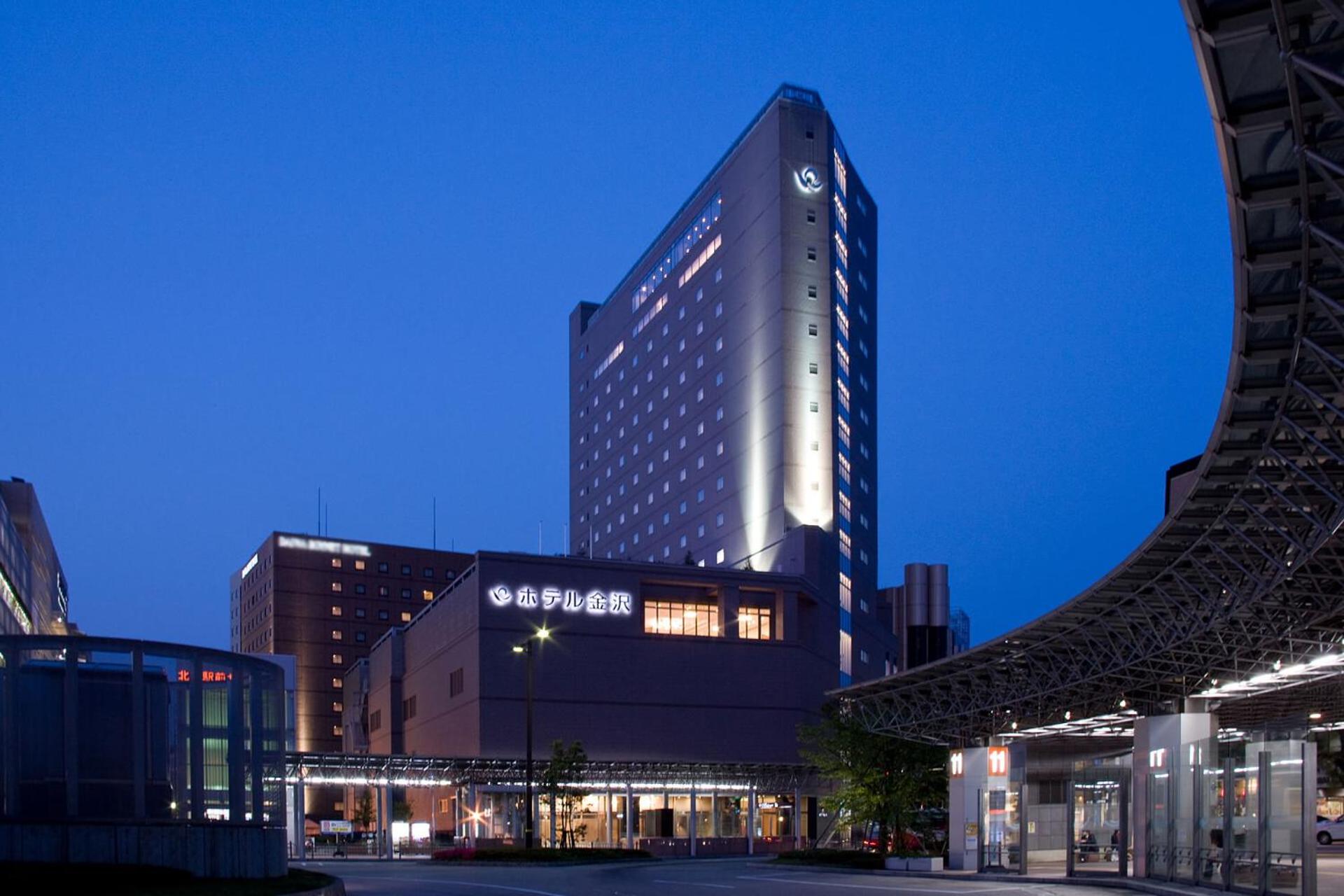
Restez autour de Korinbo et Katamachi pour une première visite : les ruelles d'izakaya sont à la porte, Kenroku-en et Nagamachi se trouvent chacun à dix minutes de marche, et les bus pour Higashi Chaya passent au coin. La plupart des gens donnent à Kanazawa 2 nuits sur Stippl, ce que la ville est construite pour. Les chambres sont compactes selon la mesure européenne à tous les prix et régulièrement bien entretenues.
Higashi Chaya
Une poignée de maisons d'hôtes et de locations machiya dans les ruelles de maisons de thé, €70 à €180 ; pas d'hôtels de service complet.
Kenroku-en et le château
Hôtels haut de gamme et quelques ryokan en bordure du parc, €120 à €300.
Omicho
Hôtels d'affaires autour du marché, €50 à €100, reliant la gare et le centre à pied.
Nagamachi
Quelques petites auberges et locations de maisons de ville à l'intérieur des ruelles des samouraïs, €80 à €200, calmes après la tombée de la nuit.
Korinbo et Katamachi
Hôtels de milieu de gamme et conversions d'aubaines au-dessus des ruelles de bars, €60 à €150.
Gare de Kanazawa
La concentration la plus dense d'hôtels capsules et d'affaires, €25 à €40 pour une capsule et €50 à €90 pour une chambre.



Que manger à Kanazawa
curry japonais épais et foncé sur du riz avec une escalope de porc panée et du chou
canard ou poulet enrobé de farine, mijoté avec du gluten de blé
fruits de mer crus de la mer du Japon, crabe des neiges, sériole, crevette sucrée, sur du riz
feuille d'or comestible sans saveur sur une crème glacée molle, faite pour la photo
thé à tige torréfié, style Kaga, servi à la place du matcha
sake local servi dans l'izakaya de la ville inscrit au Tabelog
Découvrez des adresses gourmandes dans Stippl
Trouvez restaurants et marchés sur la carte, enregistrez-les dans votre itinéraire, fonctionne aussi hors ligne.
Coutumes de Kanazawa et ce qu'il ne faut pas faire
Les geisha ne sont pas réservables
Les repas avec geisha dans une chaya se font sur invitation ; les bâtiments des maisons de thé à Higashi Chaya sont ouverts à la visite, les représentations ne le sont pas, et demander à la porte ne change rien.
Myoryuji nécessite un appel téléphonique
Le temple ninja n'accepte les visiteurs que sur une visite guidée réservée, réservée par téléphone en japonais ou par l'intermédiaire de votre hôtel ; c'est le seul endroit de la ville qui refuse des gens.
Le jardin est un jardin actif
Kenroku-en est entretenu chaque matin et les jardiniers travaillent autour des visiteurs, pas l'inverse ; restez sur les sentiers, et les cordes yukitsuri en hiver ne sont pas à toucher.
Omicho est d'abord un marché
Le marché aux poissons nourrit les restaurants de la ville avant de nourrir les visiteurs ; achetez et mangez au comptoir, ne photographiez pas les comptoirs sans un signe de consentement, et allez avant onze heures.
À faire
- Réservez Myoryuji par téléphone avant votre arrivée
- Allez tôt ; le jardin, le marché et les districts de maisons de thé récompensent tous la première heure
- Vérifiez les jours de fermeture d'Omicho pour le jour où vous prévoyez d'aller ; ils varient d'étage en étage
- Enlevez vos chaussures dans les maisons de samouraïs à Nagamachi, comme dans tout intérieur
À éviter
- Attendez-vous à ce que les représentations de geisha soient réservables
- Planifiez Higashi Chaya pour la soirée ; elle ferme vers dix-huit heures
- Touchez les cordes yukitsuri à Kenroku-en
- Mangez en marchant à Omicho ; chaque étable a un endroit debout
Quel est le coût d'un voyage à Kanazawa
Budget
€70–80
Un lit d'hôtel capsule ou d'affaires près de la gare, les repas du marché Omicho, le laissez-passer d'une journée du bus de boucle.
Milieu de gamme
€100–150
Un hôtel à Korinbo, Kenrokuen et le château, une visite de maison de thé chaya.
Haut de gamme
€250+
Un séjour à Higashi Chaya, la salle de thé de Kaikaro, le Hokuriku Shinkansen depuis Tokyo.
Suivez ce que vous dépensez vraiment
Définissez un budget journalier par pays et enregistrez vos dépenses dans n'importe quelle devise pendant le voyage.
Anecdotes sur Kanazawa
99 % de la feuille d'or du Japon est fabriquée à Kanazawa. Un morceau d'alliage d'or de 23 mm est battu jusqu'à couvrir un tatami complet, environ 1,6 mètre carré, avec une épaisseur de dix millièmes de millimètre.
Kanazawa a échappé aux bombardements de guerre presque entièrement. C'était l'une des plus grandes villes japonaises en dehors de Kyoto et d'Edo pendant une grande partie de la période Edo, et le quartier des samouraïs et les deux districts de geisha sont toujours debout.
La porte du Oyama Shrine a des vitraux et a autrefois servi de phare. Elle a été conçue sous l'influence néerlandaise en 1875, ce qui en fait la porte de sanctuaire la moins japonaise du pays.
Kenrokuen signifie le Jardin des Six Sublimités. Vaste espace, isolement, artificialité, antiquité, eau abondante et larges vues, les six qualités que la théorie du paysage chinois dit ne peuvent coexister.
L'une des plus anciennes fontaines du Japon ne fonctionne que par la gravité. La fontaine sous l'étang Kasumigaike est alimentée par la chute d'un système d'eau construit en 1632, et projette l'eau à 3,5 mètres.
Une station de ski municipale avec deux remontées mécaniques se trouve dans les limites de la ville. Iohzan ouvre de fin décembre à début mars et est accessible en transports en commun depuis la gare.
Le nom Kanazawa signifie marais d'or. Le clan Maeda, deuxième après les Tokugawa en rendement de riz, a dépensé sa richesse en arts, thé et Noh plutôt qu'en armées.
Conseils locaux pour Kanazawa
Kyoto signifie maintenant un changement
Le Hokuriku Shinkansen circule jusqu'à Tsuruga, et depuis Kyoto vous y changez ; le train direct ne fonctionne plus. Deux heures et quart, et le Japan Rail Pass le couvre.
Tokyo est l'approche facile
Deux heures et demie directes en shinkansen, ce qui est l'inverse de ce que l'encadrement « Kyoto sans la foule » implique. Venez de Tokyo, partez pour Kyoto.
Prenez le Loop Bus jusqu'à la chaya
Le cœur est à pied et Higashi Chaya est le seul district qui ne l'est pas ; le bus de boucle circule dans les deux sens depuis la gare pour environ €1,30 par trajet.
Durée du séjour
La plupart des gens donnent à Kanazawa 2 nuits sur Stippl : Kenrokuen à l'ouverture, les quartiers des samouraïs et des geisha et le marché. Le troisième jour est Shirakawa-go en bus.
La neige est un facteur logistique
Kanazawa est du côté enneigé de Honshu et une visite d'hiver signifie un chemin dégagé, pas une route dégagée. Apportez des bottes, et attendez-vous aux arbres à corde noués du jardin.
Noto est toujours en récupération
Le tremblement de terre de janvier 2024 a fermé une grande partie de la côte au-delà de la ville, et certaines parties restent fermées. Vérifiez avant de réserver une journée à Noto ; la ville elle-même n'est pas affectée.
Questions sur Kanazawa, réponses
Elle se situe en dehors du corridor Tokyo-Kyoto, donc elle coûte cher d'un côté ou de l'autre : deux heures et demie de Tokyo en Shinkansen Hokuriku, environ deux de Kyoto avec un changement. Intégrez-la dans l'itinéraire sur Stippl comme deux nuits plutôt qu'une halte. Demandez ensuite à des gens qui y sont allés, dans des subreddits comme r/JapanTravel.
Deux nuits pour la plupart. 29,6% des arrêts à Kanazawa prévus sur Stippl sont prévus pour une nuit unique et 26,4% durent trois nuits ou plus, donc la ville retient les gens beaucoup mieux qu'une réputation de simple jardin ne le suggérerait. Quatre demi-journées, c'est la durée honnête.
Par réservation téléphonique à l'avance, et il n'y a aucun moyen de contourner cela. Myoryuji est surnommé le Temple Ninja pour ses tunnels cachés, trappes, chambres dissimulées et labyrinthe d'escaliers, rien à voir avec les ninja : il a été construit pour que les Maeda puissent signaler le château en cas d'attaque. Les visites sont guidées et programmées.
Dix minutes avant l'ouverture, qui est très tôt : sept heures du matin pendant la majeure partie de l'année et huit en hiver. C'est l'un des trois grands jardins du Japon et il se remplit rapidement, donc le parcourir presque vide est une expérience différente de celui traversé dans les files d'attente. Le château est juste à côté avec un billet combiné.
Environ un itinéraire sur neuf : 11,3% des voyages au Japon planifiés sur Stippl incluent Kanazawa. C'est l'arrêt principal du côté Hokuriku, et la plupart des gens qui y vont parcourent une boucle plutôt que la ligne droite entre Tokyo et Kyoto.
Pour le temple et le ryokan, oui. Les voyageurs laissent 116 jours entre la planification d'un arrêt à Kanazawa sur Stippl et leur arrivée, près de quatre mois, et octobre est le mois de planification le plus chargé ici. Myoryuji en particulier a besoin que sa réservation soit faite bien avant votre arrivée.
Chaque guide est écrit par la rédaction Stippl et vérifié avec les voyages que nos voyageurs planifient réellement. Vous avez repéré une information dépassée ? Dites-le-nous.

Planifiez Kanazawa dans Stippl
Planification jour par jour, hébergements et budget dans une seule application, avec chaque lieu de ce guide déjà sur la carte.
Télécharger l'application