

Kanazawa
Kanazawa escaped the bombing, so its samurai quarter, geisha districts and gold-leaf workshops are original and walkable in a single day. A working fish market and an international-standard art museum sit in the middle of it.
Kanazawa in a nutshell
Kanazawa: what to expect
This page is built on 562,000+ stops planned across Japan on Stippl.
Kanazawa is a two-night city and it is unusually clear about being one. Kenrokuen is one of the three great gardens of Japan and opens early enough to be walked nearly empty. Nagamachi still has its earthen walls, its canals and the Nomura samurai residence; Higashi Chaya has the teahouses, Kaikaro among them; and Myoryuji, nicknamed the Ninja Temple for its hidden tunnels, trapdoors and staircase maze, has no ninja connection at all. Most travellers give Kanazawa 2 nights on Stippl.
Kanazawa is unusually decisive about how long it wants. 44.1% of Kanazawa stops planned on Stippl are exactly two nights, and only 3.21% are day trips. Most places in the country split between one night and two; here the plans agree, because the garden, the samurai quarter, the teahouse district and the museum are four half-days and they do not compress.
Two nights, and settle Myoryuji before you arrive. The Ninja Temple takes advance phone reservation and turns people away without one. Reach Kenrokuen ten minutes before it opens and walk it empty, then take Nagamachi on foot and Higashi Chaya in the late afternoon. Omicho Market has been running three hundred years and is where lunch is. The 21st Century Museum holds Leandro Erlich's Swimming Pool, ten centimetres of water over glass so that the people below appear to stand at the bottom of it.
Plan Kanazawa in Stippl
Day-by-day planning, stays and budget in one app, with every place from this guide already on the map.
Download the appWho Kanazawa is for
History and crafts travellers
The samurai quarter, the chaya districts and the gold-leaf workshops are all intact and all walkable in a single day.
Art travellers
The 21st Century Museum is a genuine international-standard collection, not a provincial afterthought, and it anchors the city centre.
Food travellers
Omicho market is a working fish market rather than a tourist one, and Kanazawa's own dishes are worth planning a meal around.
Anyone doing the Alps corridor
Kanazawa is on 11.3% of Japan trips on Stippl, nearly always with Shirakawa-go and Takayama, so it belongs on an Alps route rather than a first trip.
Maybe not for you: anyone on a first trip to Japan, since Kanazawa turns up on the longer, wider itineraries rather than the Tokyo–Kyoto run, and a week is better spent elsewhere first.
The best time to visit Kanazawa
Autumn
September to November
The colour season and the busiest stretch of the Kanazawa year; October takes more planned starts than any other month.
Blossom and green season
late March to May
The start of the recommended window, with Kenrokuen free to enter during blossom season, and May the most comfortable month before the rains.
Rainy season and summer
June to August
Hot, humid and wet, with July the wettest month and August the hottest. The Hyakumangoku Festival on the first weekend of June is the one reason to come early in it.
Winter
December to February
Snow, damp and the rope cones of yukitsuri over the Kenrokuen pines. The coldest, quietest and emptiest stretch of the year.
- October is the month most travellers plan Kanazawa for on Stippl, about 116 days ahead, longer than Japan as a whole. Only 7.46% of Kanazawa plans are made inside a fortnight; it rides on Alps routes fixed months out.
- The Hyakumangoku Festival takes the first Friday, Saturday and Sunday of June. Marching samurai, taiko, lion dances and a street dance of ten thousand people re-enact the lord's entry into the castle, and the town books out for the weekend.
- Kenrokuen is free during blossom season. Late March to April is the one window the garden waives its ticket, and it is at its emptiest at the 07:00 opening.
Add your Kanazawa dates and we'll flag the weather
Stippl shows the season, crowds and prices for every stop on your route.
Describe your trip, get a Kanazawa itinerary in seconds
Everything in this guide is already in Stippl. Tell the planner how long you have and what you like: it builds the route, the days and the travel times, and you edit whatever you want.
Things to do in Kanazawa

Kenrokuen at opening
Be at the gate ten minutes before it opens, at seven from March to mid October and eight in winter, and walk one of Japan's three great gardens nearly empty. About €2, and the tea house on the pond opens with it.
Myoryuji, the Ninja Temple
Tour the hidden tunnels, trapdoors and staircase maze built so the Maeda lords could signal the castle under attack; there was never a ninja here. Guided tours only, about €6, booked by telephone a day ahead.
Nagamachi on foot
Walk the samurai quarter's earthen walls and canals and go into the Nomura residence, with its garden, for about €3. The Shinise Kinenkan pharmacy nearby tells the merchant side of the same century.
The 21st Century Museum
See Leandro Erlich's Swimming Pool, ten centimetres of water over a glass floor so the people below seem to stand at the bottom of a full pool. The pool needs a timed ticket; the building's free zones are worth an hour on their own.
A gold-leaf workshop
Apply gold leaf to a small object yourself at Gold Leaf Sakuda or one of the Higashi Chaya workshops, about €10 and half an hour. Kanazawa makes nearly all of Japan's gold leaf, which is why the ice cream comes covered in it.
Kaikaro teahouse
Enter the largest chaya in Higashi Chaya, over 195 years old, with a tea room matted in paper woven with gold, for about €5. Geisha performances stay invitation-only; the rooms and the tea are open to anyone.
The neighbourhoods of Kanazawa
Higashi Chaya
Teahouse lanes, lattice facades
The largest and best-preserved of the three teahouse districts, north of the Asano river: Edo-period two-storey wooden teahouses with lattice facades, with a few machiya guesthouses among them. For first visits and for the lanes after six.
The prettiest streets in the city, and a walk across the river for dinner.
Kenroku-en and the castle
Garden, museums, green core
The green core: the garden, the castle park, the 21st Century Museum and the D.T. Suzuki Museum within a walk, with hotels on the edge of the park. For art lovers and for the garden at opening.
The garden at seven in the morning, and the city's most-visited block by ten.
Omicho
Market, between station and core
The covered market of some two hundred stalls on Sea of Japan seafood, crab, yellowtail and shrimp, with business hotels around it bridging the station and the historic core. For eating and for a practical base.
The market for breakfast, and a working street rather than a pretty one.
Nagamachi
Samurai walls, canal lanes
High earthen walls and canal-lined lanes west of Korinbo, the best-preserved mid-ranking samurai quarter in Japan, quiet and residential with a few small inns. For walkers and photographers who want the streets at dusk.
The most photogenic streets and the quiet, and nowhere to eat after dark.
Korinbo and Katamachi
Department stores, izakaya alleys
The commercial and after-dark district: department stores giving onto back alleys of izakaya and bars, the city's social hub and the practical base for food. For eating and for anyone who wants the evening on foot.
The best evenings, and a shopping district by day.
Kanazawa Station
Wooden gate, capsule hotels
The transit hub under the wooden Tsuzumi-mon gate, with the densest supply of capsule and business hotels and the buses to everything. For budget travellers and early trains.
The cheapest beds and every bus, and twenty minutes to the old town.
See every Kanazawa neighbourhood on one map
Save the areas you like and Stippl plots your days so you're not crossing the city twice.
Where to stay in Kanazawa
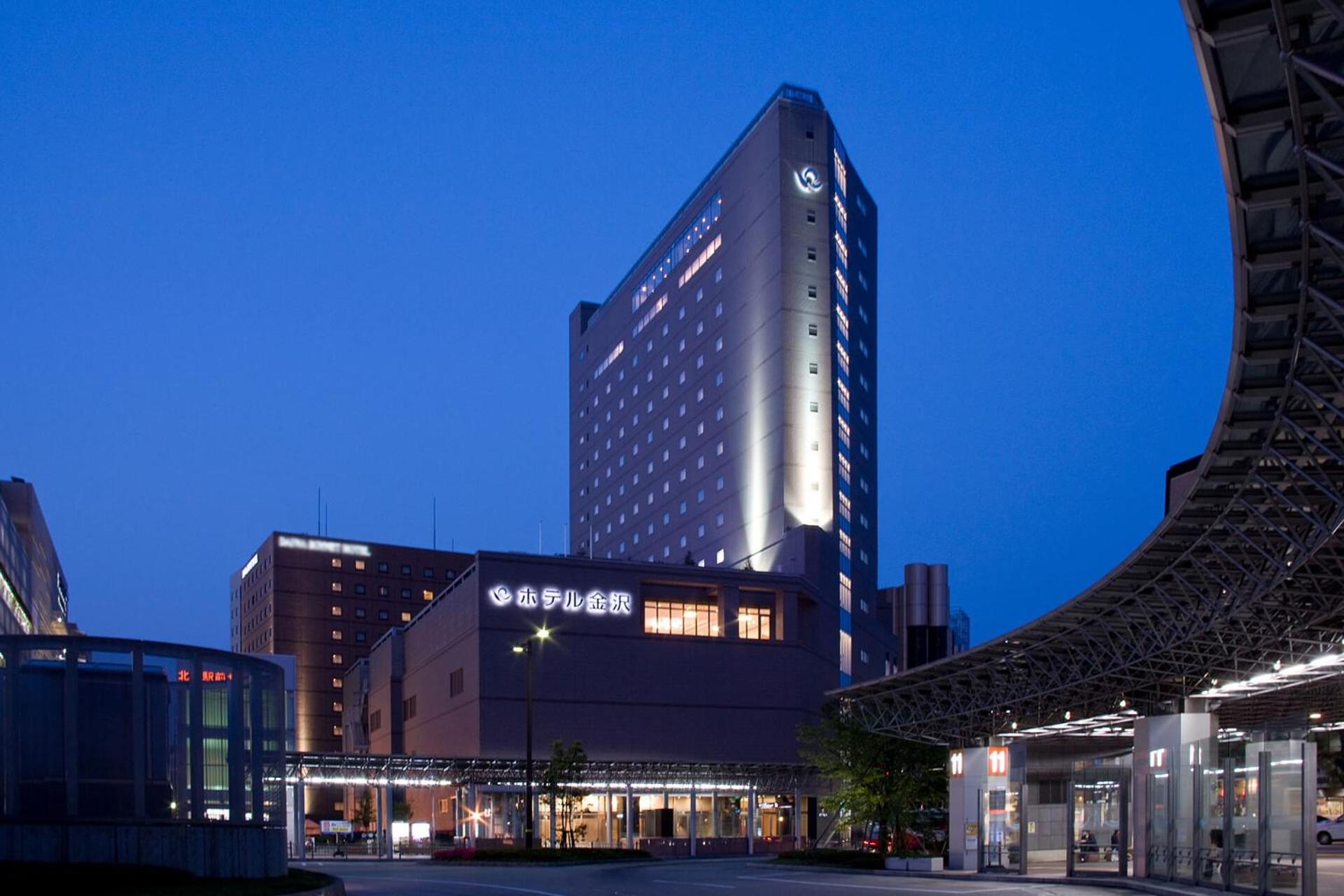
Stay around Korinbo and Katamachi for a first visit: the izakaya alleys are outside the door, Kenroku-en and Nagamachi are each a ten-minute walk, and the buses to Higashi Chaya pass the corner. Most people give Kanazawa 2 nights on Stippl, which is what the city is built for. Rooms are compact by European measure at every price and consistently well-kept.
Higashi Chaya
A handful of guesthouses and machiya rentals in the teahouse lanes, €70 to €180; no full-service hotels.
Kenroku-en and the castle
Upscale hotels and a few ryokan on the park's edge, €120 to €300.
Omicho
Business hotels around the market, €50 to €100, bridging the station and the centre on foot.
Nagamachi
A few small inns and townhouse rentals inside the samurai lanes, €80 to €200, quiet after dark.
Korinbo and Katamachi
Mid-range hotels and boutique conversions over the bar alleys, €60 to €150.
Kanazawa Station
The densest run of capsule and business hotels, €25 to €40 for a pod and €50 to €90 for a room.



What to eat in Kanazawa
thick, dark Japanese curry over rice with a breaded pork cutlet and cabbage
duck or chicken dusted in flour, simmered with wheat gluten
raw Sea of Japan seafood, snow crab, yellowtail, sweet shrimp, over rice
tasteless, edible gold leaf on soft-serve ice cream, made for the photograph
roasted stem tea, Kaga-style, served instead of matcha
local nihonshu poured at the city's Tabelog-listed izakaya
Discover food spots in Stippl
Find restaurants and markets on the map, save them to your itinerary, works offline too.
Kanazawa customs and what not to do
Geisha are not bookable
Dining with geisha at a chaya is by invitation; the tea-house buildings in Higashi Chaya are open to visit, the performances are not, and asking at the door does not change it.
Myoryuji needs a phone call
The ninja temple takes visitors only on a reserved guided tour, booked by phone in Japanese or through your hotel; it is the one place in the city that turns people away.
The garden is a working one
Kenroku-en is tended every morning and the gardeners work around visitors, not the other way; stay on the paths, and the yukitsuri ropes in winter are not for touching.
Omicho is a market first
The fish market feeds the city's restaurants before it feeds visitors; buy and eat at the stall, do not photograph the counters without a nod, and go before eleven.
Do
- Reserve Myoryuji by phone before you arrive
- Go early; the garden, the market and the chaya districts all reward the first hour
- Check Omicho closing days for the day you plan to go; they vary shop by shop
- Take your shoes off at the samurai houses in Nagamachi, as at any interior
Don't
- Expect geisha performances to be bookable
- Plan Higashi Chaya for the evening; it closes down around six
- Touch the yukitsuri ropes in Kenroku-en
- Eat while walking in Omicho; each stall has a standing spot
What a Kanazawa trip costs
Budget
€70–80
A capsule or business hotel bed near the station, Omicho market meals, the Loop Bus day pass.
Mid-range
€100–150
A Korinbo hotel, Kenrokuen and the castle, a chaya teahouse visit.
High-end
€250+
A Higashi Chaya stay, Kaikaro's tea room, the Hokuriku Shinkansen in from Tokyo.
Track what you actually spend
Set a daily budget per country and log expenses in any currency while you travel.
Fun facts about Kanazawa
99% of Japan's gold leaf is made in Kanazawa. A 23 mm piece of gold alloy is beaten until it covers a full tatami mat, about 1.6 square metres, at a ten-thousandth of a millimetre thick.
Kanazawa escaped wartime bombing almost entirely. It was among the largest Japanese cities outside Kyoto and Edo for much of the Edo period, and the samurai quarter and both teahouse districts are still standing.
Oyama Shrine's gate has stained glass and once served as a lighthouse. It was designed with Dutch influence in 1875, which makes it the least Japanese-looking shrine gate in the country.
Kenrokuen means the Garden of the Six Sublimities. Spaciousness, seclusion, artificiality, antiquity, abundant water and broad views, the six qualities Chinese landscape theory says cannot coexist.
One of Japan's oldest fountains runs on nothing but gravity. The fountain below Kasumigaike pond is driven by the drop in a water system built in 1632, and throws water 3.5 metres.
A municipal ski hill with two lifts sits inside the city boundary. Iohzan opens from late December to early March and is reachable by public transport from the station.
The name Kanazawa means marsh of gold. The Maeda clan, second only to the Tokugawa in rice yield, spent its wealth on crafts, tea and Noh rather than on armies.
Local tips for Kanazawa
Kyoto now means a change
The Hokuriku Shinkansen runs to Tsuruga, and from Kyoto you change there; the through train no longer runs. Two hours and a quarter, and the JR Pass covers it.
Tokyo is the easy approach
Two and a half hours direct on the shinkansen, which is the reverse of what the Kyoto-without-the-crowds framing implies. Come from Tokyo, leave for Kyoto.
Take the Loop Bus to the chaya
The core is walkable and Higashi Chaya is the one district that is not; the Loop Bus runs both directions from the station for about €1.30 a ride.
How long to stay
Most people give Kanazawa 2 nights on Stippl: Kenrokuen at opening, the samurai and geisha quarters and the market. The third day is Shirakawa-go by bus.
Snow is a logistics factor
Kanazawa is on the snowy side of Honshu and a winter visit means a cleared path, not a clear road. Bring boots, and expect the garden's rope-tied trees.
Noto is still recovering
The January 2024 earthquake closed much of the coast beyond the city, and parts remain shut. Check before booking a Noto day; the city itself is unaffected.
Kanazawa questions, answered
It sits off the Tokyo to Kyoto corridor, so it costs a leg either way: two and a half hours from Tokyo on the Hokuriku Shinkansen, about two from Kyoto with a change. Lay it into the route in Stippl as two nights rather than a stop-off. Then ask people who went, in subreddits like r/JapanTravel.
Two nights for most. 29.6% of Kanazawa stops planned on Stippl are a single night and 26.4% run to three or more, so the city holds people rather better than a one-garden reputation would suggest. Four half-days is the honest shape of it.
By advance phone reservation, and there is no way around it. Myoryuji is nicknamed the Ninja Temple for its hidden tunnels, trapdoors, concealed rooms and staircase maze, none of which has anything to do with ninja: it was built so the Maeda could signal the castle under attack. Visits are guided and timed.
Ten minutes before it opens, which is early: seven in the morning for most of the year and eight in winter. It is one of the three great gardens of Japan and it fills quickly, so walking it nearly empty is a different experience from queueing through it. The castle is next door on a combined ticket.
About one route in nine: 11.3% of Japan trips planned on Stippl include Kanazawa. It is the main stop on the Hokuriku side, and most of the people who go are riding a loop rather than the straight run between Tokyo and Kyoto.
For the temple and the ryokan, yes. Travellers leave 116 days between planning a Kanazawa stop on Stippl and arriving, close to four months, and October is the busiest planning month here. Myoryuji in particular needs its reservation made well before you land.
Every guide is written by the Stippl editors and checked against the trips our travellers actually plan. Spotted something out of date? Let us know.

Plan Kanazawa in Stippl
Day-by-day planning, stays and budget in one app, with every place from this guide already on the map.
Download the app