

Jeonju
Jeonju is the reference point for bibimbap and a UNESCO City of Gastronomy, the fourth in the world. Eight hundred hanok stand in a few blocks, and you can sleep in one.
Jeonju in a nutshell
Jeonju: what to expect
What follows sits on 51,000+ stops planned in South Korea on Stippl.
Jeonju is the ancestral home of the Joseon royal house and a UNESCO City of Gastronomy, which is a lot for a provincial city. More than eight hundred traditional wooden houses stand in a few blocks, the largest concentration in Korea, and almost all of them now trade. Gyeonggijeon holds the portrait of Taejo, whose clan came from here. Jeondong Cathedral stands in Romanesque brick opposite a Joseon gate, on the ground where Korea's first Catholic martyrs were killed.
Jeonju is a detour rather than a corridor stop, and that is unusual in Korea. Only half of the trips carrying Seoul, Jeonju and Busan write them in line, against three quarters for Gyeongju, and filing Jeonju predicts the south-west specifically: Gwangju, Suncheon, Yeosu and Mokpo all lift far harder from here than the east or the north does. It also carries the highest one-night share in the country.
Two nights, and sleep in a hanok for at least one of them. Several hundred houses here will let you, and few other places in Korea do at this scale. Eat the bibimbap the city is the reference point for, and give yourself a Friday or Saturday for the Nambu night market. Short is not the same as skipped here: almost everyone who writes Jeonju down actually sleeps in it, so treat it as a stop worth the detour rather than a base.
Plan Jeonju in Stippl
Day-by-day planning, stays and budget in one app, with every place from this guide already on the map.
Download the appWho Jeonju is for
Anyone here for the food
Jeonju is the reference point for bibimbap, and it has its own versions of gukbap, makgeolli service and street snacks.
Anyone wanting a hanok night
Several hundred houses here offer it, and few other places do at this scale.
Families
Short distances, hanbok rental and the street food make the hanok village an easy day with children.
Anyone going deep into Korea
A Jeonju trip carries nearly three times the Korean stops of one without it, and most people give the town 2 nights.
Anyone heading southwest after
Jeonju is the gateway to Gwangju, Suncheon, Yeosu and the tea country at Boseong, far more than Gyeongju is.
Maybe not for you: anyone planning to base here, since the typical stay is two nights, nearly a third stay one, and only one in ten goes past three.
The best time to visit Jeonju
Spring
April and May
Blossom in April and the International Film Festival across the end of April and the start of May, the city's other calendar fixture. Warm, dry and the hanok village at its most photographed.
Summer
June to August
The monsoon, with the lotus at Deokjin Park in July and August the one reason to be outside in it. Hot, humid and the hanok village quiet on weekdays.
Autumn
October and November
October is the food month, with the Bibimbap Festival and the clearest weather of the year; late November is for the ginkgos at Jeonju Hyanggyo, which is what Korean visitors come for.
Winter
December to February
Cold and clear, and the snow on the hanok roofs is worth the trip; the ondol floors make a hanok stay the best version of itself. The cheapest months.
- Jeonju is planned about 97 days ahead on Stippl, and only 10.40% of plans are made inside a fortnight. The hanok guesthouses in the village are what set the lead in the two festival weeks; the rest of the year they have room.
- The Bibimbap Festival in October is the food week, and the weather agrees. Four days in and around the hanok village with the city's signature dish cooked at every scale; the guesthouses fill for the weekend of it.
- The Jeonju International Film Festival runs from the end of April into May. It is the city's other fixture, with screenings in the old town cinemas and the hanok village at its busiest of the spring; book the room before the programme is published.
- Late November is for the ginkgos at Jeonju Hyanggyo. The old Confucian school's trees turn last and turn together, and the courtyard is what Korean television films; a weekday morning in the last week of November has it at its best.
Add your Jeonju dates and we'll flag the weather
Stippl shows the season, crowds and prices for every stop on your route.
Describe your trip, get a Jeonju itinerary in seconds
Everything in this guide is already in Stippl. Tell the planner how long you have and what you like: it builds the route, the days and the travel times, and you edit whatever you want.
Things to do in Jeonju


Jeonju Hanok Village
Walk the eight hundred hanok in a few blocks, all of it trading, and stay for dusk when it is genuinely beautiful despite that. Free, and a hanok guesthouse inside it is the night.
Gyeonggijeon Shrine
Enter the 1410 compound, rebuilt in 1614, holding the portrait of Taejo, whose clan came from Jeonju, about €2. English tours at eleven and two.
Jeondong Cathedral
See the Romanesque brick cathedral opposite the Joseon gate, raised where Korea's first Catholic martyrs were killed, free outside mass. The pair of buildings across the road from each other is the photograph.
Omokdae
Climb to the hilltop pavilion where the future first Joseon king stopped on his way home from a victory, free, for the view over the hanok roofs. Ten minutes from the village, and the mural village is behind it.
Jeonju Hyanggyo
Walk the 1603 Confucian school, unusually complete, free, and come in late November when the ginkgos turn the courtyard yellow. The scene Korean television films.
Nambu Market
Eat at the working market outside the south gate, and come back on a Friday or Saturday evening for the night market and its young cooks, about €5 a plate. The kongnamul gukbap for breakfast is the local dish.
The neighbourhoods of Jeonju
The Hanok Village
Eight hundred houses, every visitor
Pungnam-dong and Gyo-dong: the eight hundred houses, the shrine, the cathedral and every visitor in the city, with hanok stays in the village. For first visits and families.
The village from the door, and the crowds until six.
Gyo-dong
The quieter east end
The quieter east end of the village toward the Confucian school and the Omokdae stairs, with the calmer hanok stays. For couples who want the village without the main lanes.
The village without the crowd, and a walk to the food.
Gaeksa
Modern downtown, where the city shops
The modern downtown around the old state guesthouse, where the city actually shops, with business hotels and the cheaper rooms. For budget travellers.
Cheaper beds and the shops, and a fifteen-minute walk to the village.
Nambu Market
Market, night stalls
The traditional market outside the south gate with the Friday and Saturday night market, and guesthouses in the streets around. For foodies and for the market at dawn.
The market and the night stalls, and a plain quarter otherwise.
Deokjin
Lotus pond, north, quiet
North of the centre around the lotus pond and the original Gogung restaurant, residential and quiet, with a few hotels. For the pond in July and for calm.
The pond and the quiet, and a bus to the village.
See every Jeonju neighbourhood on one map
Save the areas you like and Stippl plots your days so you're not crossing the city twice.
Where to stay in Jeonju
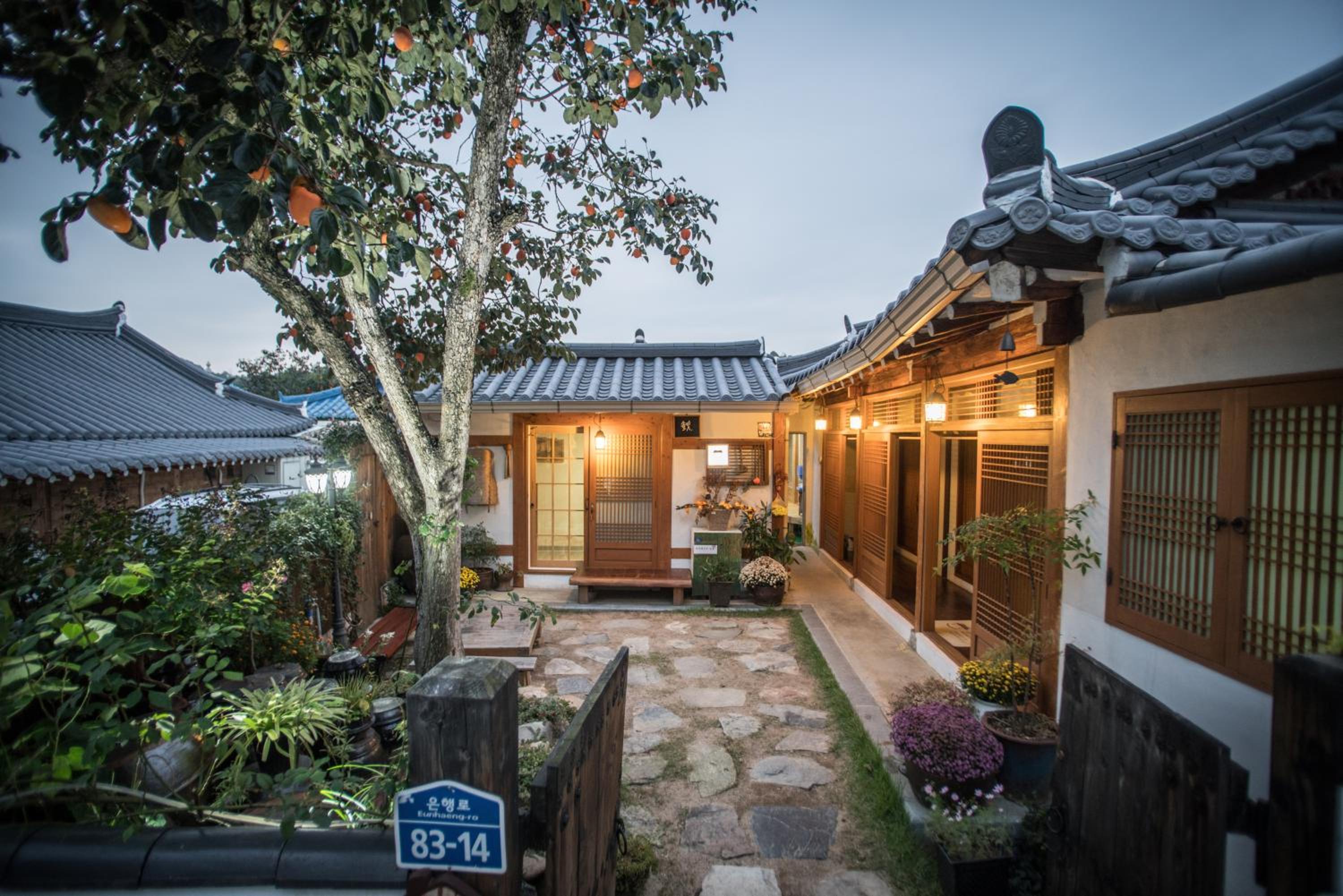
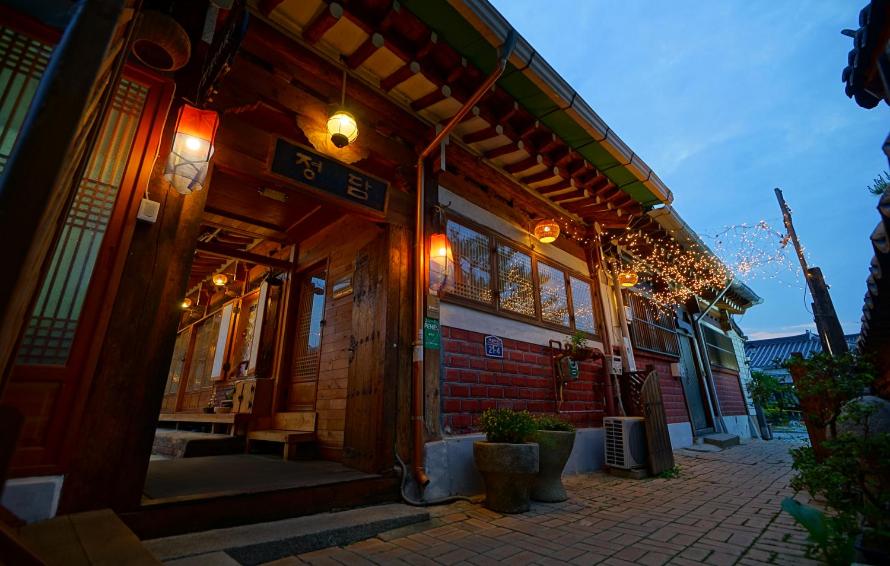
Sleep in a hanok in the village, and in the quieter east end toward the Confucian school if you want to hear the village rather than the main street: it is the whole reason to stay rather than day-trip. A hanok room means an ondol floor, a mattress, paper doors and often a shared bathroom. Most people give Jeonju 2 nights on Stippl, though many book one.
The Hanok Village
Hanok stays in the old houses, €50 to €120 for a room with floor bedding, and the oldest house by reservation from €150.
Gyo-dong
The calmer hanok guesthouses at the east end, €50 to €110, away from the main street.
Gaeksa
Business hotels and motels in the modern downtown, €35 to €80, the cheaper rooms in the city.
Nambu Market
Guesthouses in the streets round the market, €30 to €70, for the Friday and Saturday night market.
Deokjin
A few quiet hotels near the lotus pond, €45 to €90, north of the centre.


What to eat in Jeonju
Rice, vegetables and beef in a brass bowl, mixed with gochujang
Beansprout broth over rice, egg on the side, eaten at any hour
Rice wine by the kettle, with a free table of side dishes
Low-alcohol spiced makgeolli, drunk with hot soup
Chocolate-covered cake, buttercream and jam
The full Korean table, dozens of dishes at once
"Shop beer", beer and grilled dried fish in a corner shop
Discover food spots in Stippl
Find restaurants and markets on the map, save them to your itinerary, works offline too.
Jeonju customs and what not to do
Hanbok rental is normal
Roughly half the visitors in the village are wearing it, locals included, and many sites discount entry for it; the shops by the gate rent for about €10 for four hours.
The mural village is lived in
People live behind the walls at Jaman and the lanes are their streets; the murals are for photographing, the doors and the washing lines are not.
Banchan come with the kettle
The banchan are not free: they come with the makgeolli kettle, and ordering one kettle between four is the mistake the table will notice.
Shoes off, the floor is the bed
In hanok stays and the restaurants with floor seating; the ondol floor is heated and the bedding is laid on it, and the guesthouse owner will show you the boiler.
Do
- Stay the night; the village empties after six
- Order gukbap at least once, not only bibimbap
- Rent the hanbok after you have walked the hills
- Buy the choco pies on the way out, not the way in
Don't
- Expect a subway; there is not one, and you do not need one
- Judge the bibimbap by the famous restaurants alone; the cheap ones are the point of the city
- Order one makgeolli kettle between four
- Plan the Hanji museum on foot
What a Jeonju trip costs
Track what you actually spend
Set a daily budget per country and log expenses in any currency while you travel.
Fun facts about Jeonju
Jeonju was the fourth city in the world named a UNESCO City of Gastronomy. The title came in 2012, and the food is the reason most people come, to a city of 800 hanok houses.
The choco pie is a Jeonju-only franchise. PNB has made them since 1963 and has never opened a branch outside the city, so the boxes are carried home on the train.
People from Jeonju eat beansprout soup, not bibimbap. Kongnamul gukbap is the everyday dish, and the bibimbap the city is famous for is what visitors order.
Jeonju has made Korean paper for about a thousand years. Hanji is still made in the city, in a factory with a museum attached, and the traditional houses are papered with it.
Jeonju is the ancestral home of the Joseon royal house. The Yi clan came from here, which is why a provincial city has a dynastic shrine, Gyeonggijeon, holding the founder's portrait.
Jeonju predicts the south-west on Stippl. Trips that carry it are twice as likely to reach the Jeolla destinations, and half as likely to run the Seoul to Busan corridor in order.
Local tips for Jeonju
No metro, no need
The hanok village, the cathedral, the gate and Nambu market are all within twenty minutes on foot of each other. Kakao T is the taxi app for the Hanji Paper Museum in the north.
Arrive at the bus terminal
It is closer to the village than the railway station, and from Busan the bus beats the train because the rail route runs the long way round. Seoul is about €15 and under three hours.
How long to stay
Most people give Jeonju 2 nights on Stippl: the hanok village and a bibimbap lunch, then Omokdae at sunset and the market's night stalls on Friday or Saturday.
Mind your shoes
The village lanes are cobbled and uneven, and Omokdae and the mural village are several flights of stairs. Rent the hanbok after you have walked the hills, not before.
Nambu Market's hours are loose
The posted hours are not reliable; stalls open and close on their own schedule. The night market is Friday and Saturday evenings; on other nights it is a car park.
Book a hanok stay ahead
The village guesthouses are small and fill at weekends and in spring, from about €60 a night. The ones inside the village are quieter after the day-trippers leave at five.
Jeonju questions, answered
On the western line south from Seoul, about two hours by KTX. Jeonju carries 3.19% of everything planned in South Korea on Stippl, and it works as the food stop between the capital and the south coast. Put it into Stippl as an overnight rather than a lunch.
Two nights. Stops in Jeonju planned on Stippl come to 2 nights. The hanok village itself is small and you can walk it in an afternoon; what takes the time is eating your way across it properly, which is the only real reason to come.
It can be, at two hours each way by KTX, and only 3.97% of Jeonju stops planned on Stippl are same-day, so almost nobody does. The hanok village empties in the evening and fills with day visitors by eleven, which is the whole argument for sleeping here.
In a hanok inside the village, towards the quieter eastern end. They are converted courtyard houses with heated floors and thin walls, and that is part of the deal rather than a fault. Book ahead at weekends, when Koreans come down from Seoul for exactly the same reason you are.
Bibimbap once, because this is where the dish comes from and the local version arrives with beef tartare in a brass bowl. Kongnamul gukbap for breakfast, a bean sprout soup that people eat after a heavy night. Then a kettle of makgeolli, which comes with more side dishes than you ordered.
It is busy and it is commercial, and it is also the largest surviving hanok village in the country, which is why. The trick is timing: before nine in the morning and after seven in the evening it turns back into a quiet residential neighbourhood, and that is when to walk it.
Every guide is written by the Stippl editors and checked against the trips our travellers actually plan. Spotted something out of date? Let us know.

Plan Jeonju in Stippl
Day-by-day planning, stays and budget in one app, with every place from this guide already on the map.
Download the app