

Porto
Porto is the smaller, cheaper and less polished of Portugal's two cities, and the easier one to like. Port lodges across the river, a station hall of twenty thousand tiles, and the Douro upstream.
Porto in a nutshell
Porto: what to expect
For Porto we read the 127,000+ stops that travellers have planned across Portugal on Stippl.
Porto rewards two or three nights, and most travellers give it 2 on Stippl. The UNESCO old town is stacked in orange-roofed terraces down to the Douro, and the whole centre is a hill you walk down and climb back up. The port lodges are not in Porto at all but across the river in Vila Nova de Gaia, over the lower deck of the Dom Luís I Bridge. Up top sit São Bento station's tiled hall, Livraria Lello's crimson staircase and the Clérigos tower.
Porto keeps the travellers it gets better than the capital does. Only 6.85% of Porto stops planned on Stippl are same-day visits, against 9.12% for Lisbon. The nights split almost evenly between one, two and three, so there is no single standard Porto stay.
Give the Douro Valley a day of its own. The oldest demarcated wine region in the world starts an hour and a half upstream, and the train to Pinhão hugs the river for its last hour. Take a tour instead if you want the quinta lunch without a designated driver. Porto usually sits at the northern end of a Portugal route, with the train south to Coimbra and Lisbon. If rain and steep streets spoil a trip for you, note that Porto is wetter than Lisbon and steeper in places, so pack a jacket even in summer.
Plan Porto in Stippl
Day-by-day planning, stays and budget in one app, with every place from this guide already on the map.
Download the appWho Porto is for
Wine and port drinkers
More than fifty port lodges sit within one walk in Vila Nova de Gaia, and the Douro wine valley is an hour and a half upstream.
Anyone who found Lisbon slick
Porto is smaller, cheaper and less polished than the capital, and it is the easier of the two cities to like.
History-minded travellers
A UNESCO old town, the Roman port of Portus Cale that gave Portugal its name, and a railway station whose hall is a museum of tiles.
Photographers
The stacked terraces, the Dom Luís I Bridge and the Gaia bank make the most photographed view in Portugal, best from the upper deck.
Anyone with a weekend
Most travellers give Porto 2 nights on Stippl, enough for Ribeira, the bridge and a lodge tour, with a third night for the Douro.
Solo walkers after dark
Porto is a comfortable city to walk at night and feels safer than Lisbon, with less pickpocketing to watch for.
Maybe not for you: anyone avoiding hills or rain, since Porto is steeper than Lisbon in places and wetter too; and anyone without a spare day for the Douro, which does not fit into an afternoon.
The best time to visit Porto
Spring
March to June
March is cheap and improving, April mixes showers and sun in the same day, and May and June are warm and dry enough ahead of the summer crowds.
Summer
July and August
Warm and busy but rarely oppressive, and cooler than the south. August is the fullest month, and prices follow it.
Autumn
September and October
September is the best month, warm, dry and thinning out. October is mild in the city and brings the grape harvest to the Douro.
Winter
November to February
The wettest stretch of the year, dark by six in January, but the port lodges are empty and unhurried and the prices are low.
- São João on 23 and 24 June is the biggest night of Porto's year. Grilled sardines, bonfires, strangers tapping each other with plastic hammers and fireworks over the river bring the whole city out, and the Afurada festival follows on the Gaia bank a week later.
- The Douro harvest runs from September into October, and the valley train sells out. The quintas open for treading and tasting, and it is the busiest stretch of the year on the line to Pinhão, so book the train or a tour before you arrive.
- Most Portugal trips on Stippl are fixed about 67 days before departure, with 17.5% inside two weeks. Porto's lodge tours still book out at weekends, especially the ones pouring older wines, so reserve those along with the flights.
- Rain is part of the plan in Porto rather than a contingency. The city is genuinely wetter than Lisbon, so keep São Bento station, the lodges in Gaia and Livraria Lello for the wet hours, and bring a jacket even in summer.
Add your Porto dates and we'll flag the weather
Stippl shows the season, crowds and prices for every stop on your route.
Describe your trip, get a Porto itinerary in seconds
Everything in this guide is already in Stippl. Tell the planner how long you have and what you like: it builds the route, the days and the travel times, and you edit whatever you want.
Things to do in Porto
A port lodge tour in Gaia
Cross the lower deck of the bridge to Vila Nova de Gaia, where more than fifty lodges age the wine, and taste across the styles. Tours need reserving, and weekend slots go first.
The upper deck to Serra do Pilar
Walk across the top of the Dom Luís I Bridge to the Serra do Pilar viewpoint for the city stacked above the river. The lower deck is for crossing, not for the view.
The tiled hall at São Bento
Walk into the station's entrance hall and look up at about twenty thousand azulejo tiles telling the country's history. It is a working station, it is free, and it takes ten minutes.
Livraria Lello at opening
The 1906 bookshop with the crimson staircase sells timed tickets, redeemable against a book, and has a queue by mid-morning. Book a slot and go at opening.
The Torre dos Clérigos
Climb the tower for the other view of Porto, looking down on the terracotta roofs rather than across the river at them.
The Douro train to Pinhão
Ride about two hours up the valley and let the last hour along the river do the work. Make it a full day, and book ahead in the autumn harvest.
The neighbourhoods of Porto
Baixa
Aliados, Clérigos, the station
The commercial heart around Aliados and Clérigos: the station, the bookshop and the tower, with hotels of every grade. For first visits and for the checklist inside a fifteen-minute walk.
Everything on foot, and the queue outside the bookshop under the window.
Ribeira
Painted riverfront, the bridge
The postcard riverfront under the bridge: tall painted houses, restaurants and the tour boats, with boutique hotels in the old houses. For atmosphere and for one night on the river.
The view every photograph is taken from, and the tourist prices on the quay.
Cedofeita
Galleries, concept shops, design
Nineteenth-century streets west of the centre: galleries, concept shops and the city's design quarter, with apartments and small hotels. For second visits and longer stays.
The creative city at the door, and a walk to the river.
Bonfim
Residential, unglamorous, local
Residential and unglamorous east of the centre, the pick for a local feel, with guesthouses and apartments at ordinary prices. For a third day and for anyone who wants ordinary Porto.
Ordinary prices and a neighbourhood, and a tram to the sights.
Boavista
Wide avenues, the concert hall
Wide avenues, the Casa da Música and the business end of the city, with cheaper hotels and the metro. For budget stays and for concerts.
Cheaper beds and the concert hall, and a metro ride to the old town.
Vila Nova de Gaia
The far bank, the lodges
The far bank: the port lodges, the cable car and the best view back at the city, with hotels along the quay. For wine and families, and for the only place you can photograph Porto whole.
The lodges and the view, and a bridge to cross for the city.
See every Porto neighbourhood on one map
Save the areas you like and Stippl plots your days so you're not crossing the city twice.
Where to stay in Porto
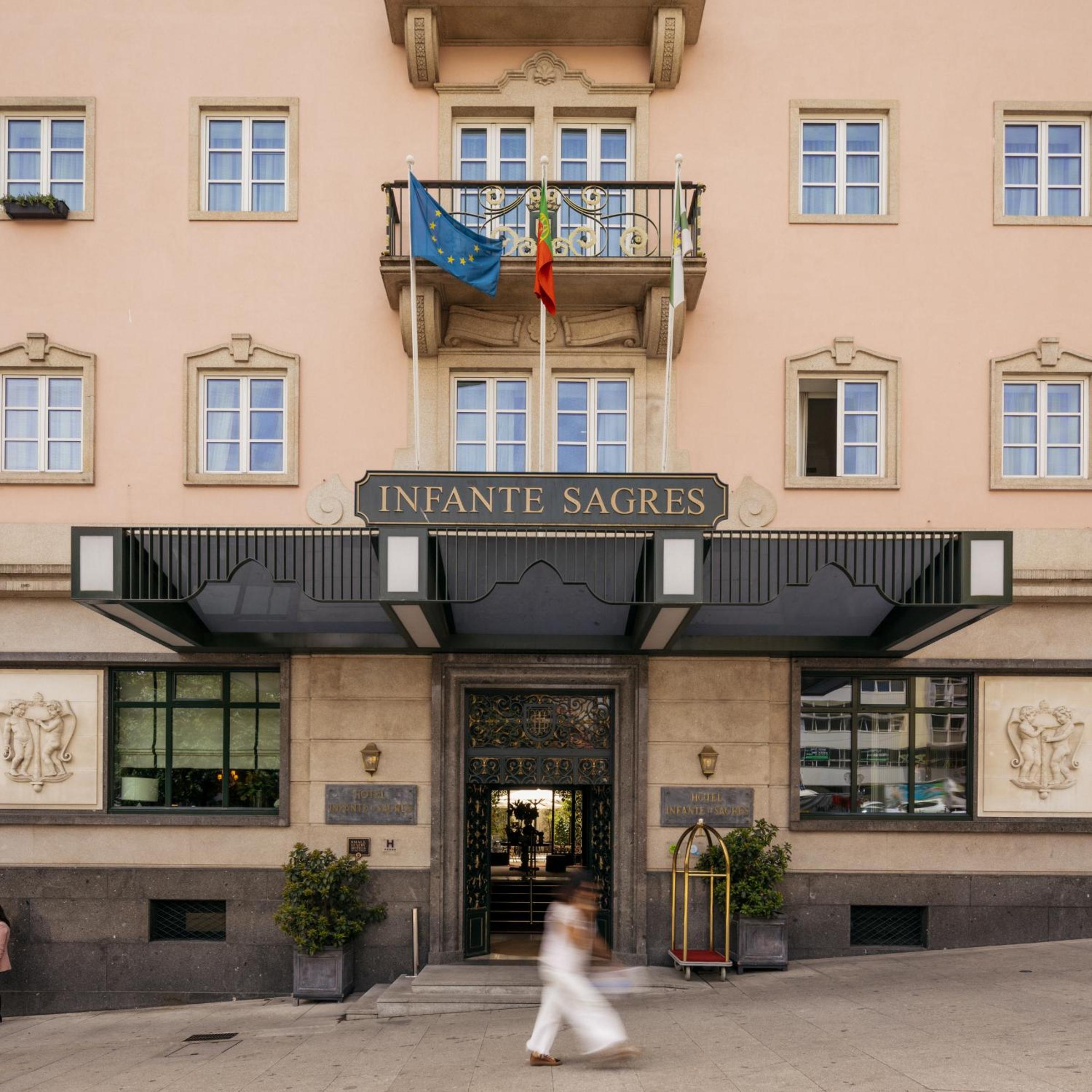
Stay in the Baixa for a first visit: central, flat by Porto standards, and walkable to everything on a first list; Ribeira buys the view and the noise, and Gaia buys the view back at Porto at the cost of the bridge every time. Most people give Porto 2 nights on Stippl, from one base. Boavista is the budget answer, a metro ride out.
Baixa
Hotels of every grade around Aliados, €90 to €220, and hostels in the old blocks from €25 a bed.
Ribeira
$$
Boutique hotels in the tall painted houses, €120 to €260, with the steepest walk home.
Cedofeita
$
Apartments and small design hotels, €80 to €160, in the gallery quarter.
Bonfim
$
Guesthouses and apartments at ordinary prices, €60 to €120, east of the centre.
Boavista
$
Cheaper business hotels and the chains, €70 to €130, on the metro.
Vila Nova de Gaia
$
Hotels along the quay and above the port lodges, €100 to €250, with the best view of the city.


What to eat in Porto
A layered meat sandwich under melted cheese and a beer-and-tomato sauce, with chips
Tripe and white bean stew, the dish the city is nicknamed for
Salt cod, here often à Gomes de Sá, which was invented in Porto
Fortified wine, from white and tawny through to vintage
Marinated pork in a roll, the standing lunch
The custard tart, as everywhere
Dense corn bread eaten with everything
Young, faintly sparkling white from the Minho just north
Discover food spots in Stippl
Find restaurants and markets on the map, save them to your itinerary, works offline too.
Porto customs and what not to do
Never call it Oporto
The city is Porto; the English form fossilised a Portuguese article and it marks you out, and tripeiro, the nickname for a local, is a compliment here.
The Lisbon rivalry is live
Porto's self-image is built partly against the capital and the football fixture is the sharpest edge of it; a kind word for Lisbon is best kept for Lisbon.
Dinner is late and unhurried
Kitchens fill after eight and nobody brings the bill unasked; the francesinha is a lunch, and the port-lodge tastings across the river close by six.
São João has a hammer
On the night of 23 June strangers hit each other with plastic hammers, cheerfully, all night, and the whole city eats sardines in the street; join in or stay indoors.
Do
- Book the port-lodge tour and the Livraria Lello slot ahead
- Eat a francesinha at lunch, not dinner
- Cross to Gaia for the tastings before six
- Carry a hammer on São João night
Don't
- Call it Oporto to a local
- Praise Lisbon in a Porto bar
- Expect the bill without asking
- Drive in the Ribeira; the lanes are for walking
What a Porto trip costs
Backpacker
€45–95
A Baixa hostel bed, a francesinha or bifana lunch, free entry to São Bento's hall and the Ribeira, walking the whole city.
Mid-range
€130–265
A Baixa or Ribeira hotel, which goes further here than the same money in Lisbon, a port lodge tour, restaurant dinners, the train up the Douro.
High-end
€255–370
A Gaia riverview hotel, private port tastings across several lodges, Livraria Lello's priority ticket; the national top band, reached more easily here than in the capital.
Track what you actually spend
Set a daily budget per country and log expenses in any currency while you travel.
Fun facts about Porto
Portus Cale, the Roman settlement at the Douro mouth, gave Portugal its name. The port on the river is the root of the country's name, and the city has stood there ever since.
The Dom Luís I Bridge was designed by a student of Gustave Eiffel. Théophile Seyrig's two-deck iron bridge opened in 1886, and the metro runs across the top while the walkers use the bottom.
São Bento station's hall carries about 20,000 azulejo tiles. They tell the history of the country in blue and white, and the hall is a working station you can walk into for free.
Over fifty port lodges operate across the river in Gaia. They are not in Porto at all but in Vila Nova de Gaia, a separate municipality, and they produce most of the country's port exports.
Porto's historic centre has been a World Heritage Site since 1996. The terraces of orange roofs stack down to the Douro from the cathedral, and the Ribeira quay is the oldest part.
The two decks of the Dom Luís I Bridge go to different places. The upper is the metro and the walk to the Serra do Pilar viewpoint; the lower connects the two riverfronts at water level.
Local tips for Porto
Every walk ends uphill
The centre sits above the river, so everything down to Ribeira is a climb back. Uber and Bolt both operate here and are the easy uphill return at night.
Grip beats style on the cobbles
The steep wet cobbles are the real hazard in Porto, more so than in Lisbon, because the gradients here are sharper and it rains more.
Take tram 1 to Foz
The historic tram runs beside the river from Ribeira to Foz do Douro in about 25 minutes, and it is the ride for sunset at the river mouth.
Do the maths on the Porto Card
The card bundles transport with museum entry and, as in Lisbon, only pays off if you enter several paid places in a day.
Metro line E from the airport
Line E runs from the airport to Trindade in the centre in about 30 minutes, and it is the cheapest way into the city.
How long to stay
Most people give Porto 2 nights on Stippl, and the Douro wants one more: the train to Pinhão alone takes two hours each way.
Porto questions, answered
As the northern end, with the Douro as its day trip and the train south to Coimbra and Lisbon. Lay the route out in Stippl and give Porto two nights and the Douro a third; the valley is a full day. Show the plan to people who have been, in subreddits like r/PortugalTravel, and say whether the wine matters.
Two for the city, three with the Douro. Most people give Porto 2 nights on Stippl and 26.3% of stops are a single night, the Lisbon day-trippers who see the Ribeira and the bridge and leave. Two lets you cross to Gaia for the lodges and eat a francesinha at lunch.
Porto is smaller, cheaper and easier to like; Lisbon has more to do. Porto is the second most-planned stop in Portugal on Stippl after Lisbon and it is planned 67 days ahead, so this is a fixture. Most routes take both: the train is three hours, and the rivalry between the two cities is real.
Not in Porto. The lodges are in Vila Nova de Gaia across the river, and the vineyards are in the Douro Valley upstream; a tasting in Gaia is a walk over the lower deck of the bridge, and the lodges close by six. The train to Pinhão is the scenic way into the valley.
Yes if you book a time slot; the ticket is redeemable against a book and the queue without one runs to an hour. Go at opening or in the last hour, and pair it with the Clérigos tower next door. The bookshop is the reason the street is full, so the cafés around it price accordingly.
Upper for the view and the walk to the Serra do Pilar viewpoint, lower to get between the two riverfronts. About 6.85% of Porto stops planned on Stippl are same-day, the Lisbon day-trippers, and the bridge is what they see; the upper deck carries the metro and the wind, the lower is the way to the port lodges.
Every guide is written by the Stippl editors and checked against the trips our travellers actually plan. Spotted something out of date? Let us know.

Plan Porto in Stippl
Day-by-day planning, stays and budget in one app, with every place from this guide already on the map.
Download the app