

Luang Prabang
Luang Prabang is a former royal capital on a peninsula between two rivers where the whole town is the World Heritage site, thirty-odd working temples, a dawn alms round six hundred years old and a midnight curfew. Three nights, the falls in the dry season, sunrise on the hill rather than sunset, and the train booked through an agent.
Luang Prabang in a nutshell
Luang Prabang: what to expect
This is what 102,000+ planned stops in Laos on Stippl say about Luang Prabang.
Three nights in Luang Prabang, and the count is unusually firm. Tak Bat is several hundred barefoot monks collecting rice along Sakkaline Road at first light, daily, and watched from across the street, Kuang Si Falls is a tiered turquoise cascade thirty kilometres south with the bear rescue centre at its gate, Wat Xieng Thong is the royal temple at the tip of the peninsula, Phousi Hill is a climb to a view over both rivers, and the Pak Ou caves hold thousands of Buddha images, reached by boat up the Mekong. Most travellers give Luang Prabang 3 nights on Stippl.
Luang Prabang is the most-planned place in Laos by a wide margin, and almost never where a trip starts. The town sits on 83.78% of the Lao trips planned on Stippl, 33.2% of its stops run exactly three nights, the tightest three-night mode in the country, and it opens only 4.21% of the trips it appears on, because the slow boat and the train deliver people to it from somewhere else.
Sleep on the peninsula or one street back, go up Phousi at sunrise instead of sunset, visit the bears on the way into Kuang Si rather than on the way out, and carry small notes because nobody has change. Skip the falls between June and October, since the pools run brown and swimming is unsafe, and skip March to May, because the heat reaches forty and the burning haze takes the views.
Plan Luang Prabang in Stippl
Day-by-day planning, stays and budget in one app, with every place from this guide already on the map.
Download the appWho Luang Prabang is for
Architecture travellers
A World Heritage town where the listing covers the streets rather than a single site, with thirty-odd working temples and a palace museum.
First-timers in Southeast Asia
Compact, flat, safe, cheap and slow, and every guide frames it as the gentlest introduction the region offers.
Three-night planners
33.2% of Stippl stops here are exactly three nights, the tightest three-night mode in Laos, and the town is built to that rhythm.
Slow-boat arrivals
The two-day Mekong descent ends here, and its partners on Stippl run up the river rather than down the road, to Pak Beng and Nong Khiaw.
Ethical spenders
An unusual density of social enterprises: a training restaurant, a weaving centre, a bear sanctuary and an English-practice project.
Anyone who eats
French bakeries, a distinct northern Lao kitchen and a night market of buffets and baguettes, in a town small enough to try all three in a day.
Maybe not for you: anyone after nightlife, since the town-wide midnight curfew is real and the one late venue is a bowling alley; anyone travelling March to May who cannot take forty degrees plus agricultural haze; and anyone expecting a beach or a bar street.
The best time to visit Luang Prabang
The cool dry season
November to February
The season everything is built around, with days of twenty-seven to thirty-two, nights near fifteen and morning fog over the Mekong, and peak crowds and prices with it.
The hot dry season
March to May
Means in the mid-thirties and peaks past forty, and the agricultural burning season across the north, when the haze takes the views and the air.
The wet season
June to October
Heavy afternoon rain, the town fine and green, and the falls running brown and fast with the swimming unsafe and the top trail too slippery.
The bamboo-bridge season
November to April
The seasonal footbridges over the Nam Khan and to Chomphet are built each dry season and taken down before the river rises; out of season a boatman does the crossing.
- Most travellers give Luang Prabang 3 nights on Stippl, and 33.2% of stops are exactly that. A day of temples and the market, a day at Kuang Si, and a morning for Tak Bat and a village.
- The busiest month here on Stippl is January, and the quietest is August. The cool season is when the town fills, and the peak-to-trough gap is nearly sevenfold.
- The fire-boat festival lands on the October full moon. Illuminated dragon boats parade down the main street and onto the Mekong to mark the end of Lent, and the peninsula's rooms go for the night.
- March to May is smoke as much as heat. The burning season across northern Laos is the reason the viewpoints disappear, and the reason those months read lowest on the calendar.
- Kuang Si has a season and the town does not. December to May is when the pools are turquoise and swimmable; June to October they run brown and the swim is unsafe.
- Most travellers plan Luang Prabang about eleven weeks ahead on Stippl, and 26.3% more than six months out. The train tickets are the only thing that punishes the late planners.
Add your Luang Prabang dates and we'll flag the weather
Stippl shows the season, crowds and prices for every stop on your route.
Describe your trip, get a Luang Prabang itinerary in seconds
Everything in this guide is already in Stippl. Tell the planner how long you have and what you like: it builds the route, the days and the travel times, and you edit whatever you want.
Things to do in Luang Prabang
 Photo by Hongbin via Unsplash
 Photo by chatnarin pramnapan via Unsplash
Tak Bat, the dawn alms round
Several hundred barefoot monks collecting rice from kneeling residents along Sakkaline Road at first light, daily and for centuries, watched from across the street with the camera down.
Kuang Si Falls
Tiered turquoise pools under a sixty-metre cascade thirty kilometres south, turquoise from the limestone, with a swim in the lower pools and a steep climb to the quiet upper ones.
The bear rescue centre
Asiatic black bears taken from the bile trade, in enclosures at the falls entrance, included in the ticket and visited on the way in rather than the way out.
Wat Xieng Thong
The royal temple of 1560 at the tip of the peninsula, with the sweeping layered roof, the glass-mosaic Tree of Life on the rear wall and the hall of royal funeral carriages.
Phousi Hill at dawn
Three hundred and twenty-eight steps to a view over both rivers and the mountains, crowded at sunset and nearly empty at sunrise after the alms round.
The Pak Ou caves
Two river caves twenty-five kilometres upstream holding thousands of Buddha images left by pilgrims, reached by boat up the Mekong, quieter in the afternoon.
The neighbourhoods of Luang Prabang
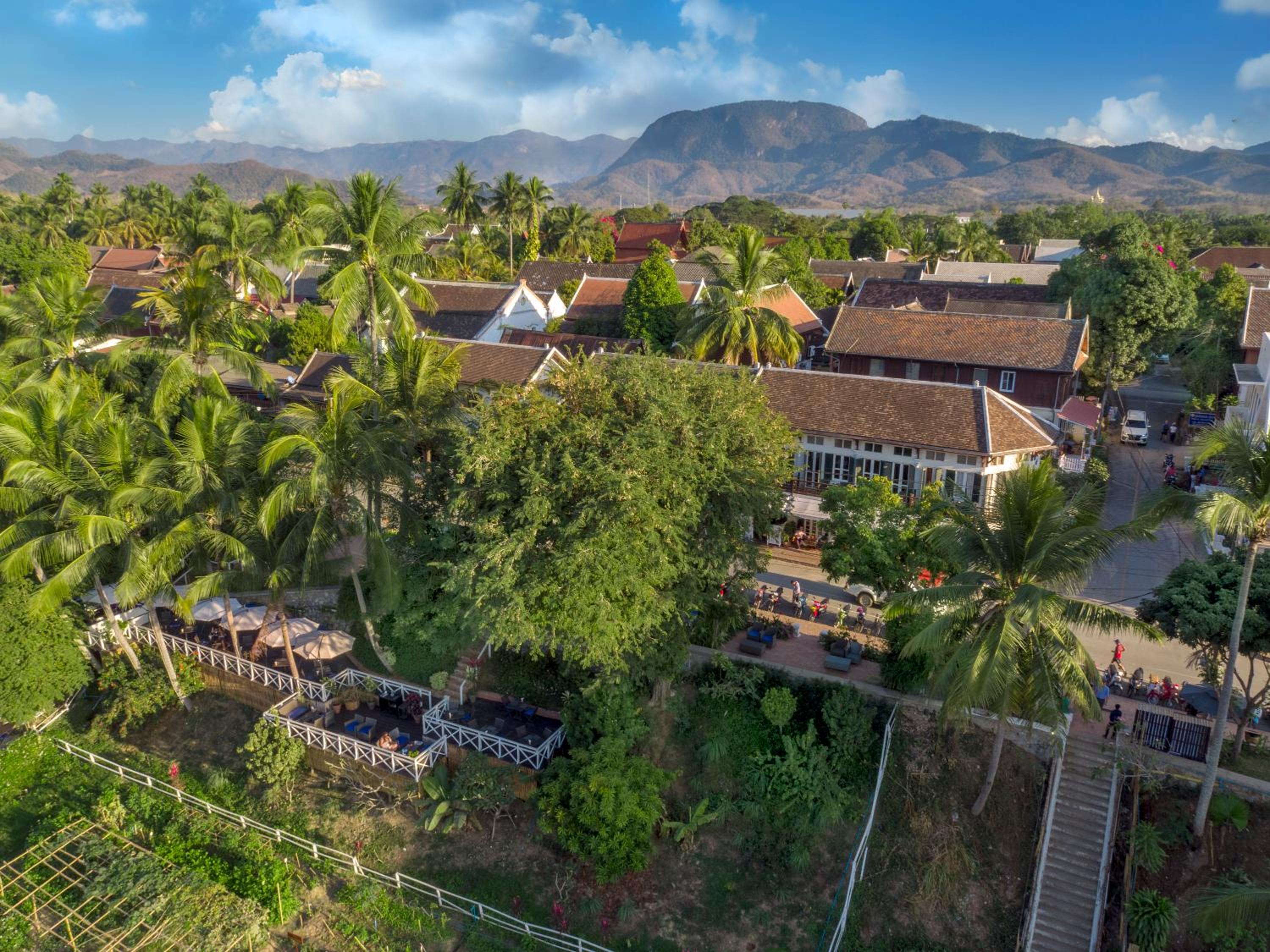
The old town peninsula
The World Heritage core
The flat spit between the two rivers with Wat Xieng Thong, the Royal Palace, Phousi Hill and the night market all inside a walk, and Sakkaline Road running the length of it. For first visits.
Everything on foot and the alms round at the door, but the highest rates and the tour groups from nine.
Ban Xieng Mouane and the Mekong bank
One street back
A residential village on the peninsula's southern flank with weaving workshops, family guesthouses, frangipani lanes and open-air riverside kitchens. For budgets.
The same walk at a lower rate and quieter nights, though the river bars run late on the bank.
Ban Phan Louang
Across the Nam Khan
The far bank of the smaller river reached by a footbridge, bamboo in the dry season and iron now, with bamboo-hut restaurants over the water and a slower evening. For a slower evening.
Riverside huts and a quiet night, but the bridge or a boat to the temples.
Chomphet
Across the Mekong
The north bank reached by car ferry or the seasonal bamboo bridge, with hill temples, a cave shrine, pottery and weaving villages, sand tracks and almost no visitors. For getting off the peninsula.
Temples and villages with nobody else, though a ferry each way and nothing after dark.
Around Phosi Market
The working town
West along the Kuang Si road, with the largest market in Luang Prabang, cheap textiles and no tourism infrastructure. For errands.
The city's real market at real prices, and nothing to stay for.
See every Luang Prabang neighbourhood on one map
Save the areas you like and Stippl plots your days so you're not crossing the city twice.
Where to stay in Luang Prabang
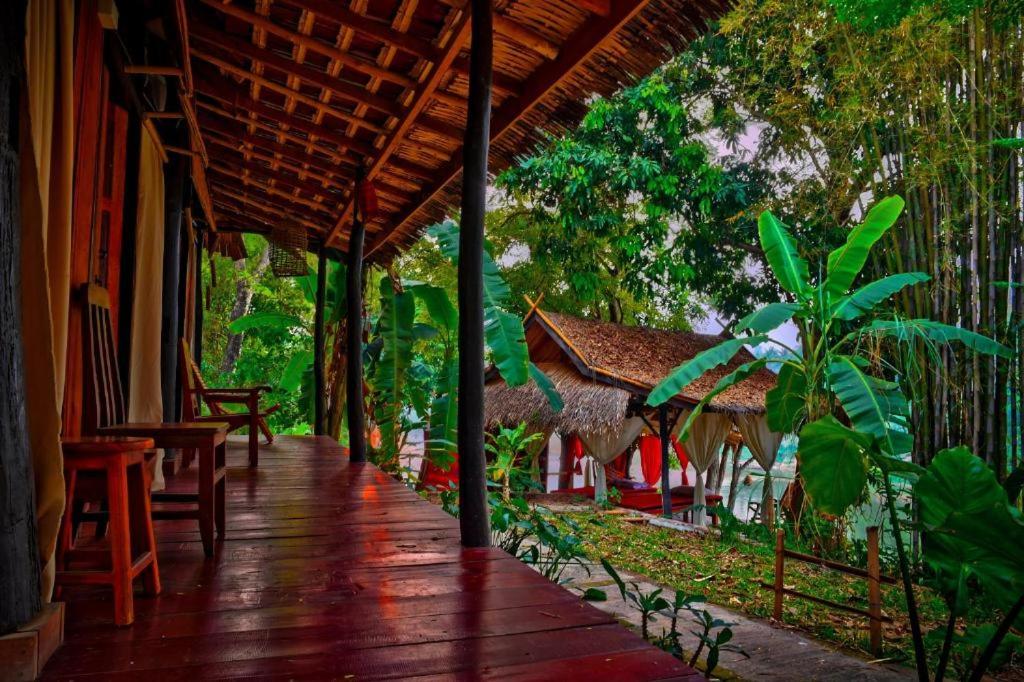
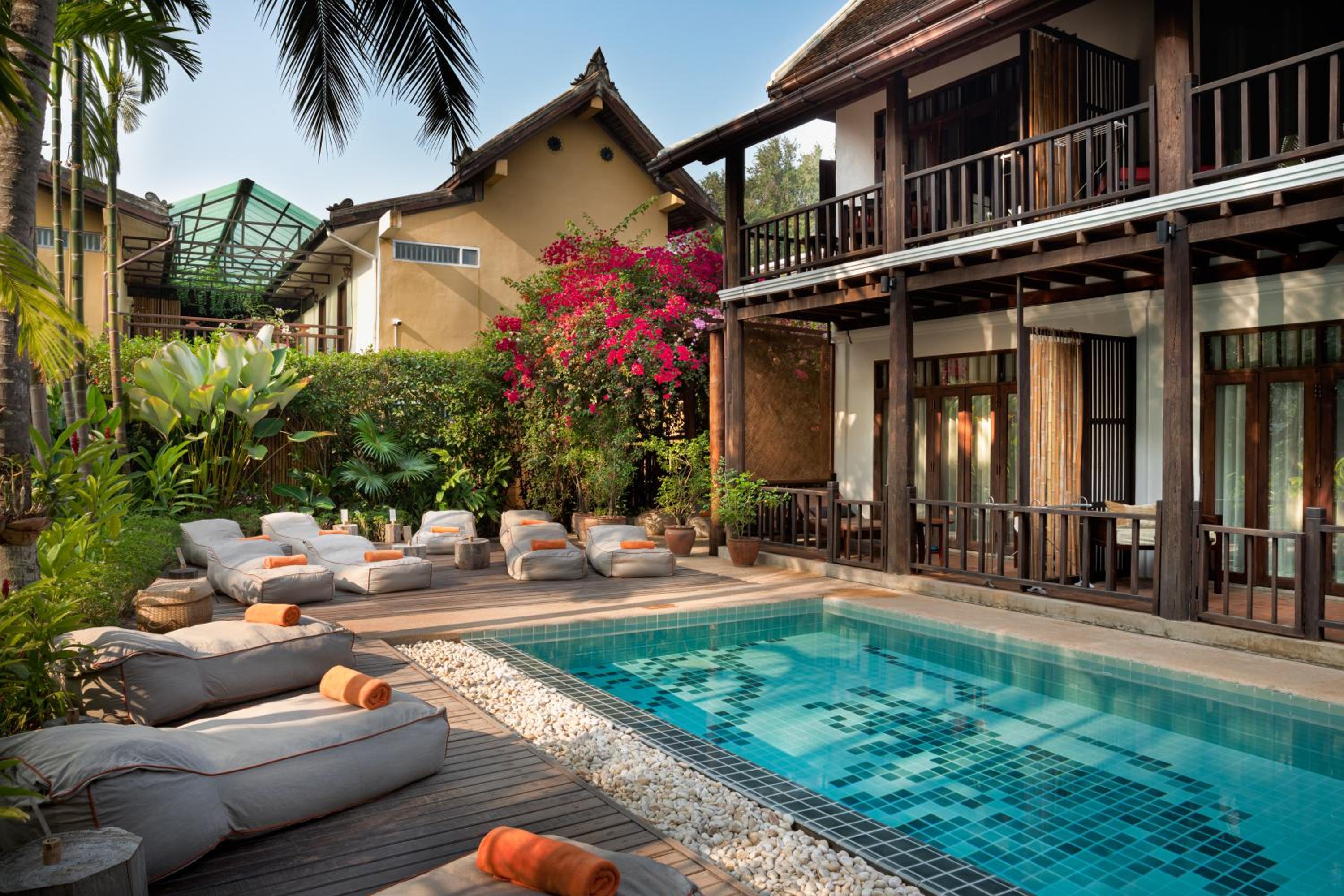
The whole town is walkable, so location is about noise rather than distance: on or one street back from the peninsula gets you everything, and the difference between the two is price and quiet rather than convenience. Most travellers give Luang Prabang 3 nights on Stippl, and the town is the dearest bed in the country.
The old town peninsula
Colonial-villa hotels and boutique guesthouses on the listed streets, €40 to €250 a night.
Ban Xieng Mouane and the Mekong bank
Family guesthouses and small hotels one street back, €15 to €70 a night.
Ban Phan Louang
Bungalows and guesthouses across the footbridge, €12 to €50 a night.
Chomphet
A lodge or two and a homestay on the far bank, €20 to €120 a night.
Around Phosi Market
Hostels and budget hotels on the main road, €5 to €30 a night.


What to eat in Luang Prabang
The Luang Prabang stew and the town's own dish: meat, aubergine, long beans and mushrooms thickened with charred sticky rice and given its numbing heat by sakhaan pepperwood
Mekong river weed pressed into sheets, dried with sesame and garlic, and fried crisp, eaten as a snack with a jaew dip
The national dish: minced meat or fish tossed with lime, chilli, herbs and toasted rice powder, eaten with sticky rice
Steamed glutinous rice served in a woven basket, torn off by hand and used to pick up everything else
Pounded dips built on charred chilli, garlic and shallot: jeow mak keua with aubergine, jeow mak len with tomato
Not the Thai curry noodle of the same name: a clear northern rice-noodle soup under a pork-and-tomato-and-fermented-bean sauce
River fish with herbs and rice, wrapped in banana leaf and steamed
Lao barbecue: a domed grill over broth at your own table, meat on top, vegetables in the moat
Pork sausage heavy with lemongrass, kaffir lime leaf and galangal
Village-distilled rice spirit, the "whisky" of the whisky-village stop on the Pak Ou boat
Discover food spots in Stippl
Find restaurants and markets on the map, save them to your itinerary, works offline too.
Luang Prabang customs and what not to do
Tak Bat is the etiquette test
Watch from the far side of the street, seated or standing well back, shoulders and knees covered, no flash and silence, because it is a religious observance rather than a show.
Do not buy the baskets and join
Sellers work the street offering rice to tourists, and only Buddhists give alms; the transaction is the thing the residents most resent.
The cameras are the problem
Residents name the cameras pressing into the monks' faces as the issue, and the town's own street signage now says so.
Phousi is a temple hill
Shoulders and knees are covered on the hill as at the wats, and the shrines on the way up are prayed at.
The town closes at midnight
A curfew applies town-wide and is observed, which is why the one late venue is a bowling alley outside the centre.
Do
- Go up Phousi at sunrise instead of sunset; same view, a fraction of the people
- Carry small notes; stalls, tuk-tuks and ticket offices rarely have change
- Visit the bear sanctuary on the way in to Kuang Si, not on the way out
- Bargain at the night market, not in shops or restaurants
Don't
- Buy souvenirs made from wildlife; the night market openly sells them
- Photograph the alms procession with a flash, or stand in it
- Leave your passport as a scooter deposit
What a Luang Prabang trip costs
Budget
€26
A dorm bed, night-market meals, a shared minivan to the falls and one paid sight.
Mid-range
€43–69
A private air-conditioned room or a small boutique, restaurant meals and private tuk-tuks.
High-end
€129+
A colonial-villa hotel with a pool, a guide, a cooking class and a Mekong cruise.
Track what you actually spend
Set a daily budget per country and log expenses in any currency while you travel.
Fun facts about Luang Prabang
Luang Prabang means Royal Buddha Image. After the Phra Bang, a gold Buddha received from the Khmer in 1359 that turned a river settlement into a capital.
The UNESCO listing of Luang Prabang covers 611 buildings and 33 villages. Thirty-three of the town's fifty-eight villages, because it is the settlement that is inscribed rather than any single monument.
The bamboo bridge over the Nam Khan is rebuilt by hand every dry season. And dismantled before the river rises, with the crossing fee paying for next year's bridge.
Luang Prabang nearly saw snow in January 2016. A cold spell brought two days with a high of nine degrees, and it snowed in the northern provinces above nine hundred metres.
The one late-night venue in Luang Prabang is a bowling alley outside the centre. Which exists because of the midnight curfew, and closes at three.
33.2% of stops in Luang Prabang on Stippl are exactly three nights. The tightest three-night mode in Laos, on a town that opens only 4.21% of its trips.
Local tips for Luang Prabang
The station is twelve km out
The railway put Vang Vieng an hour away, and the catch is that both stations sit well outside their towns with a tuk-tuk at each end.
The ticket is the hard part
Seats are released only four days before departure, the in-town office sells them in person, and an agent is the answer for anyone arriving late.
The road south is the worst leg
Sealed now and faster, and still relentlessly curved, with vans pulled over for sick passengers the norm, so the train wins on every count.
The slow boat docks out of town
A few kilometres out, where a fixed-price tuk-tuk transfer is now organised, and the older accounts of being stranded are out of date.
The speedboat is the danger
Six to seven hours at speed on the Mekong with crash helmets issued, and the one way to arrive that every sensible guide says not to.
Three nights, never first
Only 4.21% of the Stippl trips Luang Prabang appears on start here and 3.65% end here, because the boat and the train deliver people to it.
Luang Prabang questions, answered
Because a day of temples and the market, a day at Kuang Si and a morning for Tak Bat and a village is the town: most travellers give Luang Prabang 3 nights on Stippl and 33.2% of stops are exactly three, the tightest mode in Laos.
Yes, and it is watched rather than joined: from across the street, in silence, with shoulders and knees covered and no flash, from about half past five in the hot months and six in the cool ones. The baskets of rice sold to tourists are the one thing the residents ask you not to buy.
December to May, when the pools are clear and swimmable and the climb to the upper pools is dry; from June to October the water runs brown and fast and the swim is unsafe. Put the falls into Stippl on a dry-season morning, then ask people in subreddits like r/laos whether the upper pools were worth the climb.
The train, if you can get a ticket: about an hour against five or six by a road that makes people sick. Seats are released four days ahead and the station is twelve kilometres out, so the ticket goes through an agent and the tuk-tuk is budgeted at both ends.
March to May, when the means sit in the mid-thirties with peaks past forty and the agricultural burning haze takes the views across the north. The busiest month here on Stippl is January, and the cool season from November to February is what the town is built around.
Yes, it is the country's dearest stop and the accommodation is where it shows, though about thirty euros a day still works with the night market. It holds 26.24% of Laos's 139,215 stops of Lao stops on Stippl and sits on 83.78% of the trips, so the demand sets the rate.
Every guide is written by the Stippl editors and checked against the trips our travellers actually plan. Spotted something out of date? Let us know.

Plan Luang Prabang in Stippl
Day-by-day planning, stays and budget in one app, with every place from this guide already on the map.
Download the app