

Short on time? The quick answer to where to travel in winter: Tromsø or Rovaniemi for the northern lights, Zermatt or Whistler for snow, Prague or Salzburg for Christmas markets, and Venice or Kyoto in January if you want a famous place almost to yourself.
Plan it in Stippl
Day-by-day planning, stays and budget in one app, with every place from this guide already on the map.
Download the appWhere to travel in winter: pick the trip first
Winter trips split into four kinds, and the right destination depends on which one you're after. Pick the kind, then pick the place.
| If you want | Go to | Best months |
|---|---|---|
| Snow and skiing | Zermatt, Whistler, Chamonix, Innsbruck, Banff | January to March |
| The northern lights | Tromsø, Rovaniemi, Swedish Lapland, Reykjavík | November to March |
| Christmas markets | Prague, Salzburg, Budapest, Edinburgh, Tallinn | Late November to 24 December |
| A famous city without the crowds | Venice, Kyoto, Seoul, Granada | January and February |
One honest note: this list leans cold. For winter sun in Europe, the southern Mediterranean stays mild well past autumn, and our guide to warm destinations in Europe is the better starting point.
The 20 best winter destinations, one by one
1. Zermatt, Switzerland
Zermatt is a car-free village under the Matterhorn, and it's the one Swiss resort where you can ski every day of the year: the glacier runs at Matterhorn Glacier Paradise stay open through summer too. In winter the main season runs from late November or early December to mid or late April.

There's no airport, so you arrive by train: 3 hours 15 from Zurich or 2 hours 15 from Bern, changing at Visp. Ride the Gornergrat Railway for the classic Matterhorn view, and go early: cloud around the peak usually builds from about 10 am. Book beds and passes early for Christmas and February, when the village fills. More on the rest of the country in our Switzerland guide.
2. Reykjavík, Iceland
Reykjavík is the easiest winter base in Iceland if you don't want to drive on ice. Aurora season runs from mid-September to mid-April, and in January you get only four to five hours of daylight, so the city works as a launch pad: the Golden Circle by day tour, an aurora bus at night.

For a lagoon, the Sky Lagoon is 10 minutes from the centre and calm, while the Blue Lagoon is 45 minutes out and needs booking ahead. To try for the lights without a tour, walk out to the Grótta lighthouse, but check the tide first: the path floods at high water. If you're not used to snow and ice on the road, join tours rather than renting a car. Plan the rest with our Reykjavík guide.
3. Tromsø, Norway
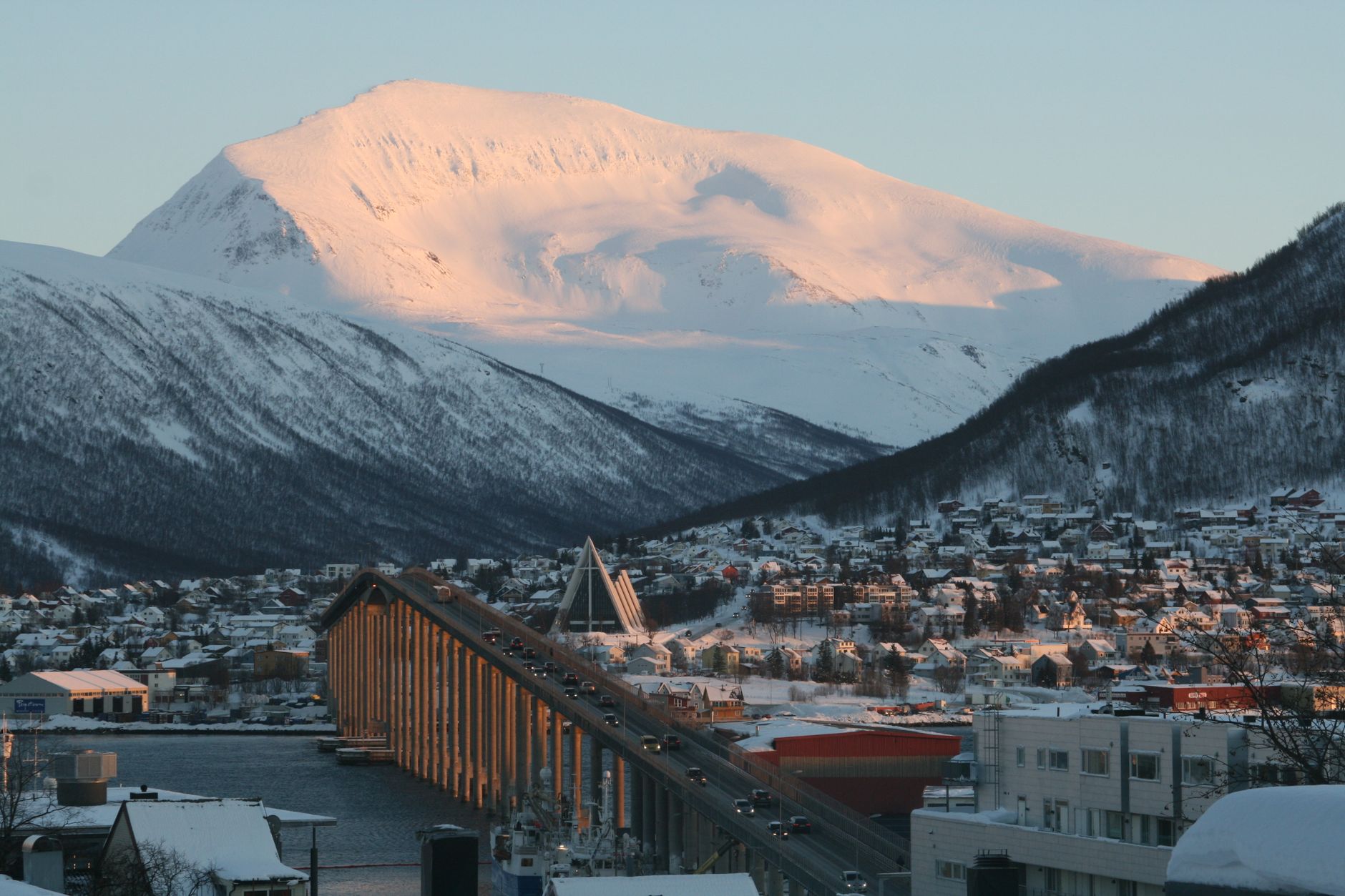
Known as the "Gateway to the Arctic", Tromsø is one of the best places in Europe to see the Northern Lights. The aurora is visible from mid-September to early April, with November to February as the peak. From late November to mid-January the sun doesn't clear the horizon at all, and on 21 January the city celebrates its return.

It's a real winter destination in our own data too: more travellers set off for Tromsø in December than in any other month, and nearly a third of all Tromsø trips planned with Stippl start in December, January or February. That's unusual for Norway, where everywhere else peaks in summer.
Huskies, whale trips and aurora chases all leave from the centre as booked tours. Take the Fjellheisen cable car to 421 m in four minutes for the view over the island, and visit the Arctic Cathedral across the bridge. A hostel bed runs €37-74 (NOK 400-800) and climbs through aurora season, so book early. Three nights is the sweet spot; see things to do in Tromsø.
4. Banff, Canada
Banff sits in the heart of the Canadian Rockies, 130 km from Calgary airport (1.5 to 2 hours by road). January here is properly cold, with an average low of minus 15°C in town, and that's exactly why the snow is so good.
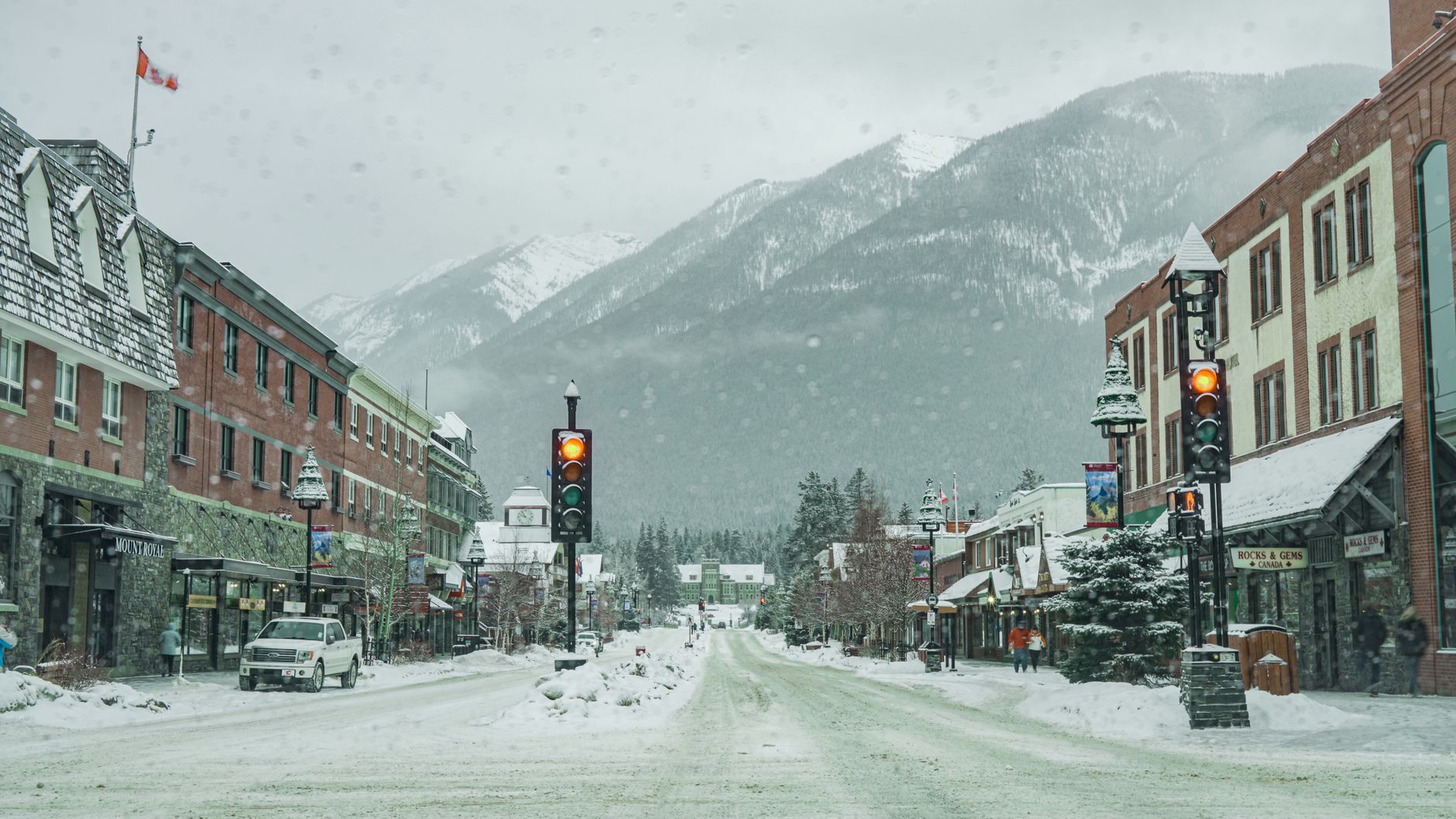
Ski or snowboard at Sunshine Village or Lake Louise Ski Resort, then warm up in the Banff Upper Hot Springs with snowy peaks around you. If you drive, make sure the car has winter tyres. More ideas for the rest of the country are in our Canada guide.
5. Prague, Czechia
Prague is magical in winter, with snow-dusted spires and some of Europe's best-loved Christmas markets. The markets open in late November on Old Town Square and Wenceslas Square and are packed up by 6 January, so time your trip for December.
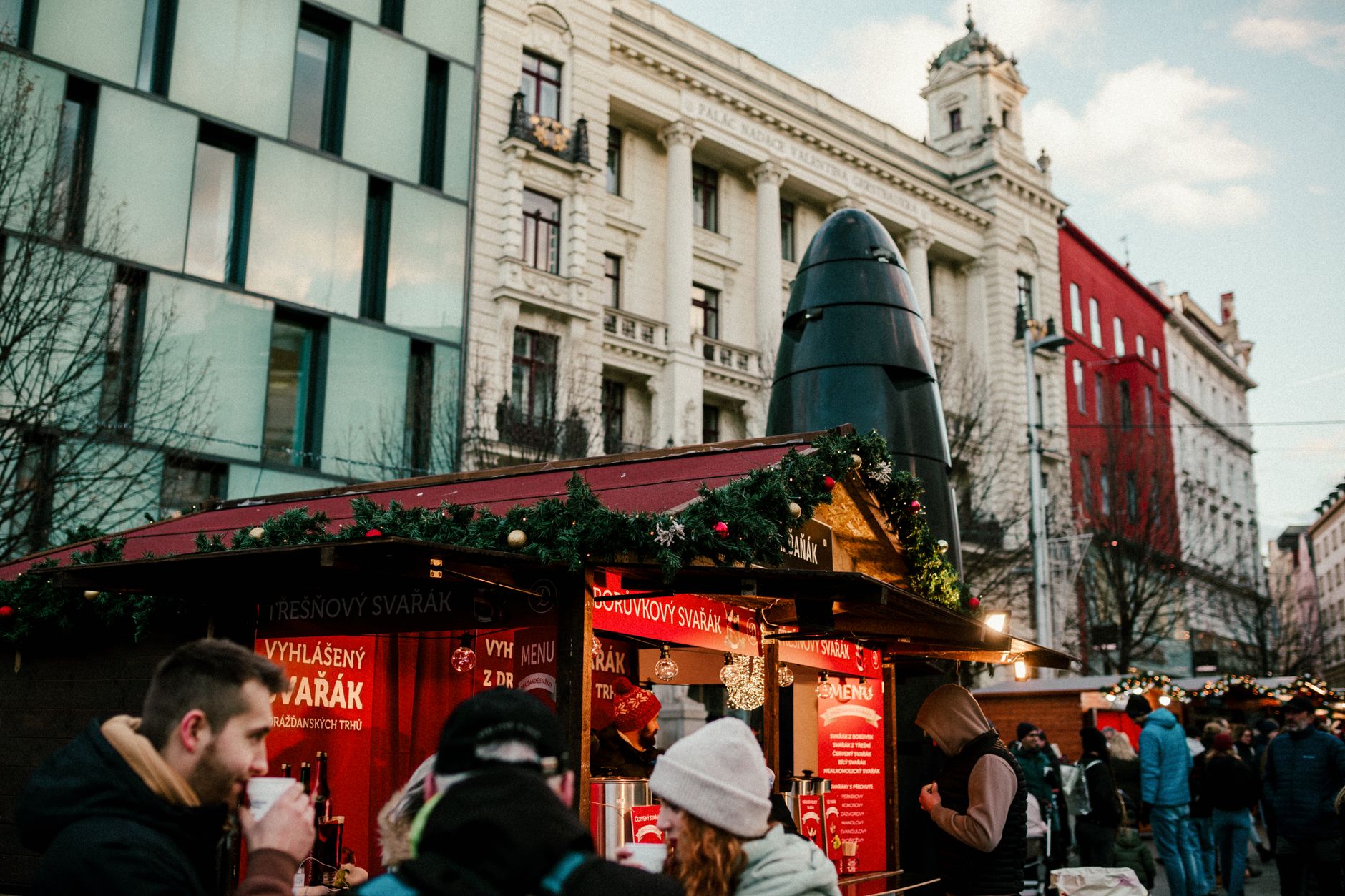
Walk Charles Bridge early for the castle view, and keep a hand on your wallet there and on Old Town Square: both are pickpocket hotspots. You'll see trdelník (chimney cake) everywhere, sold as an ancient Czech pastry. It's neither ancient nor Czech, but it's warm, so go ahead. The Czech koruna is the currency, and euro prices in the old town usually come at a poor rate. Browse more in our Prague guide.
6. Kyoto, Japan
Kyoto from mid-December to February is the city's best-kept secret: cold, quiet and the cheapest beds of the year, with the odd dusting of snow on the temple roofs. February is its quietest month of all.
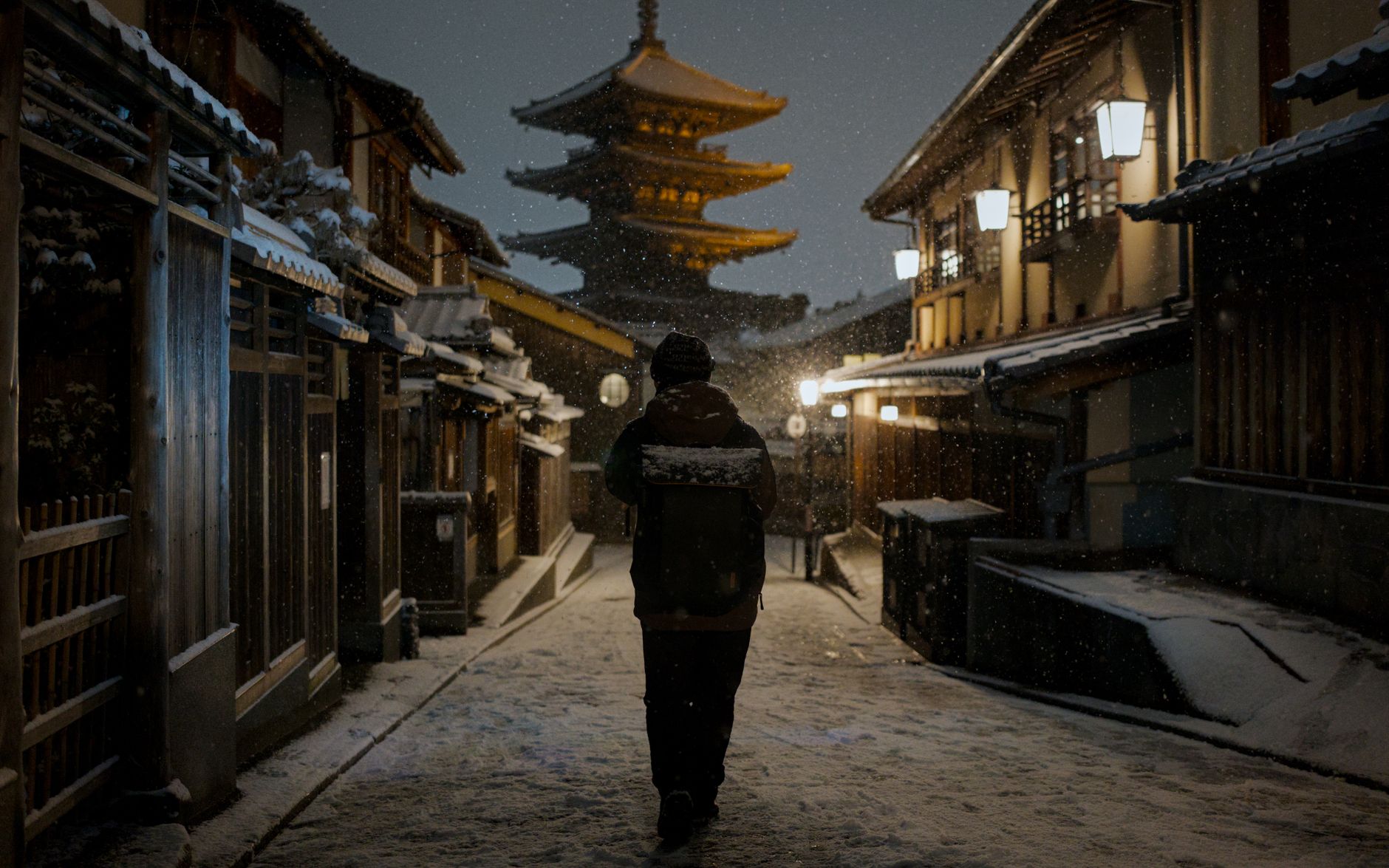
Visit Kinkaku-ji (the Golden Pavilion) and hope for snow, walk the Arashiyama Bamboo Grove before sunrise, and warm up with yudofu, the simmered tofu that is Arashiyama's winter dish. Most temples charge €2.20-3.40 (¥400-600). One catch: many places close from 29 December over New Year, so check before you plan that week. Kyoto also leads our list of the most beautiful traditional cities in Japan, and the full picture is in our Kyoto guide.
7. Rovaniemi, Finland
Rovaniemi sits on the Arctic Circle and is the official hometown of Santa Claus, which makes it a favourite for families and couples. Santa Claus Village is open all year, but December is when it looks the part.

Go on a husky or snowmobile safari through the forest, or sleep in a glass igloo to watch for the aurora from bed. Lapland's aurora season runs from late August to early April, and March, with full snow and longer days, is a favourite month for it. Dress for real cold: Lapland runs 8 to 12 degrees colder than Helsinki in midwinter. More in our Finland guide.
8. Salzburg, Austria
Salzburg, the birthplace of Mozart, is at its most atmospheric in December, when the Christmas market fills the cathedral square and Residenzplatz from late November.

Walk up to the Hohensalzburg Fortress for the view over the snowy roofs, and book a concert in Mozart's city. January to March is cold, quiet and cheap, but note that Hellbrunn Palace and its trick fountains close from November to March. The Salzburg Card costs €35 for 24 hours in the summer table, so check the winter price before you buy. Market weekends get busy: go on a weekday evening. See Salzburg for the rest.
9. Innsbruck, Austria
Innsbruck hosted the Winter Olympics twice, in 1964 and 1976, and it's the rare ski base where the evenings happen in a real town. The Nordkette cable cars climb to Hafelekar at 2,334 m in about 25 minutes from the old town.

Ski at Nordkette or Patscherkofel, then explore the Golden Roof in the old town, where the Christmas market is smaller and calmer than Vienna's or Salzburg's. The Innsbruck Card (€69 for 24 hours, €79 for 48) covers the Nordkette cable cars and all public transport. In early January the Bergisel Four Hills ski jump fills the city for a day. Read more on things to do in Innsbruck.
10. Tallinn, Estonia
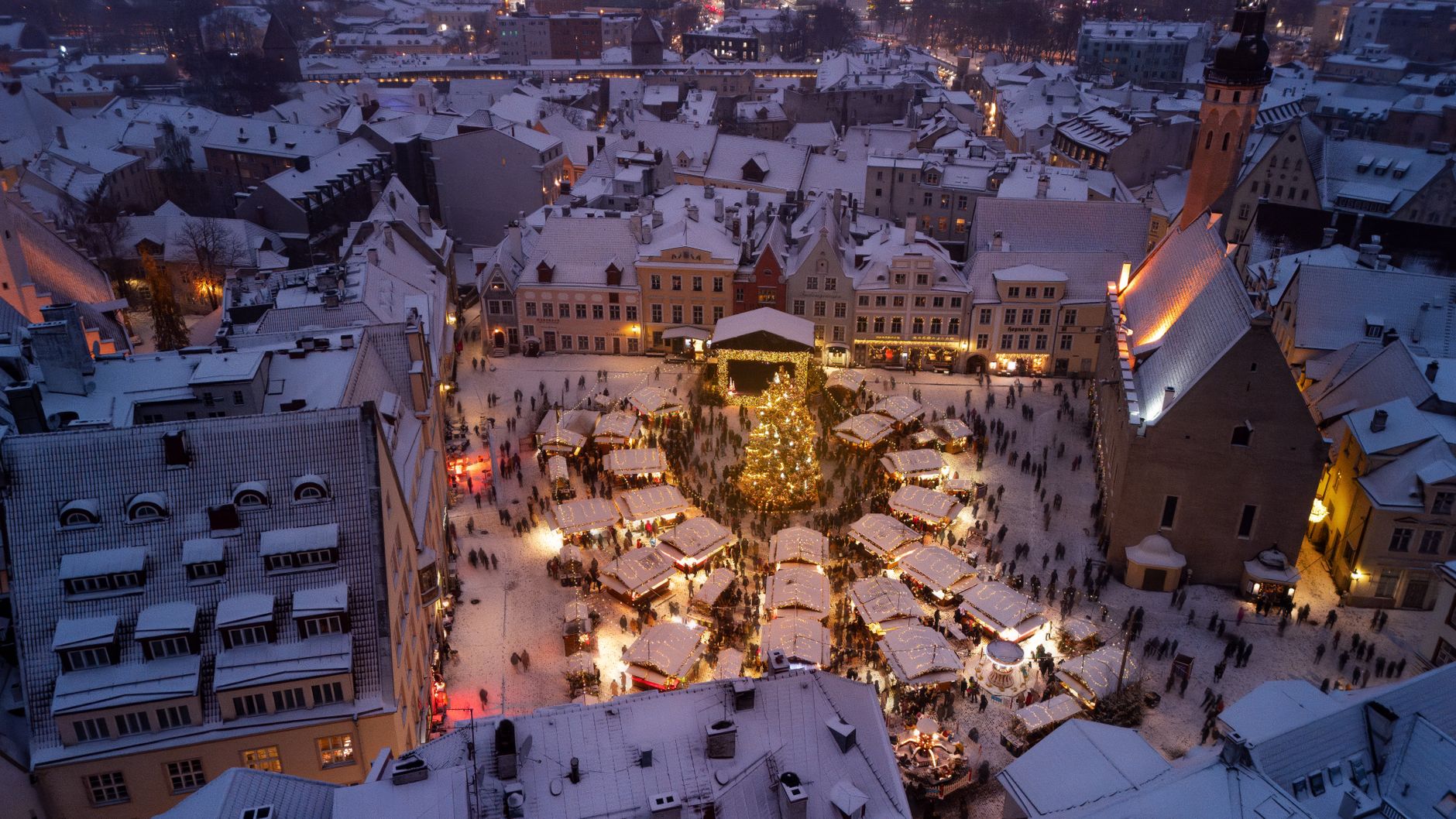
Tallinn's medieval old town has been on the UNESCO list since 1997, and UNESCO calls it exceptionally complete and well preserved. Under snow it looks like a Christmas card. The Christmas market on Town Hall Square is the heart of December here: 20 November 2026 to 6 January 2027, daily 10 am to 8 pm, free to walk in, with a €2 deposit on your glögg mug that you get back when you return it.
Walk up to Toompea for the view over the red roofs, from the Kohtuotsa platform, which is open around the clock, or up the 157 steps to Patkuli. Then eat: elk soup at III Draakon in the Town Hall costs about €2.50, or you can go the other way at Olde Hansa, where soups run €13-19 and mains €28-54. The outdoor rink on Harju Street, beside St Nicholas' Church, runs daily 10 am to 10 pm from early December to about the end of March, at €5.50-9.50 an hour with skates from €4.50.
Pack for it: December averages a high of 1°C and a low of -3°C, and at the solstice the sun sets around 3:20 pm. Bring shoes with grip for the cobbles, and a reflector, which is legally required on unlit roads after dark. From the airport, 4 km out, tram T2 or T4 takes 15 to 20 minutes for €2, and a taxi is about €15. From Helsinki, the ferry takes 2 to 2 hours 30, from about €10 one way in winter.
Describe your trip, get a Europe itinerary in seconds
Everything in this guide is already in Stippl. Tell the planner how long you have and what you like: it builds the route, the days and the travel times, and you edit whatever you want.
11. Whistler, Canada
Whistler Blackcomb is one of North America's biggest ski areas: 8,171 acres, more than 200 marked runs, 36 lifts and three terrain parks. For the 2026/27 season it targets an opening day of 20 November 2026, and a new quad chairlift replaces the Showcase T-Bar for better access to the glaciers.
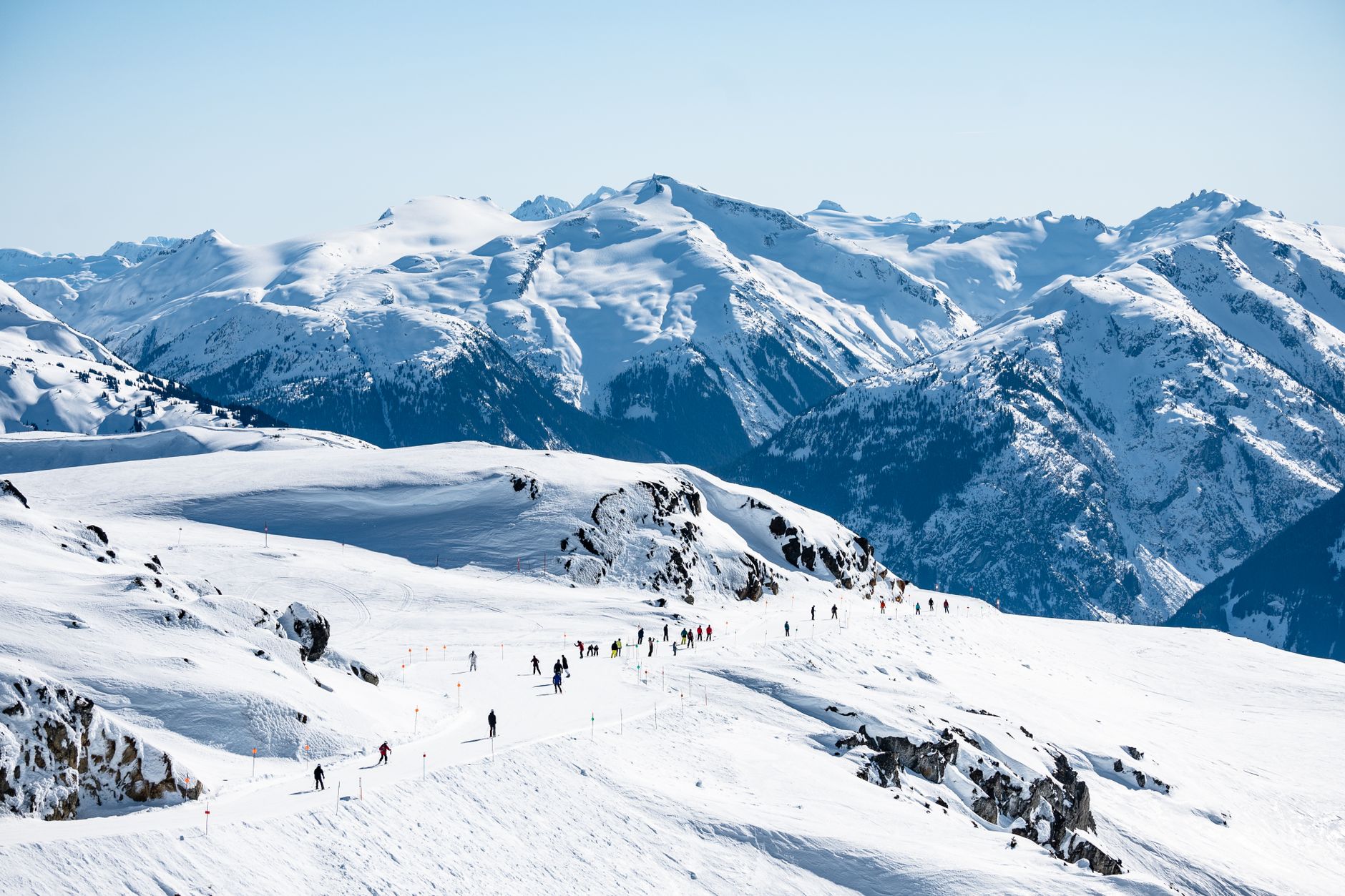
Lift tickets start from €60 (CA$97) a day when you buy ahead, and walk-up prices are much higher, so book online. Off the slopes, Whistler Village is lit up and walkable, and a mountain spa is the classic way to end the day. It's a drive up the Sea-to-Sky corridor from Vancouver; check road conditions before you go.
12. Quebec City, Canada
Quebec City has cobblestone streets, a walled old town and French as its everyday language, which is why it feels more European than anywhere else in North America. In February the Carnaval de Québec, one of the world's largest winter festivals, takes over the city.
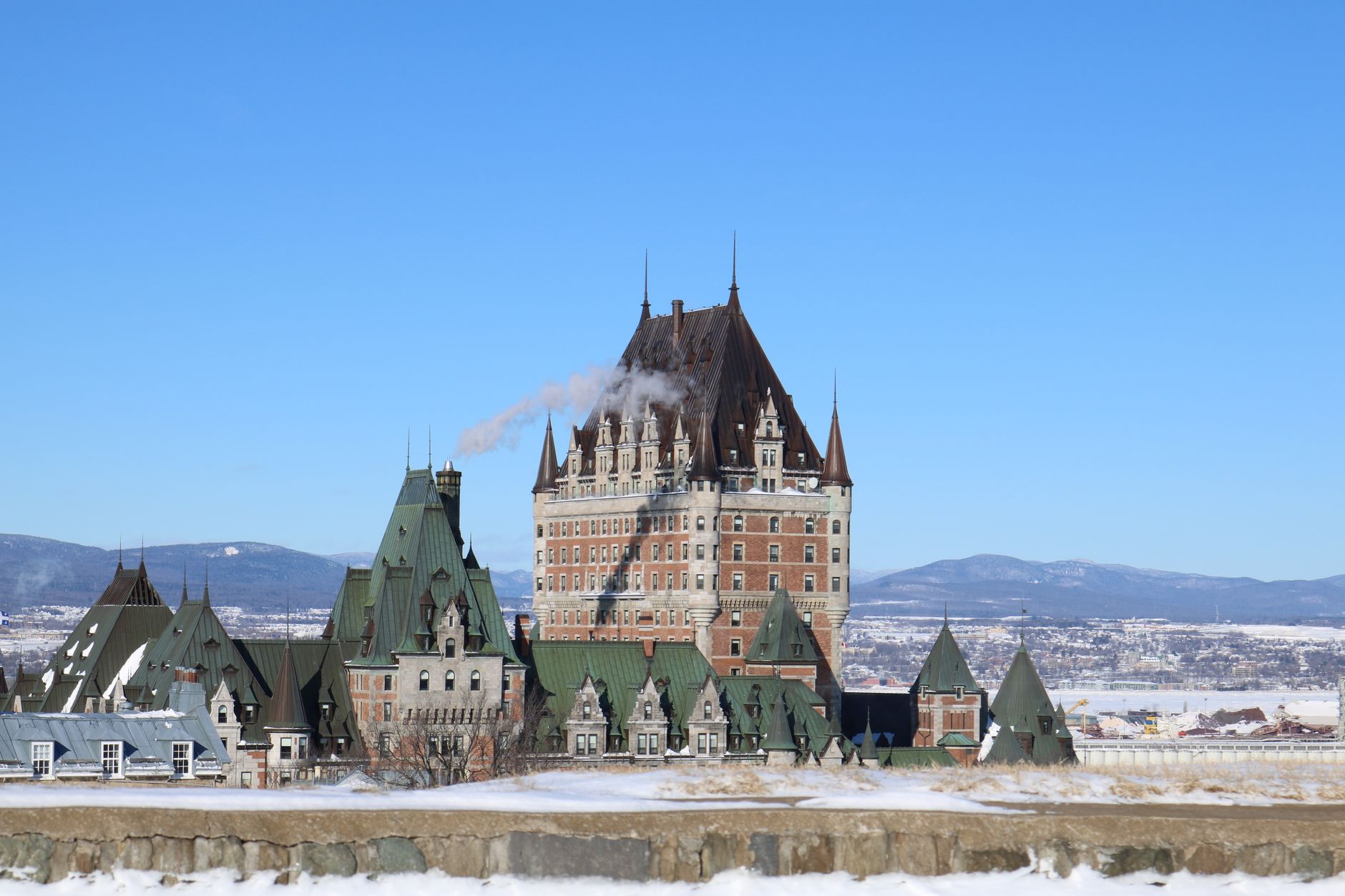
Walk Old Quebec under the snow, skate, and stay a night in an ice hotel if you want the full experience. Winter tyres are required by law in Quebec from 1 December, which matters if you rent a car. The rest of the country is in our Canada guide.
13. Swedish Lapland, Sweden
Swedish Lapland is aurora country, with the darkest and most reliable nights from November to March. Abisko sits in a rain shadow that gives it more clear nights than almost anywhere else in Nordic Europe, which makes it the smart choice for the lights.

Visit the Icehotel, rebuilt from ice every winter, try a traditional Sámi meal by the fire, and stay in a glass cabin if the budget allows. Kiruna is the gateway town. Pack proper boots and thermal layers: this is the far north. See our Sweden guide.
14. Venice, Italy
Venice isn't the first city you'd think of for winter, but January is when it's emptiest and most itself: cold, foggy and quiet, with the shortest queues of the year. Carnival fills it for the two weeks before Lent, which in 2027 means the run up to 9 February.

A gondola costs a fixed €90 for 30 minutes by day or €110 after 7 pm, per boat rather than per person. The Doge's Palace is €30 if you book 30 or more days ahead and €35 inside that. Acqua alta (high water) runs roughly October to January, so bring waterproof shoes. Winter is also the best time for its museums, and we've picked the best museums in Venice. The day-tripper access fee isn't in force now; check the city's site for 2027 before a Carnival day trip. More in our Venice guide.
15. Chamonix, France
Chamonix sits under Mont Blanc, the highest mountain in Western Europe, and hosted the very first Winter Olympics in 1924. It's the choice for serious skiers and snowboarders, with the ski season running from December to March.
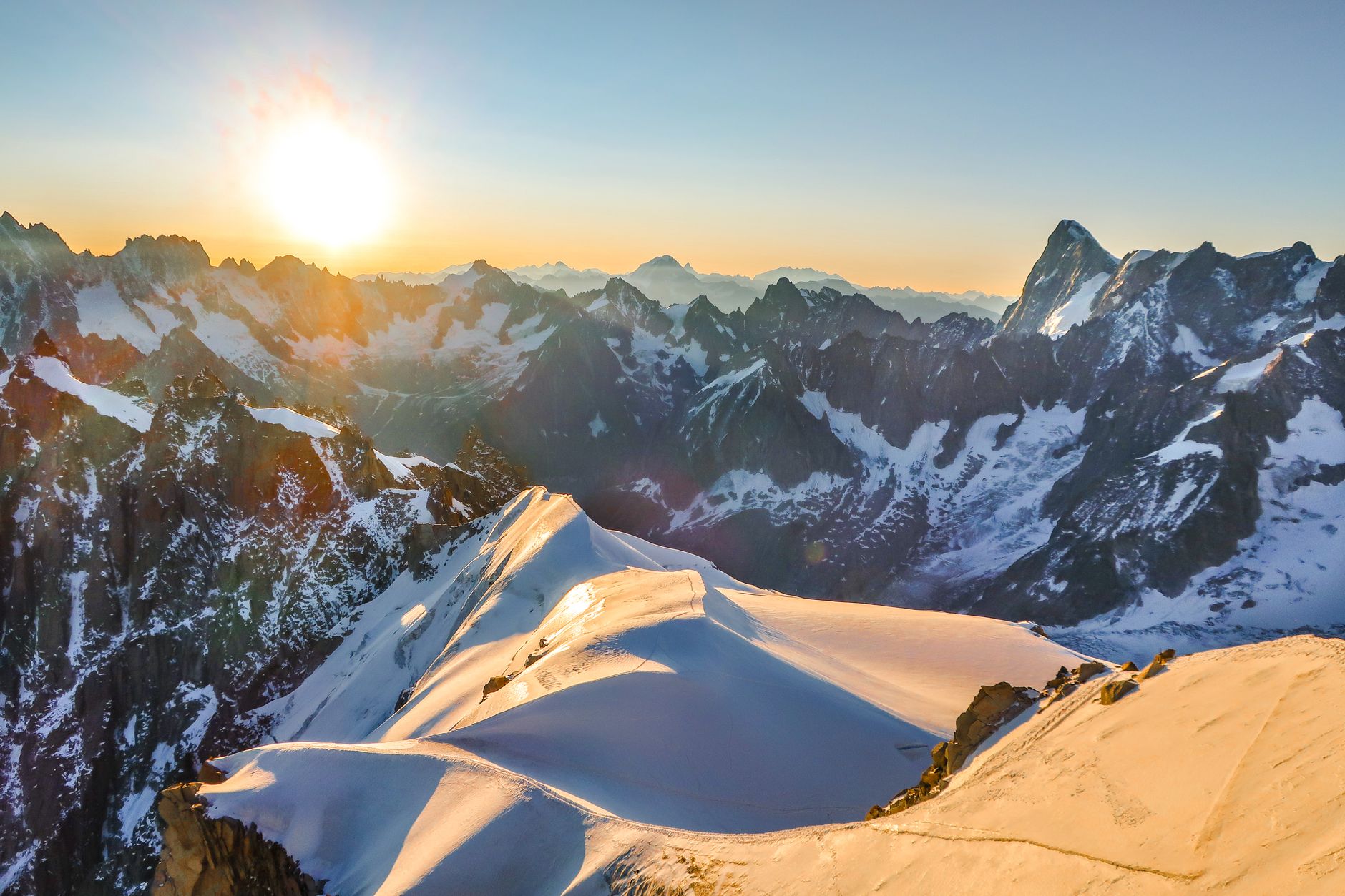
Ski or ride at Les Grands Montets or Brévent-Flégère, take the Aiguille du Midi cable car for the view of Mont Blanc, or try ice climbing or snowshoeing in the forest. Geneva is the practical airport, about 1 hour 30 by train or shared shuttle. Book beds and passes well ahead for February. More on the Alps in our France guide.
16. Budapest, Hungary
Budapest is made for winter because of its baths: the outdoor pools at Széchenyi stay open and steaming all season, even under snow. A day ticket with a locker costs about €33 (HUF 13,200), or €26 (HUF 10,500) if you go in before 9 am.

In December the Christmas market on Vörösmarty Square takes over, and the stalls smell of kürtőskalács, the spit-roasted chimney cake. For the other big bath, Gellért is the art nouveau one. Winter is the cheapest season here, and three nights gives you time for a slow bath morning. See Budapest for the rest.
17. Seoul, South Korea
Seoul in winter is cold and clear rather than grey, and it's the low season for prices. It is properly cold, below freezing for weeks at a time, so pack thermals.

Visit Gyeongbokgung Palace, which looks just as good under a bare January sky as in spring, and try street food like hotteok (sweet pancakes) and bungeoppang (fish-shaped pastries with red bean). Spend an evening in a jjimjilbang, the 24-hour bathhouse, which every guide calls a must and is perfect on a freezing night. Get around by subway on a Climate Card, from €3 (₩5,000) for a day to €12.60 (₩20,000) for seven. Our Seoul guide has the rest.
18. Interlaken, Switzerland
Interlaken sits between two lakes below the Eiger, Mönch and Jungfrau, and the train to the Jungfraujoch runs all year. Be aware that the town itself is quiet in winter: the ski traffic goes up the valley to Grindelwald and Wengen, and most travellers who plan a Swiss ski trip with Stippl head for Zermatt instead.
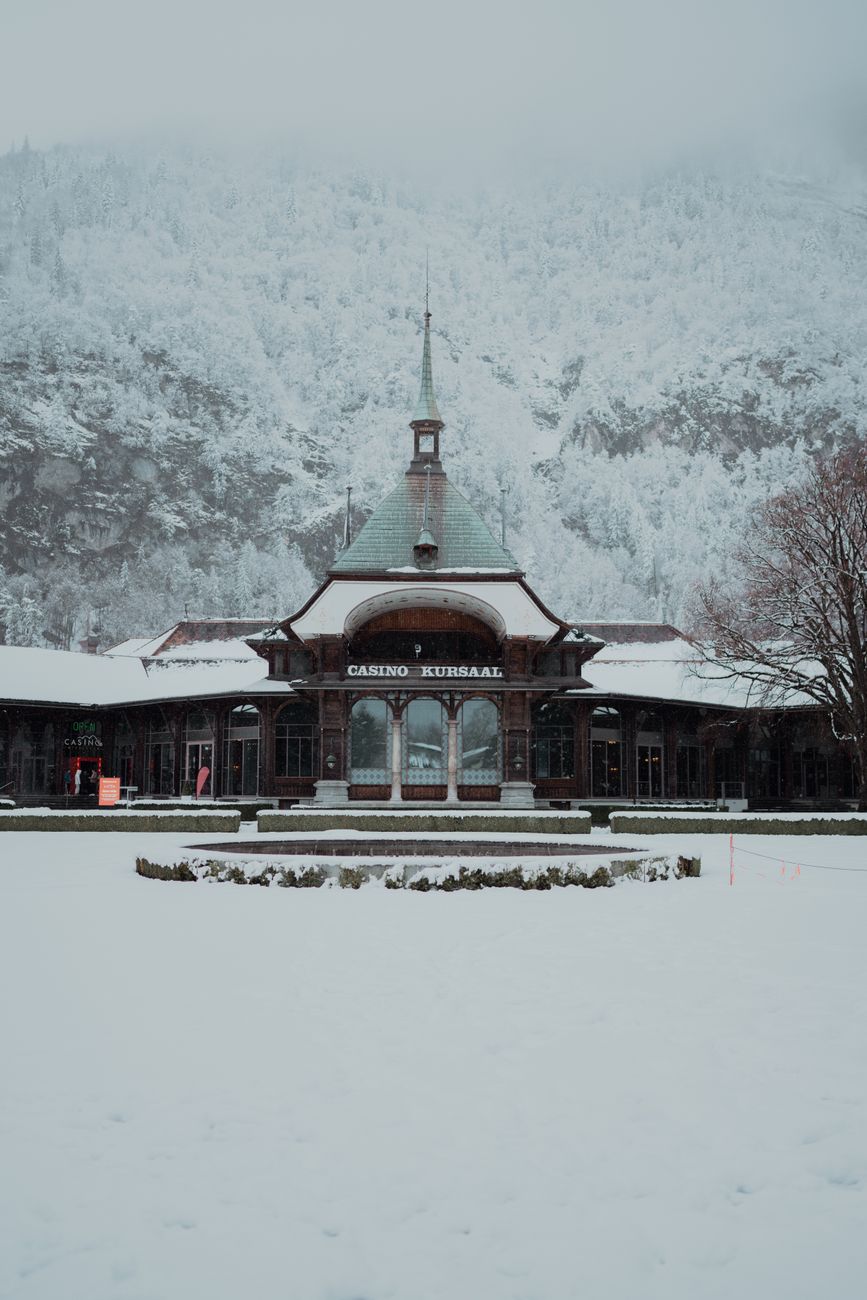
So treat it as a gateway rather than a ski base: ride up to the snow, go snowshoeing, and eat fondue one street back from the Höheweg, where the prices are better. Budget from about €85 (CHF 80) a day before any mountain ticket. More in our Interlaken guide.
19. Edinburgh, Scotland
Edinburgh is a brilliant winter city break: the Christmas market fills the gardens below the castle, and on 31 December the city throws Hogmanay, Scotland's famous New Year's Eve party.

Visit Edinburgh Castle (€27.40 or £23.50 booked online), and fill the rest of the day with the national museums, which are mostly free. December averages around 7°C with plenty of rain, so bring a waterproof. Most travellers stay two or three nights, and the city is also the natural start of a Highlands trip. Read more in our Edinburgh guide.
20. Granada, Spain
Granada is the one city in Spain where you can ski and see the sea on the same day. The Sierra Nevada, Europe's southernmost ski resort, is 45 minutes to an hour away by ski bus, and its season runs roughly from late November to late April.

From December to February days reach 13 to 15°C and most nights bring frost, but the Alhambra is at its quietest. A full ticket including the Nasrid Palaces costs €22.27. Watch sunset from the Mirador de San Nicolás, with the palace in front of the snowy peaks, then go for tapas: a free plate still arrives with every drink here.
Two nights is the classic stay, three if you add a ski day. See our Granada guide.
The best winter destination for each month
The best winter destination depends a lot on when you can travel. Here's how the season plays out across this list.
December is for Christmas markets and polar night. Prague, Salzburg, Budapest and Edinburgh are at their most festive, and Tromsø sits in the blue light of the polar night. Book early: it's the busiest winter month almost everywhere.
January is the quiet month. Venice and Kyoto are at their emptiest, the Alps are in full ski season after New Year week, and in Tromsø the sun comes back on 21 January.
February is festival month: the Carnaval de Québec, the Venice Carnival and the height of the ski season. Kyoto is at its quietest, and the aurora is still at its peak in Lapland.
March is the connoisseur's pick for the north. Nights are still dark enough for the aurora, the days are long enough to use, and the snow in Lapland is at its deepest.
Embrace the chill
Snow, northern lights, markets or an empty Venice: choose the winter you want and the list gets short fast. Ready to plan it? Build your winter trip in Stippl, with every stop, booking and budget in one place.
Frequently asked questions about Top 20 Best Winter Destinations for 2026/2027
It depends on the trip. For the northern lights, Tromsø or Rovaniemi. For skiing, Zermatt or Whistler. For Christmas markets, Prague or Salzburg. For a famous city without the crowds, Venice or Kyoto in January.
For snow, Zermatt, which has skiing every day of the year on its glacier. For a winter city break, Prague in December for the markets or Budapest for its outdoor thermal pools, which stay open in the snow.
Tromsø, Swedish Lapland (Abisko especially), Finnish Lapland around Rovaniemi and Reykjavík. November to February is the darkest stretch, and March combines dark nights with longer days.
Kyoto, Seoul and Budapest are at their cheapest in winter, and Venice in January costs far less than in summer. The Nordic aurora towns and the big ski resorts are the most expensive, because winter is their high season.
As early as you can for December, Carnival week in Venice and February half-term in the Alps. Beds in Tromsø and ski villages go first. January, outside New Year week, is the easiest month to book late.
Save these to your trip in Stippl and they are on your map before you land.