
Plan Australia in Stippl
Day-by-day planning, stays and budget in one app, with every place from this guide already on the map.
Download the appThe best day trips from Sydney at a glance
Eight trips, sorted by how far you have to go. Times are from Central unless the trip only works by car.
| Where | How | Time from Sydney | What it costs |
|---|---|---|---|
| Royal National Park | Train | 45 min | Opal fare, capped |
| Ku-ring-gai Chase and Cowan | Train | About 1 h | Opal fare, capped |
| Palm Beach and the northern beaches | Ferry then bus 199 | About 1 h 30 from the city | Opal fare, capped |
| Wollongong | Train | 1 h 30 | Opal fare, capped |
| Blue Mountains (Katoomba) | Train | About 2 h | Opal fare, capped, plus Scenic World |
| Hunter Valley | Car or a booked tour | About 2 h | Fuel or tour price |
| Newcastle | Train | About 2 h 30 | Opal fare, capped |
| Jervis Bay | Car | Around 3 h | Fuel, and see the note below |
What a day trip from Sydney actually costs
This is the part the lists leave out, and in Sydney it is the part that decides your day.
Every train, metro, light rail, bus and ferry in the network takes a tap on and tap off with any contactless bank card or an Opal card, and the fares are capped. The daily cap is €11.98 (A$19.30). From Friday to Sunday it drops to €5.99 (A$9.65), and that cap covers the whole day across every mode, according to Transport for NSW.
Read that again with a map in front of you. A return train to Katoomba, two hours each way into the mountains, costs the same on a Saturday as three stops to Newtown. So does Wollongong. So does Newcastle. The weekend cap is the reason a Sydney day trip is one of the cheapest good days out of any big city, and it is why six of the eight trips below have "Opal fare, capped" in the cost column rather than a number.
Two things sit outside it. The airport line carries a station access fee of €11.55 (A$18.61) each way on top of the fare, and that fee is outside the caps, so an airport hop is never part of a capped day. And the long-distance XPT, the train that runs north towards Casino and south towards Melbourne, is outside the Opal network entirely: book it ahead, and expect no wifi and no sockets.
1. The Blue Mountains
The one everybody does, and the one worth doing properly. Katoomba is about two hours from Central on the Blue Mountains line, which puts an eight hundred metre escarpment, hanging valleys and eucalypt forest inside a normal day out.
Echo Point is where you stand for the Three Sisters, and it is busy for good reason. Scenic World, a short walk from it, runs a railway down the cliff at a 52 degree incline, which is the steepest passenger railway anywhere and a genuinely startling ninety seconds.
The thing to get right is what you do with the middle of the day. If you take a tour, take one that actually walks: plenty of them shuttle between lookouts, and the mountains are a hiking place that happens to have lookouts. If you go independently, a hop-on-hop-off bus runs at the Katoomba end and connects the trailheads.
Come prepared, because this is the one trip on the list where people get caught out. Phone coverage on the tracks is patchy to absent, the trails empty quickly once you are off the paved lookouts, and the weather at the top is a different weather from the one you left at Central. Carry water, take a layer, and do not go alone on the longer descents.
Here is the number that made us write this article rather than a Sydney city guide. When travellers plan Sydney with Stippl and add somewhere else to the same trip, the Blue Mountains stands out further from what chance alone would predict than any other place in the country, ahead of Brisbane, Byron Bay and Melbourne. It is also the only place near the top of that list that is a day trip rather than another stop on the east coast run. People come to Sydney and go up the mountains, and they have been doing it long enough for it to show in the data.
2. The Royal National Park
Forty-five minutes on the train, and the second oldest national park in the world. That is a very good ratio.
The Royal is a coast park: heath on top, sandstone cliffs, small beaches at the bottom of steep tracks, and a clifftop walk running the length of it. From May to November, humpbacks pass close enough to watch from the cliffs, which is the same whale season you get from the Sydney headlands but with far fewer people at the railing.
One honest warning, because the guides tend to skip it. The cliff edges here are real and mostly unfenced, and Wedding Cake Rock in particular has a closure history that its photographs never mention. Stay on the path, keep back from edges, and treat the fences that do exist as advice worth taking.
If you want a beach day rather than a walking day, the park's coves are quiet and largely unpatrolled. Patrols on New South Wales ocean beaches run from late September to late April, and an unpatrolled beach is not a safe beach, whatever the water looks like.
3. Ku-ring-gai Chase and the Cowan tracks
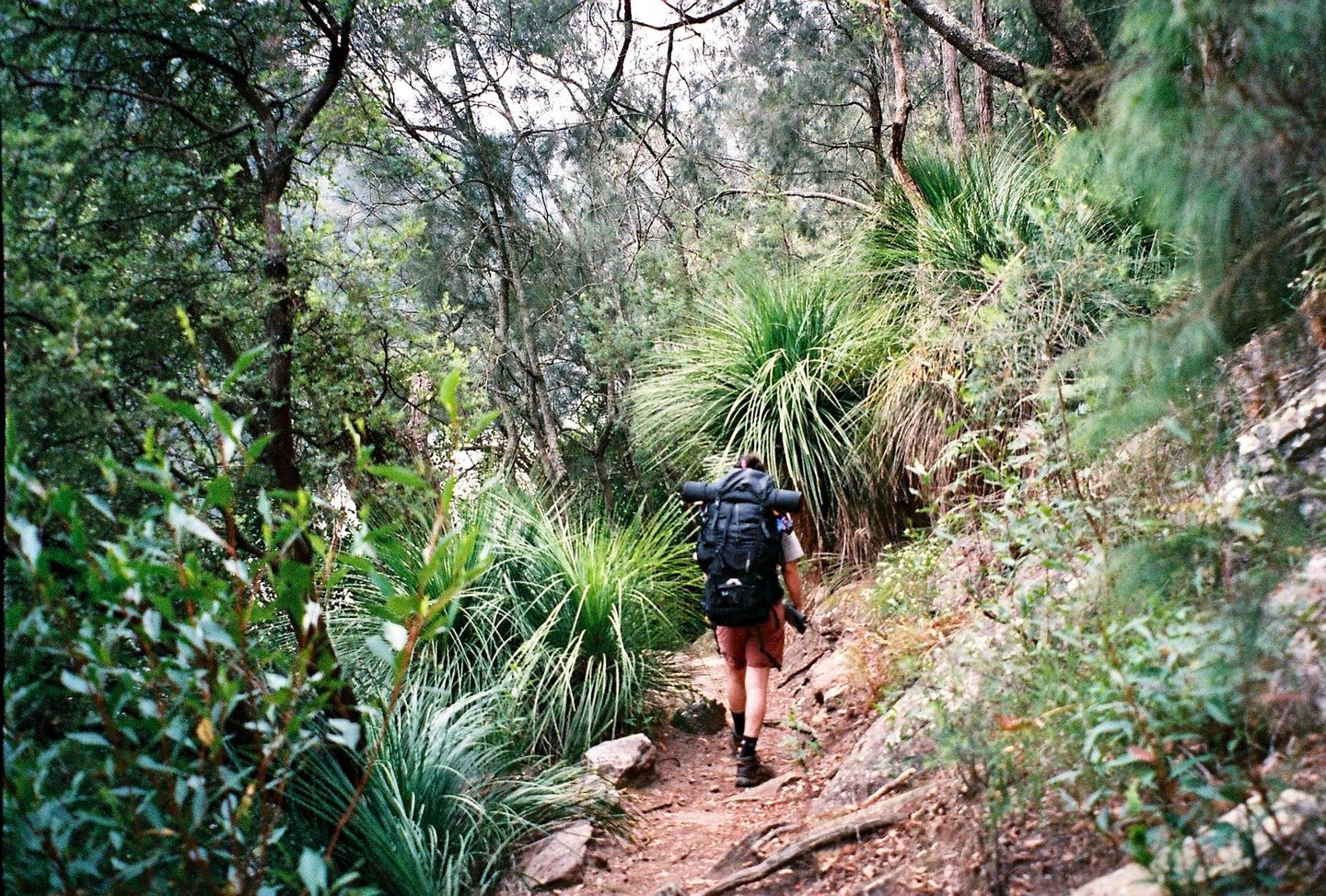
North of the harbour, the northern line runs straight into bushland, and small stations like Cowan drop you at a trailhead with nothing else around. This is the day trip for someone who wants a walk and does not want a car park, a queue or a lookout with a coach beside it.
It is the least famous trip on this list and the one locals use most, which is usually a good sign. Go in the morning, take more water than you think, and check when the trains back run before you commit to a long loop.
4. Wollongong
An hour and a half down the line, and a proper city rather than a village with a view: beaches, a working harbour, and the escarpment running behind the whole thing so you get bush and coast in the same afternoon.
Wollongong is the trip to pick when you want a swim, a long lunch and a train nap rather than a hike. It also works in winter, when the mountains are cold and the coast south of Sydney is merely mild.
5. Palm Beach and the northern beaches

Not a day trip out of the city so much as a day trip along it, and the best value ride in Sydney. Take the F1 ferry to Manly, which runs about thirty minutes on a fare of roughly €5.60 (A$9) and does half the sightseeing for you, then pick up the 199 bus at the wharf. It runs the length of the northern beaches to Palm Beach in about an hour, past Mona Vale, Newport and Avalon.
Get off wherever the water looks right. The beaches thin out the further north you go, and the whole run sits inside the same capped Opal day as everything else here.
Describe your trip, get a Sydney itinerary in seconds
Everything in this guide is already in Stippl. Tell the planner how long you have and what you like: it builds the route, the days and the travel times, and you edit whatever you want.
6. The Hunter Valley

Australia's big wine regions are nearly all day-trippable from the nearest city, and the Hunter is Sydney's. About two hours north, vineyards and cellar doors, and a completely different pace from anything else on this list.
Getting there is the catch, and it is the reason the Hunter sits sixth rather than second. The easy rail day trips out of Sydney are Katoomba, Newcastle, the Royal National Park and Wollongong. The vineyards are not one of them, so this is a car day or a booked tour day, and if the tastings are the point then it needs to be somebody else driving. A tour costs real money where the six capped trips above cost about six euros, which is a fair trade for a day that ends in a glass of semillon rather than at a station.
7. Newcastle
Two and a half hours is the longest rail run here, and it still comes in under the weekend cap, which is the only reason it belongs on a day-trip list at all rather than a weekend-away one.
What you get is a coastal city with a real centre, beaches inside walking distance of the station, and none of the day-tripper density of the mountains. Go early, because the return leg is the same two and a half hours and the light on the coast at the end of the day is the best part.
8. Jervis Bay
The one on this list we would talk you out of doing in a day, and it is worth saying why rather than leaving it off.
Jervis Bay is around three hours south by car, and the white sand it is famous for is genuinely as good as the photographs. But in our own suggested routes down the New South Wales south coast, Jervis Bay gets two nights, not an afternoon. Six hours of driving for a few hours on a beach is a long day to end up with a shorter swim than you would get at the Royal National Park in forty-five minutes.
Do it as an overnight if you can. If you cannot, leave before dawn, and accept that the drive is part of the trip rather than a tax on it.
Which day trip from Sydney should you pick?
Eight is a lot of choice for one weekend, so:
- No car, and you want the classic. The Blue Mountains, on a Saturday, for about six euros. Book nothing, take a jumper.
- No car, and you want a swim. The Royal National Park at forty-five minutes, or the 199 bus up the northern beaches for the longer, lazier version.
- You want a walk with nobody on it. Cowan and the Ku-ring-gai tracks, on the northern line.
- You want a long lunch. The Hunter Valley with a designated driver, or Wollongong if you would rather keep it cheap and take the train.
- With kids. Wollongong or the northern beaches: short travel, sand, patrolled water in summer, and a train that keeps everyone entertained.
- You have a whole weekend. Jervis Bay overnight, and stop feeling guilty about the three hour drive.
Whatever you pick, two rules travel with you. Swim between the red and yellow flags and nowhere else, and put sunscreen on before you leave, because the summer UV index in Sydney reaches 13 and people burn here on cool days.
Frequently asked questions about Australia
The Blue Mountains, for most people and on a first go: two hours by train from Central, no car needed, and the widest range of things to do once you arrive. If you would rather have a beach than a lookout, the Royal National Park at forty-five minutes is the better answer.
Yes, and this is Sydney's real advantage. Six of the eight trips above run on the train and ferry network: the Royal National Park, Ku-ring-gai Chase, the northern beaches, Wollongong, the Blue Mountains and Newcastle. Only the Hunter Valley and Jervis Bay need a car or a tour.
The daily cap is €11.98 (A$19.30), and from Friday to Sunday it falls to €5.99 (A$9.65) across trains, buses, ferries, metro and light rail combined. The distance makes no difference once you have hit the cap, so Katoomba and Newcastle cost the same as a trip across town.
About two hours from Central to Katoomba by train, or a similar drive without traffic. Leave by about 8 am if you want a walk in the middle of the day rather than a rushed lookout stop.
The coast trips work best from about October to April, when the ocean is swimmable and beach patrols are running. The Blue Mountains are better in the cooler half of the year, when the walking is comfortable, and from May to November the whales are passing the Royal National Park's cliffs.
Sydney is a city with a very good back door, and the weekend fare cap means using it costs about the same as staying home. Pick two of these, put them at either end of a weekend, and drop the stops into a Stippl trip so the timings, the train legs and the walk lengths are all in one place before you leave. If you would rather have it built for you, describe the weekend you want to the AI trip planner and adjust from there. It is free.