
Geneva
Geneva is the one Swiss city where the United Nations, the Red Cross and CERN all open their doors to visitors. Your bed comes with free trams, and the lake steamers leave for Lausanne and Montreux.
Geneva in a nutshell
Geneva: what to expect
Geneva's figures below sit inside 104,000+ stops planned across Switzerland on Stippl.
Geneva sits at the western tip of Lake Geneva, where the Rhône flows out of it, with France on three sides. The French border is a tram ride from the centre, and the city fits the Jet d'Eau, the old town around Cathédrale Saint-Pierre and the Place du Bourg-de-Four, the Palais des Nations, the Red Cross museum and CERN into a day or two. Most travellers give Geneva 1 night on Stippl.
For most of the people who go, Geneva is the door into Switzerland. 71.8% of the Geneva trips planned on Stippl begin there, and 43.5% carry no other Swiss stop at all, so for many travellers the city is the whole of their Switzerland. The winter holds up too: 23.2% of Geneva trips start between December and March.
Give Geneva one full day, or two if you want the UN or CERN, and use it as the start of the lake. Both visits book out weeks ahead, and the Palais des Nations tour needs a passport. Every registered bed comes with a free transport card, and the trains and CGN steamers run along the shore to Lausanne, the Lavaux vineyards and Montreux. Skip Geneva if your first Swiss trip is about Alpine postcards; Lucerne and Interlaken put the lakes and the mountains together.
Plan Geneva in Stippl
Day-by-day planning, stays and budget in one app, with every place from this guide already on the map.
Download the appWho Geneva is for
Anyone with one night
Most travellers give Geneva 1 night on Stippl, and a compact centre with free trams makes one evening and one morning go a long way.
Followers of world affairs
The Palais des Nations, the International Red Cross and Red Crescent Museum and CERN are all open to visitors, and all in one city.
Lake and day-trip travellers
Chamonix and Mont Blanc are a day trip, and the train reaches Lausanne in half an hour, with the Lavaux vineyards and Montreux further along the shore.
Winter visitors
Geneva keeps working in February in a way Interlaken does not, with the Escalade festival in December and the ski resorts to the south within reach.
Museum-goers on a budget
The permanent collections of the Art and History Museum and the Botanical Gardens are free, and CERN's visits cost nothing either.
Maybe not for you: first-timers after the classic Swiss postcard, since lakes and mountains together are what Lucerne and Interlaken do; and anyone counting every franc, because a bed in Geneva costs more than in most Swiss stops.
The best time to visit Geneva
Summer
June to September
The lake baths open, the steamers run their full timetable and the terraces fill. July is the warmest and driest month, and September has the same weather with more room.
Conference season
March to May and September to November
Hotel prices follow the congress and summit calendar rather than the weather, so a quiet-looking week can price like July. Check the room rate before assuming the shoulder is cheap.
Winter
December to February
Cold and often grey, but fully open, with the Escalade in December and the ski resorts to the south within reach. The museums and markets keep running all season.
- Geneva's planning year peaks in early summer, and its winter holds up. 46.5% of Geneva trips on Stippl start between June and August and 23.2% between December and March, a stronger winter than the mountain stops get.
- Check the Jet d'Eau before you promise it. The fountain shuts for its annual maintenance in late autumn or early winter, and the window moves from year to year, so a November or December visit may find the lake without it.
- Book the UN tour and CERN before the trip. Both are free or cheap and both fill weeks out, and the Palais des Nations tour needs a passport on the day, so a same-week plan usually misses one of them.
Add your Geneva dates and we'll flag the weather
Stippl shows the season, crowds and prices for every stop on your route.
Describe your trip, get a Geneva itinerary in seconds
Everything in this guide is already in Stippl. Tell the planner how long you have and what you like: it builds the route, the days and the travel times, and you edit whatever you want.
Things to do in Geneva
The Jet d'Eau from the pier
Walk out along the pier to the foot of the fountain, which throws water about 140 m into the air, close enough to be rained on. It stops for maintenance for a few weeks each late autumn.
The Palais des Nations tour
The guided tour is the only way inside the United Nations Office in Geneva. Bring a passport and book weeks ahead, because the tours fill early.
The Red Cross museum
The International Red Cross and Red Crescent Museum is the most substantial museum in the city, and it sits in the International Quarter with the UN, so the two fit one morning.
Cathédrale Saint-Pierre's tower
Climb the north tower of the twelfth-century cathedral for the view over the old town's roofs and the lake, then walk down to the Place du Bourg-de-Four, the oldest square in the city.
A paddle steamer on the lake
Take a CGN paddle steamer along the lake to Yvoire or Lausanne, and use the small yellow Mouettes to cross the harbour on the city ticket.
A visit to CERN
The particle physics laboratory on the French border runs free visits on the edge of the city. They book out weeks ahead, so reserve before the trip rather than on arrival.
The neighbourhoods of Geneva
Pâquis
Lakeside, cosmopolitan, loud after dark
The quarter by the station with more affordable restaurants than anywhere else in the centre, and the Bains des Pâquis lake bath at the end of the street. For budget stays and food-first travellers.
The cheapest central beds and food, and a red-light reputation after dark.
Carouge
Low houses, courtyards and bars
The Sardinian-built quarter south of the Arve, with courtyards, markets and the city's bar quarter, fifteen minutes from the centre by tram. For food lovers and longer stays.
Character and better value, and a tram ride to the lake.
Vieille Ville
Cobbled, sober, on the hill
The oldest part of the city, with the cathedral, the Place du Bourg-de-Four and the Reformation Wall all within ten minutes on foot. For history lovers and first visits on foot.
The history on the doorstep, and the dearest rooms in Geneva.
Eaux-Vives
Residential, green, by the water
The east bank beside the Jet d'Eau, the English Garden and the flower clock, and a quieter stay than the centre. For families and anyone who wants the lake without the crowd.
Calm and close to the water, but a longer walk to the station.
Nations
Diplomatic, orderly, leafy
The international quarter around the UN, the Red Cross museum and the missions, and a genuine second centre of the city. For first-timers who came for the UN and the Red Cross museum.
The UN on foot, and a quarter that is functional rather than pretty.
See every Geneva neighbourhood on one map
Save the areas you like and Stippl plots your days so you're not crossing the city twice.
Where to stay in Geneva
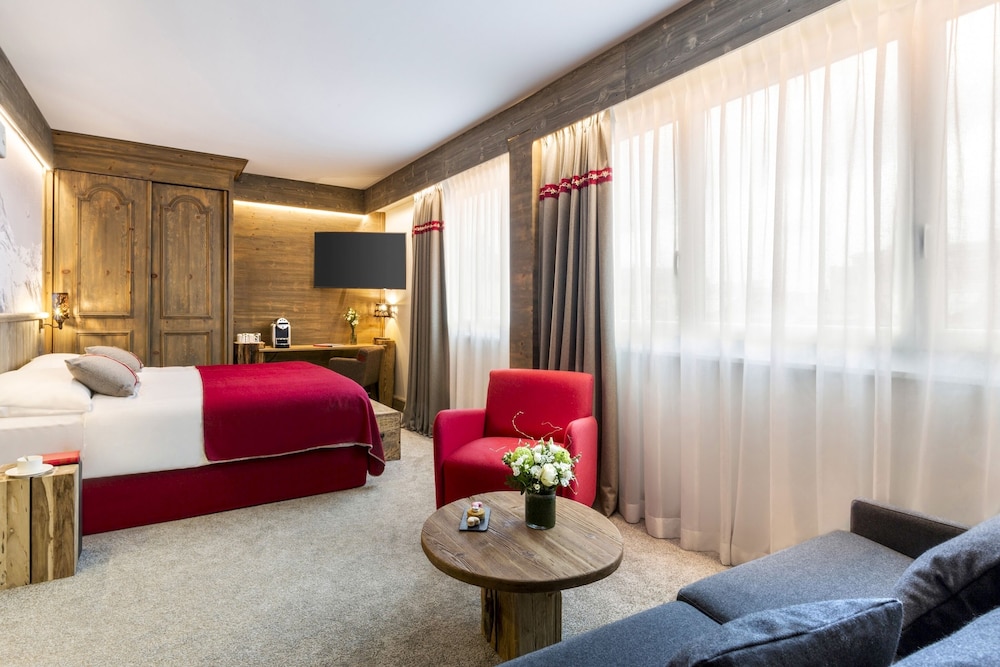
Stay in Pâquis for a first visit: it is next to the station, has the cheapest central beds and the best-value food, and every registered bed in Geneva comes with a free transport card, so staying further out costs nothing extra to get around. Most travellers give Geneva 1 night on Stippl. Prices follow the congress calendar rather than the season, so a February week can cost like July.
Pâquis
CHF 130–250
Hostels and simple city hotels near the station, dorm beds from about €64 and doubles €140 to €260 a night.
Carouge
CHF 150–280
Small hotels and apartments in the old Sardinian streets, €160 to €300 a night, with the tram into the centre.
Vieille Ville
CHF 200–380
Boutique rooms in historic buildings on the hill, €210 to €400 a night, the highest band in the city.
Eaux-Vives
CHF 180–320
Residential hotels and apartments near the park and the lake, €190 to €340 a night.
Nations
CHF 170–300
Business hotels that follow the diplomatic calendar, €180 to €320 a night, busiest in conference weeks.


What to eat in Geneva
A coarse pork and fennel sausage, the canton's own charcuterie
Half Gruyère, half Vacherin, the local mix
Lake perch fillets, fried, the standard lakeside plate
A thistle relative eaten at Christmas, claimed by Geneva
A chocolate cauldron smashed at the December festival
Hazelnut pralines from a Geneva chocolate house of 1826
A public bathing pier serving fondue in the cold months
Discover food spots in Stippl
Find restaurants and markets on the map, save them to your itinerary, works offline too.
Geneva customs and what not to do
Bonjour comes first
Walking into a shop or up to a counter without a bonjour reads as rude here, in a way it does not in German-speaking Switzerland.
French hours, not Zurich's
Greetings are more formal and lunch runs longer in the French-speaking half of the country, so the Zurich clock is not the local one.
International, not touristic
A large share of the people around you live and work here on foreign passports, and English is a working language across the city.
Sunday is closed
Shops shut on Sundays in Geneva as in the rest of Switzerland; the station and the airport are the exceptions, so do the shopping on Saturday.
Do
- Greet with bonjour before you ask for anything
- Ask for the free transport card at check-in
- Book the UN tour and CERN weeks ahead
- Check your ticket zone before a tram crosses into France
Don't
- Pay in euros if you can avoid it; the change comes back in francs at a poor rate
- Carry goods over the allowance back across the French border; there are customs checks
- Leave a bag open at the station, in Pâquis at night or on the summer lakefront
- Plan a Sunday shopping day; only the station and the airport stay open
What a Geneva trip costs
Budget
€100
A hostel dorm, takeaway meals and the free transport card that comes with the bed.
Mid-range
€159–255
A three-star double, a main course at dinner, and the lake and the old town on foot and by tram.
High-end
from €565
A top hotel, restaurant dinners and a day pass for anywhere the card does not reach.
Track what you actually spend
Set a daily budget per country and log expenses in any currency while you travel.
Fun facts about Geneva
The Botanical Gardens hold more than six million herbarium samples. That makes Geneva's herbarium one of the largest in the world, while the garden around it is free to walk.
Geneva still celebrates a battle it won in 1602. The Escalade marks the night Savoy's troops failed to take the city, and in the telling the defenders poured soup on the attackers.
The cardon is the one vegetable Geneva claims as its own. A relative of the thistle, it is eaten at Christmas and turns up on December menus across the canton.
The Reformation Wall in the Parc des Bastions remembers Calvin's Geneva. The city's Protestant history is the reason the old town on the hill looks as sober as it does.
The canton of Geneva has a charcuterie of its own, the longeole. It is a coarse pork and fennel sausage, and it still appears on the traditional bistro menus in the city.
Local tips for Geneva
Take the free airport ticket
A machine in the baggage hall issues a free 80-minute public transport ticket, and the train reaches the main station in six minutes.
Ask for the transport card
Every registered night comes with a free Geneva Transport Card covering zone 10 for the whole stay, and some hotels wait to be asked at check-in.
Mind the zone into France
The trams run across the French border, so check which zone your ticket or card covers before you ride past the last Swiss stop.
Cross the harbour by Mouette
The small yellow Mouettes boats cross the harbour as part of the city network, so the same ticket covers the crossing and the trams.
Keep your bag closed
Geneva is a low-crime city, and the pickpockets work the station, Pâquis at night and the summer crowds along the lakefront.
How long to stay
Most people give Geneva 1 night on Stippl: one full day covers the old town and the lake, and a second adds the UN or CERN.
Geneva questions, answered
Geneva is in the far west of Switzerland, at the western tip of Lake Geneva where the Rhône flows out of it. France surrounds the city on three sides and the border is a tram ride from the centre, which is why Geneva feels French: the language, the food and the pace are closer to Lyon than to Zurich.
Geneva is worth one night for most people, and 1 night is what travellers usually give it on Stippl. One full day covers the old town, the lake and the Jet d'Eau, and a second day buys the Palais des Nations tour or a visit to CERN, both of which book out weeks ahead.
Geneva is where most of its visitors start: 71.8% of the Geneva trips planned on Stippl begin there. The airport is six minutes from the main station by train, and from Geneva the line runs along the lake to Lausanne and on to Bern, or to Zermatt with one change at Visp.
For many travellers Geneva is the whole of their Switzerland: 43.5% of the Geneva trips people build on Stippl carry no other Swiss stop. With a day more, Lausanne, the Lavaux vineyards and Montreux along the shore are the natural addition, and Chamonix is a day trip over the border.
Put Geneva at one end of the route, since it is a door rather than a middle stop. Lay out Geneva, the lake shore and one mountain base in Stippl and check what the days allow. Then show the route to people who have been, in subreddits like r/Switzerland, and say how you travel when you ask.
Public transport in Geneva is free for anyone staying the night in registered accommodation. The Geneva Transport Card comes with the bed, covers the whole of zone 10 for the length of the stay and is handed over at check-in, and arriving travellers get a free 80-minute ticket from a machine in the airport's baggage hall.
Every guide is written by the Stippl editors and checked against the trips our travellers actually plan. Spotted something out of date? Let us know.

Plan Geneva in Stippl
Day-by-day planning, stays and budget in one app, with every place from this guide already on the map.
Download the app