
Sigiriya
Sigiriya is the site every Sri Lanka itinerary is built around, 1,200 steps up a rock to a palace with a pool on top, and the base for the whole cultural triangle. Pidurangala opposite gives the view of it.
Sigiriya in a nutshell
Sigiriya: what to expect
This is what 253,000+ planned stops in Sri Lanka on Stippl say about Sigiriya.
Sigiriya is a granite plug standing two hundred metres out of flat dry-zone jungle, with a fifth-century royal citadel on top of it. King Kassapa built it after taking the throne from his father. The site is a sequence rather than a summit: water gardens and moats, then boulder gardens, then the frescoes up a caged spiral stair, then the mirror wall carrying graffiti a thousand years old, then the lion's paws and the last climb. Pidurangala, a kilometre and a half north, is where you stand to look at it.
Nowhere else on the island do travellers commit to sleeping the way they do here. Under three stops in a hundred here carry no night, against one in ten across the country, and even the shorter quarter of stays runs two nights, which is true of nowhere else on the loop. Dambulla, twenty kilometres away and sold as the same day out, is not a pair with it: people log the rock they slept under.
Climb at first light, and stay 2 nights so that you can. The heat and the crowds both arrive by nine, and the whole site takes two to three hours. Dambulla's cave temples and Polonnaruwa's ruined capital fill the second day, and the elephant gathering at Minneriya and Kaudulla runs through the back half of the year. Skip the climb if you have vertigo, because the fresco stair is an enclosed spiral and it usually has a queue on it.
Plan Sigiriya in Stippl
Day-by-day planning, stays and budget in one app, with every place from this guide already on the map.
Download the appWho Sigiriya is for
First-timers and historians
Sigiriya is the single site every Sri Lanka itinerary is built around, and most people give it 2 nights.
Cultural-triangle travellers
Polonnaruwa, Anuradhapura and Dambulla are all inside 90 minutes, so Sigiriya is the base for the whole triangle.
Families
The climb of 1,200 steps in the heat is real and the spiral stair is enclosed, so it works with older children and not with toddlers.
Wildlife travellers
The Minneriya and Kaudulla elephant gathering in the second half of the year is a short drive away.
Maybe not for you: anyone with vertigo, since the frescoes stair is a caged spiral often with a queue on it; and anyone expecting the rock to be cheap, because Sigiriya alone is €30 while Pidurangala next door is a tenth of that.
The best time to visit Sigiriya
The peak
January to March
Dry, cooler, and the busiest the site gets.
The hot inter-monsoon
April and May
Thirty-five degrees and the first rain: the least comfortable climb of the year.
The dry-zone summer
June to August
The driest months and the elephant gathering. Hot, clear and quieter than January.
The second inter-monsoon
October to December
The wet half, with November the wettest month of the year.
- The elephant gathering is a season, not a festival. Hundreds of elephants concentrate at Minneriya from about July to October and shift to Kaudulla from September; the operators switch parks, so book the safari by month, not by park.
- Sigiriya is planned about 69 days ahead on Stippl, and 14.3% of its plans are made inside a fortnight. It is the site every Sri Lanka route is built around, so it is fixed early.
- The climb is a first-light plan in every season, and in April and May it is the only plan. Twelve hundred steps, little shade and the heat by nine; the gates open at seven and the buses land by nine.
- Sigiriya's hot-air balloons fly one dawn slot from November to April. A single launch around six over the rock and the tank country; outside those months the wind rules them out.
Add your Sigiriya dates and we'll flag the weather
Stippl shows the season, crowds and prices for every stop on your route.
Describe your trip, get a Sigiriya itinerary in seconds
Everything in this guide is already in Stippl. Tell the planner how long you have and what you like: it builds the route, the days and the travel times, and you edit whatever you want.
Things to do in Sigiriya
 Photo by Oliver Frsh via Unsplash
 Photo by Chathura Anuradha Subasinghe via Unsplash
Sigiriya Rock
Climb about 1,200 steps, forty-five minutes up, and allow two to three hours for the whole site with the water gardens, the frescoes and the mirror wall, about €30. Be at the gate at seven; the steps are in full sun by nine.
Pidurangala Rock
Climb twenty to thirty minutes with a boulder scramble at the top for the view of Sigiriya that the rock itself cannot give you, about €1. Sunrise is the point; sunset works too.
The frescoes
Climb the caged spiral stair to the nineteen surviving paintings of the Sigiriya maidens halfway up the rock, included in the ticket. No photography, and the guard means it.
Dambulla cave temples
Drive half an hour to the five caves of Buddha images and painted ceilings under the granite overhang, about €5. Shoulders and knees covered, shoes off, and the climb from the road is twenty minutes.
A Minneriya or Kaudulla safari
Take the afternoon jeep to the elephant gathering, at Minneriya from July to October and Kaudulla from September, about €40 for the jeep plus the park fee. The operators follow the herd between the two parks.
Polonnaruwa
Drive eighty minutes to the ruined medieval capital and cycle between the temples and the giant Buddhas of Gal Vihara, about €25 entry. The standard second site of a cultural-triangle day, and better by bike than by car.
The neighbourhoods of Sigiriya
Sigiriya village
At the foot of the rock
The road at the foot of the rock: guesthouses, homestays, a few resorts and the lake, a walk or a cycle from the entrance. For first visits and budget travellers who want the rock at opening.
The gate on foot at dawn, and a village that closes early.
Habarana
Junction town, nature lodges
Fifteen kilometres north, a junction town with the area's nature lodges and the departure point for the Minneriya safaris. For families and for a lodge with a pool between the sights.
The lodges and the safaris, and a drive to the rock.
Dambulla
Cave temples, cheapest beds
Twenty kilometres south-west: the cheapest beds in the area and the cave temples on the hill, with the bus station for everywhere. For budget travellers and for the buses.
The caves and the buses, and a town rather than a village.
Kandalama
Reservoir, architectural resorts
The reservoir east of Dambulla, where the big architectural resorts sit in the forest above the water. For a splurge and for the view from the pool.
The best resorts in the region, and a car for everything else.
See every Sigiriya neighbourhood on one map
Save the areas you like and Stippl plots your days so you're not crossing the city twice.
Where to stay in Sigiriya
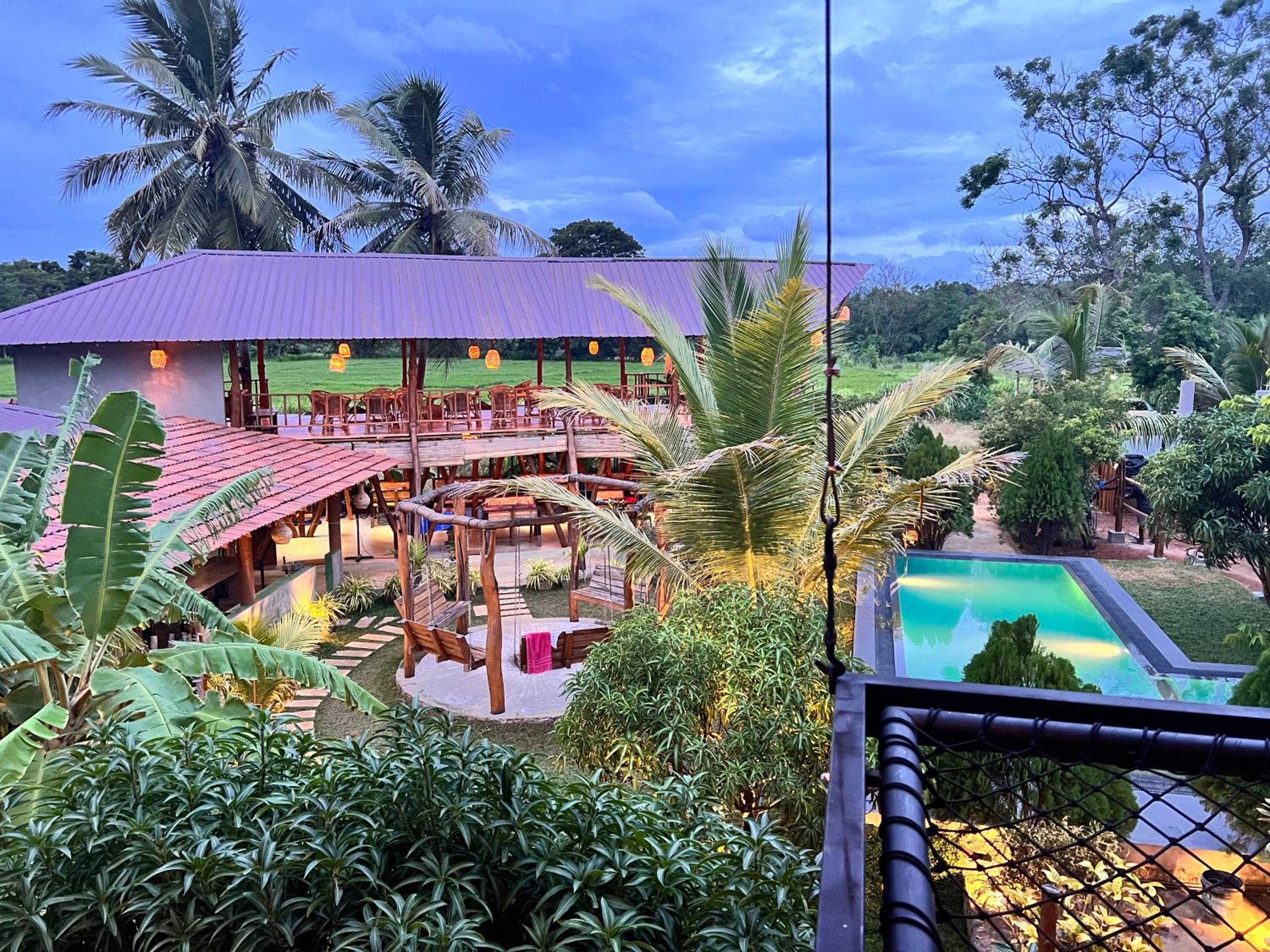
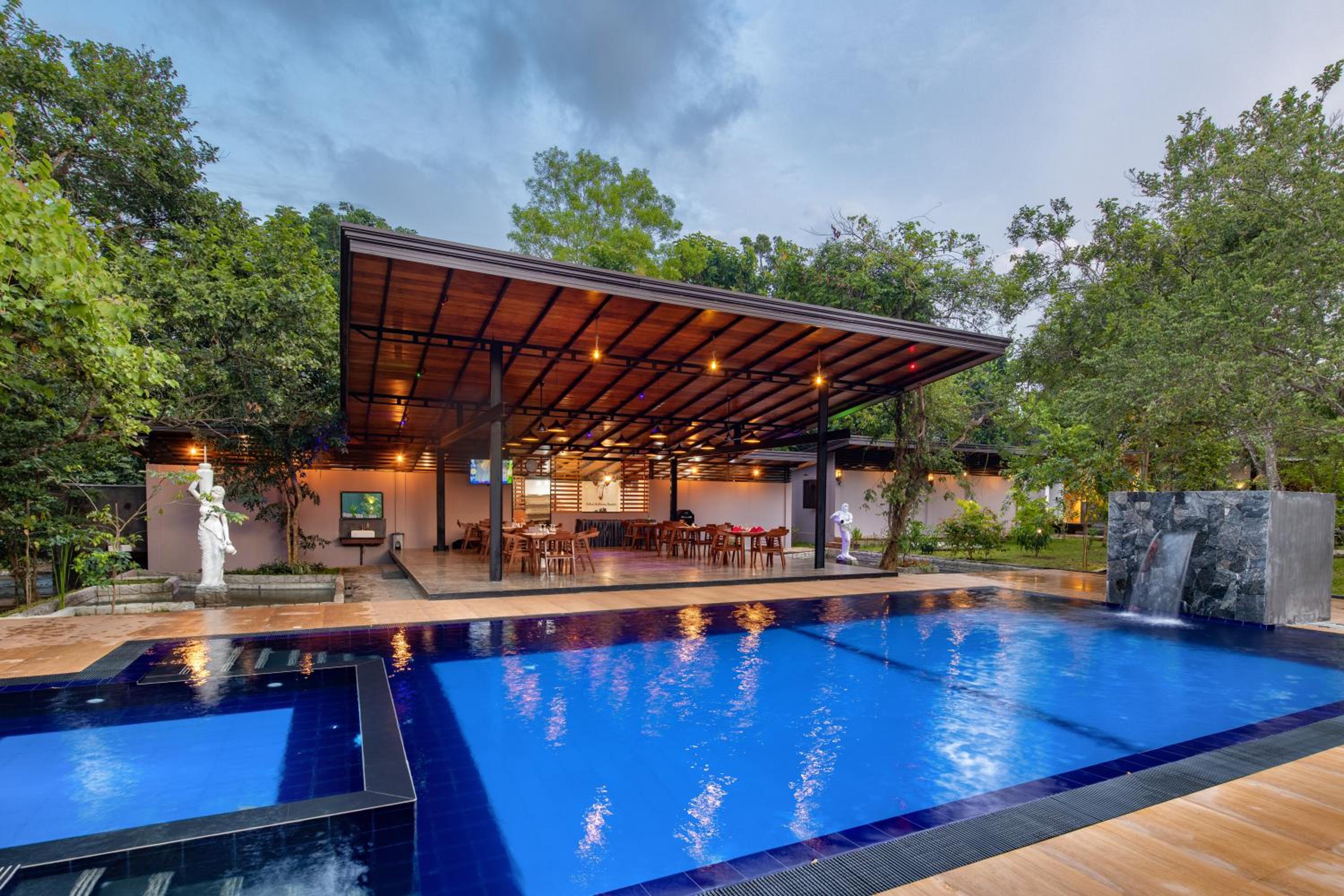
Stay in Sigiriya village if you want to be first up the rock: the homestays and guesthouses at its foot are a walk or a cycle from the entrance. A hotel here runs about €94.02 a night in what travellers log, though the village runs far below that. Book two nights, one for the rock at dawn and one for Pidurangala and a Minneriya safari.
Sigiriya village
Homestays and family guesthouses with bicycles, €15 to €45, and a few small resorts by the lake from €70.
Habarana
Nature lodges and safari hotels around the junction, €80 to €200, with the Minneriya jeeps at the door.
Dambulla
Hostels and the cheapest rooms in the area, dorms €6 to €10 and doubles €15 to €35, twenty kilometres from the rock.
Kandalama
The big architectural resorts in the forest above the reservoir, from €200, and the pool with the view.


What to eat in Sigiriya
Rice with a spread of vegetable, lentil and meat curries
Chopped flatbread stir-fried with egg and vegetables
Sour dry fish curry with goraka
Buffalo curd with kithul palm syrup
Discover food spots in Stippl
Find restaurants and markets on the map, save them to your itinerary, works offline too.
Sigiriya customs and what not to do
No dress code on the rock
Sigiriya is a royal site, not a religious one, and there is no cover-up rule; it surprises people arriving from Dambulla, and the climb is hot, so dress for that.
Dambulla is the opposite
The cave temples need covered shoulders and knees, shoes off at the bottom of the steps and a shoe-minding fee; the monkeys on the way up take anything loose.
No photos at the frescoes
The rule is enforced by an attendant on the spiral stairs, and flash has damaged the paint; look, and buy the postcard at the museum.
The gate guides are optional
The site is signposted well enough to do alone and the men at the entrance are not compulsory; a licensed guide is worth it, about €10, if you want the history.
Do
- Start at opening time, or take the late-afternoon slot
- Carry a litre of water per person; the stalls near the top are unreliable
- Book activities directly with the family or operator running them
Don't
- Walk the Pidurangala road in the dark; take a tuk-tuk
- Photograph the frescoes
- Assume your ticket includes the museum; check which combination you bought
What a Sigiriya trip costs
Track what you actually spend
Set a daily budget per country and log expenses in any currency while you travel.
Fun facts about Sigiriya
The mirror wall carries graffiti from over a thousand years ago. Early visitors scratched verses praising the paintings into the polished plaster, and their lines are read alongside the modern scratching that spoiled them.
King Kassapa built a swimming pool on the summit. The cut cistern is still there on the palace terrace, 200 metres above the plain, fed by rainwater the engineers channelled up.
Monks were moved off the rock to make room for the palace. They went to Pidurangala, which is how the cheaper rock next door got its temple and its sunrise crowd.
Sigiriya was a capital for only eighteen years. Kassapa built it between about 477 and 495 AD after taking the throne from his father; his half-brother came back for it and won.
Only 19 of the frescoes survive. The wall paintings of women are reached by a caged spiral stair, photography is forbidden, and they once covered the whole western face of the rock.
Pidurangala behaves like a sunrise and not a stay. On Stippl most of its planned stops carry no night at all, against a small share at Sigiriya, where people sleep to climb early.
Local tips for Sigiriya
Everything goes via Dambulla
Whichever way you come, Dambulla is the bus interchange and the cheapest bed; Sigiriya village is twenty minutes on by tuk-tuk for about €5. The cave temples are on the way.
A driver for the day
The cultural-triangle sites are twenty to seventy kilometres apart with no useful public transport; a driver for the day is about €40 and the normal arrangement. Polonnaruwa and Dambulla in one day.
A tuk-tuk to the pre-dawn gate
Guesthouses arrange it, about €3, and it is the only practical way to be at the ticket office when it opens. Wild elephants use the roads at night; do not walk it.
How long to stay
Most people give Sigiriya 2 nights on Stippl: the rock one morning, Pidurangala the next dawn, and a Minneriya safari in between. It is the hub of the triangle.
Hornets are the real hazard
There are warning signs, shelter huts on the stairs and days when the guards hold visitors below. Be quiet on the climb and do not run if they swarm; get into a hut.
Climb before nine
The rock is unshaded, the stairs are metal and stone, and the middle of the day is unworkable. The spiral stair to the frescoes is enclosed and queued; a problem for vertigo.
Sigiriya questions, answered
Start at first light, because the stairs are exposed and the rock bakes by nine. Sigiriya carries 7.67% of everything planned in Sri Lanka on Stippl, so expect company. Put Pidurangala into Stippl for the following morning rather than the same one: both want a sunrise, and you only get one a day.
Two nights. Travellers planning Sigiriya on Stippl give it 2 nights, and even the shorter visits rarely drop below it. One night is enough for the rock and nothing else; two gives you Pidurangala at sunrise and the Dambulla caves as well.
Roughly 21.44% of the Sigiriya stops on Stippl stop at one night, and it means climbing on your arrival or your departure day. Both rocks want a dawn start and you cannot do that twice in one night. The cultural triangle repays a second night more than most stops here.
Both, if you have a morning each. Forced to choose: Sigiriya for the ruins on top, the frescoes and the water gardens; Pidurangala for the view of Lion Rock itself, at a fraction of the ticket price. The photograph you have in your head was taken from Pidurangala.
Twelve hundred steps or so, on maintained staircases with handrails, and nothing about it is technical. What makes it hard is the heat, the exposure and the queue on the narrow spiral up to the frescoes. Anyone reasonably fit manages it. Nobody enjoys doing it at midday.
Yes for the cave temples, which hold the best painted interiors on the island, but treat it as its own stop rather than an add-on. It is a steep climb to the caves in full sun and it deserves a morning of its own. Fewer people combine the two than the guidebooks assume.
Every guide is written by the Stippl editors and checked against the trips our travellers actually plan. Spotted something out of date? Let us know.

Plan Sigiriya in Stippl
Day-by-day planning, stays and budget in one app, with every place from this guide already on the map.
Download the app