

Andong
Andong is where you sleep in a hanok in a village people still live in, not a preserved quarter, and the mask dance plays free all year. Korea's oldest wooden building costs nothing to walk into.
Andong in a nutshell
Andong: what to expect
This is what 51,000+ planned stops in South Korea on Stippl say about Andong.
Andong is the centre of Korean Confucian culture, and the buildings are the reason to come. Hahoe Folk Village has been the seat of the Pungsan Ryu clan for six centuries and was listed by UNESCO in 2010, with a small resident population still living in it. Dosan Seowon was founded for Yi Hwang, the dynasty's most celebrated Neo-Confucian scholar. Bongjeongsa dates from 672 and its main hall is the oldest surviving wooden building in Korea.
Andong is the ninth thing you add to a Korean trip rather than the first. Its itineraries carry more Korean stops than any other destination's, and almost six in ten of them never leave the country at all, the highest domestic share we measure here. Its strongest partner is Sokcho, on the opposite coast, which the two share nothing geographically but everything in kind: both are what a trip adds once the obvious stops are done.
Two nights, and sleep inside the village if you can. That is the single strongest reason to be here overnight rather than day-tripping, and the stays here top out at four nights because the city itself is thin. The mask dance is performed free all year round, about an hour, with English displayed beside it. The festival runs from the last Friday of September, and it is worth knowing that July rather than the festival is when most people actually come.
Plan Andong in Stippl
Day-by-day planning, stays and budget in one app, with every place from this guide already on the map.
Download the appWho Andong is for
Joseon history travellers
Andong's draw is architectural and scholarly rather than scenic, and the academies and clan villages are the reason to come.
Anyone deep into a Korea trip
Andong is what a long domestic route adds once the obvious cities are booked, and most people give it 2 nights.
Anyone after a village hanok
Sleeping in a hanok in a real village, rather than a preserved quarter, is the single strongest reason to stay overnight rather than day-trip.
Festival travellers
The Mask Dance Festival runs ten days from the last Friday of September, with fireworks of mulberry charcoal strung from Buyongdae cliff on Saturday nights.
Maybe not for you: anyone on a first trip to Korea, since Seoul, Busan and Gyeongju come first; and anyone planning a long stay, because there is little else to do in the city itself and four nights is the ceiling.
The best time to visit Andong
Spring
April and May
The best conditions of the year, and a period our own travellers under-use: dry, mild and the cherry blossom encircling Hahoe village. The riverside walk to the Buyongdae cliff is at its best.
Summer
June to August
Monsoon and humidity together, with July the wettest month, and the Korean domestic holiday filling the village guesthouses. The peak in our own data, and the worst weather.
Autumn
September and October
Foliage and the Mask Dance Festival at the start of October, the second peak. The mask dance itself runs on a weekly schedule outside the festival, on the riverbank at Hahoe.
Winter
November to February
Cold, dry, clear and empty, with the village to yourself and the ondol floors warm. The quietest months anywhere in Korea we cover.
- Korea is planned about 94 days ahead on Stippl, and only 9.92% of plans are made inside a fortnight. Andong follows the country's pattern; the festival week in October is the one where the lead matters.
- The Andong Mask Dance Festival runs ten days from the end of September. It is the town's one big event and it fills the Hahoe guesthouses and the town's motels; the dance itself is performed weekly at Hahoe the rest of the year, on a schedule posted at the village gate.
- Hahoe's cherry blossom is a week in mid April. The trees ring the village and line the road in from Andong; the blossom festivals elsewhere in Korea are dated months ahead, and here the week is simply watched.
- A night in a Hahoe hanok is the point, and the ondol makes winter the best time for it. The heated floors, the quiet after the day visitors leave and the frost on the thatch; the summer version is humid and shared with the holiday crowd.
Add your Andong dates and we'll flag the weather
Stippl shows the season, crowds and prices for every stop on your route.
Describe your trip, get a Andong itinerary in seconds
Everything in this guide is already in Stippl. Tell the planner how long you have and what you like: it builds the route, the days and the travel times, and you edit whatever you want.
Things to do in Andong
The Hahoe mask dance
Watch the Byeolsingut Tallori performed free in the arena at Hahoe village, about an hour with English translation on the screen behind the stage, on weekends year round and daily in the festival. A play more than a dance, and a bawdy one.
Hahoe village
Walk the riverside clan village of Joseon houses, still lived in, about €4, and sleep in one of the hanok that take guests. Book the ondol room; the winter floors are the reason.
Buyongdae Cliff
Take the ferry across the river from the village beach for a few cents and climb ten minutes for the standard photograph of Hahoe in its river bend. Morning light, and the path continues to Byeongsan Seowon.
Byeongsan Seowon
Walk the forest trail from the far side of the village to the Confucian academy on the river, UNESCO-listed, free. An hour each way, and the pavilion faces the cliff.
Woryeonggyo bridge after dark
Walk the 387-metre wooden footbridge across the reservoir, lit lantern-style at night, free. The town's evening, and the mask museum is beside it.
Jjimdak on the market alley
Eat Andong's braised chicken with glass noodles and soy at the market alley where it was invented, about €20 for a plate that feeds two. Lunch or dinner, and the queue at the oldest one moves.
The neighbourhoods of Andong
The city centre
Old market, jjimdak alley
The downtown around the old market where sixty-odd braised-chicken restaurants cluster, with the folk museum, the bus terminal and most of the hotels. For first nights and for the buses.
Everything on foot and every bus, and a plain provincial centre.
The riverside
Wooden bridge, evening walk
The Nakdong riverbank around the long wooden footbridge, lit after dark, with the folk village reconstruction on the far bank and a few hotels along the water. For couples and the evening walk.
The bridge at night from the door, and a taxi to the market.
Hahoe
Folk village, hanok stays
The UNESCO village in a horseshoe bend of the river eighteen kilometres west, still lived in by the Pungsan Ryu clan, and the only place nearby with hanok stays. For the village at dawn and after the last bus.
The village to yourself at dusk, and the last bus at six.
The Dosan valley
Academy, river, farm stays
The river valley twenty-five kilometres north around the Confucian academy, with farm stays and pensions along the road and the lake. For drivers who want the countryside and the academy at opening.
The valley and the quiet, and a car for everything.
See every Andong neighbourhood on one map
Save the areas you like and Stippl plots your days so you're not crossing the city twice.
Where to stay in Andong
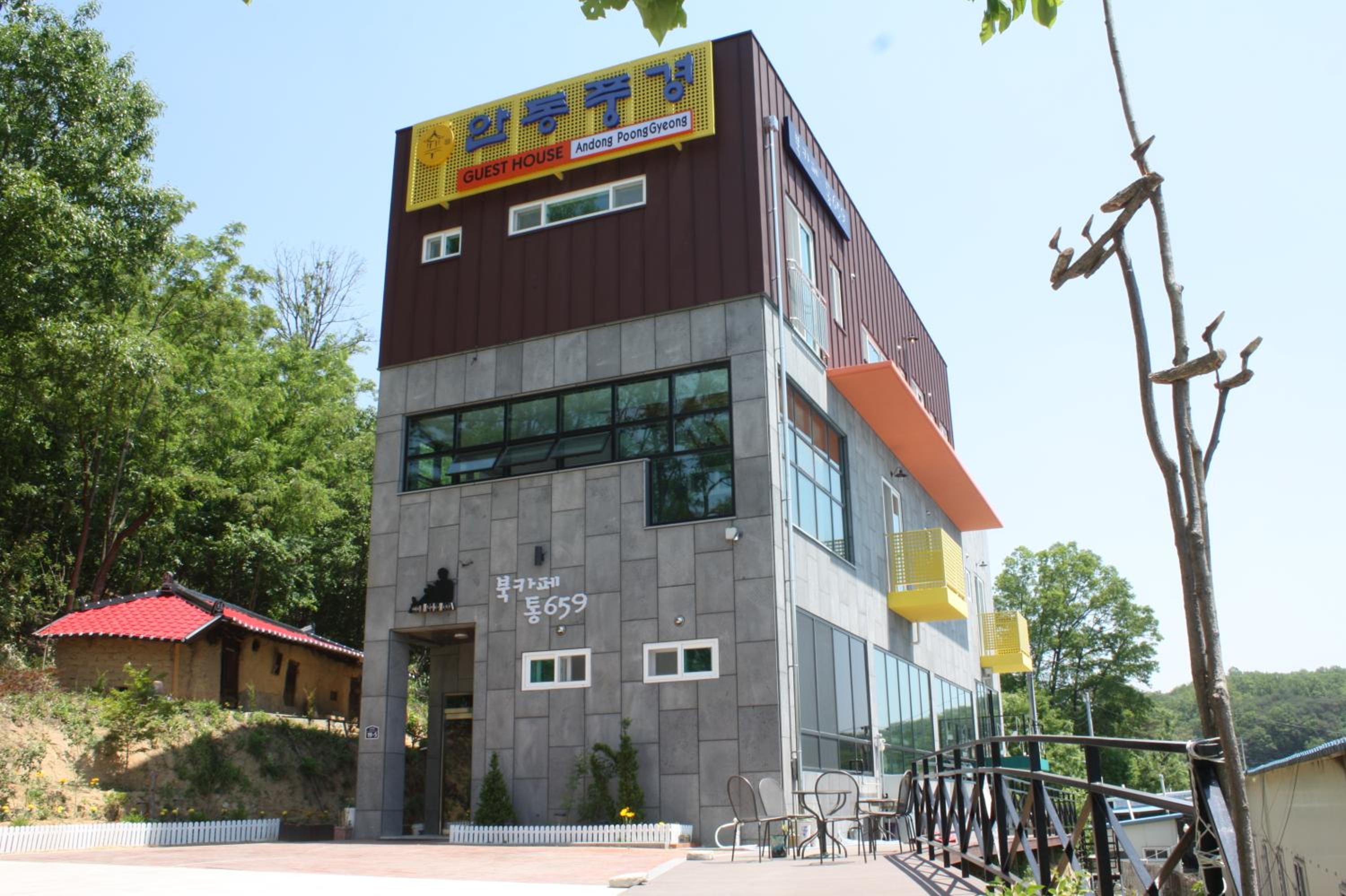
Stay inside Hahoe, in a hanok: once the day visitors leave, the village is effectively empty, and that is the point of sleeping here rather than in the city. Expect a floor mat on ondol heating rather than a bed, and book by phone or email through the property or the tourist office. Most people give Andong 2 nights on Stippl, and that is enough.
The city centre
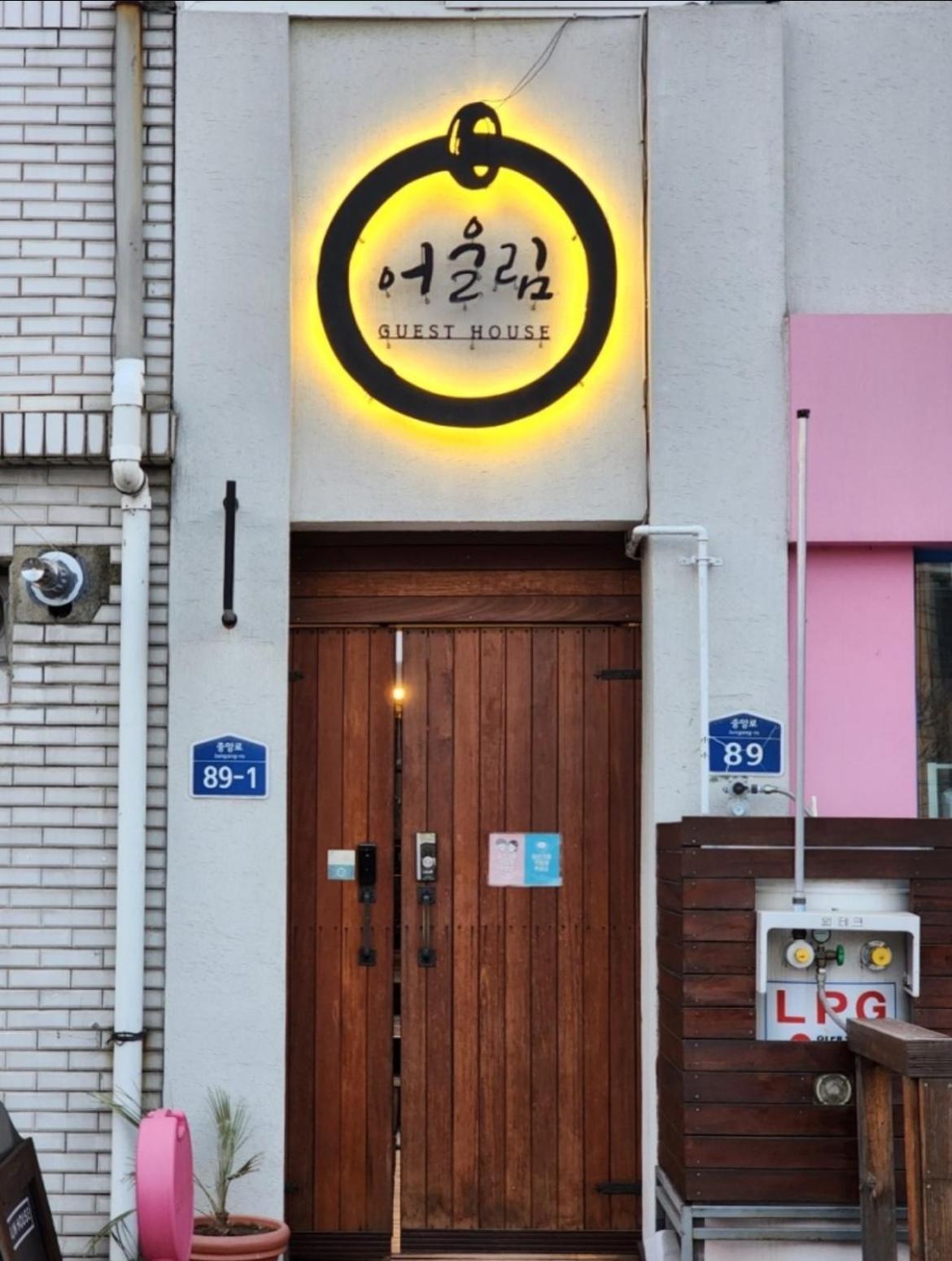
Business hotels and motels near the market and the bus terminal, €40 to €90, and one affordable guesthouse from €25.
The riverside
A few mid-range hotels along the bank near the footbridge, €50 to €100, with the bridge lit at night.
Hahoe
Hanok stays from basic rooms with shared bathrooms at €40 to en-suite luxury at €150 to €250.
The Dosan valley
Farm stays and pensions along the road and the lake, €40 to €90, for drivers.


What to eat in Andong
Chicken braised in a soy-based sauce with glass noodles, potato and carrot, served as a shared platter
A savoury fermented radish-and-rice dish, eaten with a spoon and spiced with chilli and ginger
A set lunch of mackerel with banchan
Beef from the local cattle breed, named by the city's tourism board
Noodles, completing the local canon the tourism board names
A spirit distilled to 45% ABV, roughly double ordinary green-bottle soju
Steamed silkworm pupae, standard festival street food, sold by the cup
Discover food spots in Stippl
Find restaurants and markets on the map, save them to your itinerary, works offline too.
Andong customs and what not to do
The seat of Confucian Korea
The seowon academies are ritual sites as well as monuments and still hold memorial rites for the scholars they enshrine; Yi Hwang, on the thousand-won note, is the one at Dosan.
Hahoe is somebody's home
Residents live in the houses along the paths, which is what separates it from the reconstructed folk villages; voices down, no photographs through doors, and the courtyards are private.
The mask dance was satire
Hahoe Byeolsingut Tallori was performed by commoners mocking the yangban aristocracy and the clergy, which is why the masks matter more than the choreography; laugh, it is meant to be funny.
A hanok stay is being a guest
Not a hotel transaction: payment is usually cash to the owner, dinner is a favour asked in advance rather than a service ordered, and the ondol floor is the bed.
Do
- Book the hanok dinner when you book the room
- Take the bus 210 to Hahoe and stay until the day-trippers leave
- Watch the mask dance on a performance day; it is free at the village
- Carry cash for the hanok and the village shops
Don't
- Photograph through the doors at Hahoe
- Expect the seowon to be open for wandering during a rite
- Arrive at Hahoe after last admission and expect the village
- Treat the mask museum as the dance; the dance is at the village
What a Andong trip costs
Track what you actually spend
Set a daily budget per country and log expenses in any currency while you travel.
Fun facts about Andong
The oldest wooden building in Korea is in Andong. Bongjeongsa's Geungnakjeon hall was built in 1363, in a temple founded in 672, and admission is free.
Andong sikhye means something different here than in the rest of Korea. The drink is savoury, spooned and fermented rather than sweet, and the city uses it as a test of local credentials.
Queen Elizabeth II spent her 73rd birthday in Andong. She visited in 1999, reportedly having asked to be taken to the most Korean place in Korea, and the town still tells the story at every turn.
Woryeonggyo is Korea's longest wooden pedestrian bridge. The 387-metre span across the Nakdong is lit in the evening, and the walk across it is the town's after-dinner ritual.
Dosan Seowon was founded four years after its scholar died. Yi Hwang, the Joseon dynasty's most celebrated Neo-Confucian, retired here in 1549, and the academy grew from his study hall in 1574.
Two-thirds of the people who plan Hahoe never write down Andong. On Stippl the village is planned as the destination and the city is not recorded at all, though the village is 25 km from the station.
Local tips for Andong
Buses beat trains here
The bus network is the real one: 36 a day to Daegu, and Seoul in about three hours for around €20. There is no direct link to Sokcho or Seoraksan; route through Seoul.
Bus 210 to Hahoe
The standard way to the folk village is bus 210 from the terminal, thirteen a day at about €1. Last admission is 17:30 in summer and 16:30 in winter, so take the early afternoon bus.
Dosan Seowon needs a taxi
The academy is 25 kilometres north and awkward without a car; a taxi there and back with waiting time is about €40. Pair it with the old town the same day.
How long to stay
Most people give Andong 2 nights on Stippl: Hahoe and the mask museum one day, Dosan Seowon and the old town the next. Eight in ten Andong trips also carry Gyeongju.
Rural buses stop early
The last intercity departures run between 19:50 for Gyeongju and 22:00 for Seoul and Daegu, so a late day trip can strand you. Check the board when you arrive.
The monsoon and the cold
July brings 244 millimetres and Andong sits on the Nakdong river, so path closures follow heavy rain. January lows near minus seven with the year's heaviest snow on unlit rural paths.
Andong questions, answered
Probably not on a first fortnight. 58.5% of the trips that include Andong stay inside Korea on Stippl, well above the national figure, which says it is a stop for people building a Korea-focused route rather than a highlights loop. Save it for a third week in Stippl.
Two nights. Travellers planning Andong on Stippl give it 2 nights and hardly anybody goes beyond four. One day for Hahoe village and the mask museum, one for Dosan Seowon and the old town, and the three-hour bus at either end.
It is possible and it is rushed: three hours each way by bus, and Hahoe's last admission is mid-afternoon. Only 6.65% of Andong stops planned on Stippl are same-day, which is the sensible verdict. The village at dawn is the reason people stay.
In Hahoe if you want the village empty at dawn and again once the last bus has gone, which is the whole point of coming. In the city if you want restaurants, the bus terminal and a choice of beds. There are no rooms in the village that are not hanok.
The festival runs from the last Friday of September into the first Sunday of October and it takes over the town. Outside it, the regular performances at Hahoe are free and run at weekends through most of the year, with extra midweek shows in the warmer months. No booking needed.
Very. It sits inland in a river valley where January averages below freezing and the nights drop a good way under that, and it is comfortably the emptiest month here. Hanok rooms have heated floors, which handles the sleeping; the walking between sights is what to dress for.
Every guide is written by the Stippl editors and checked against the trips our travellers actually plan. Spotted something out of date? Let us know.

Plan Andong in Stippl
Day-by-day planning, stays and budget in one app, with every place from this guide already on the map.
Download the app