

Tamarindo
Tamarindo is the easiest beach town in Costa Rica to reach and the one that teaches the whole northern Pacific to surf. Eight hundred leatherbacks a year nest along this coast.
Tamarindo in a nutshell
Tamarindo: what to expect
The figures here sit on 87,000+ planned stops across Costa Rica on Stippl.
Tamarindo is the easiest beach town in Costa Rica to get to, and the waves are beginner waves. Ninety minutes from Guanacaste Airport on a paved road, with the surf schools using the town beach because the bottom is sand and the break forgiving. Las Baulas National Marine Park covers the bay, protecting the largest leatherback nesting colony on the Pacific coast at Playa Grande. The estuary behind the town runs into mangroves with two monkey species, wading birds and crocodiles in them, and Playa Conchal north of here is made of crushed shells.
Nowhere in Costa Rica keeps travellers as long as Tamarindo, and it is where the country splits in two. Stays here run to three nights and beyond more often than at any other destination we measure. From Tamarindo, Uvita and Tortuguero both sit below what trip length alone would predict, exactly as Tamarindo does from their side: Costa Rica is planned as two trips and travellers pick a coast.
Take the surf lesson here rather than chasing better waves, and stay 3 nights. Playa Avellanas and Playa Grande are half an hour away when you want them, and the Catalinas Islands are thirty minutes up the coast for rays. Leatherback nesting runs October to February with a certified guide, and sightings are genuinely unreliable. Skip Tamarindo if you came for rainforest, because this is dry deciduous forest and mangrove.
Plan Tamarindo in Stippl
Day-by-day planning, stays and budget in one app, with every place from this guide already on the map.
Download the appWho Tamarindo is for
First-timers who want it easy
An international airport ninety minutes away, a paved road the whole way, and a town that speaks English.
Beginner surfers
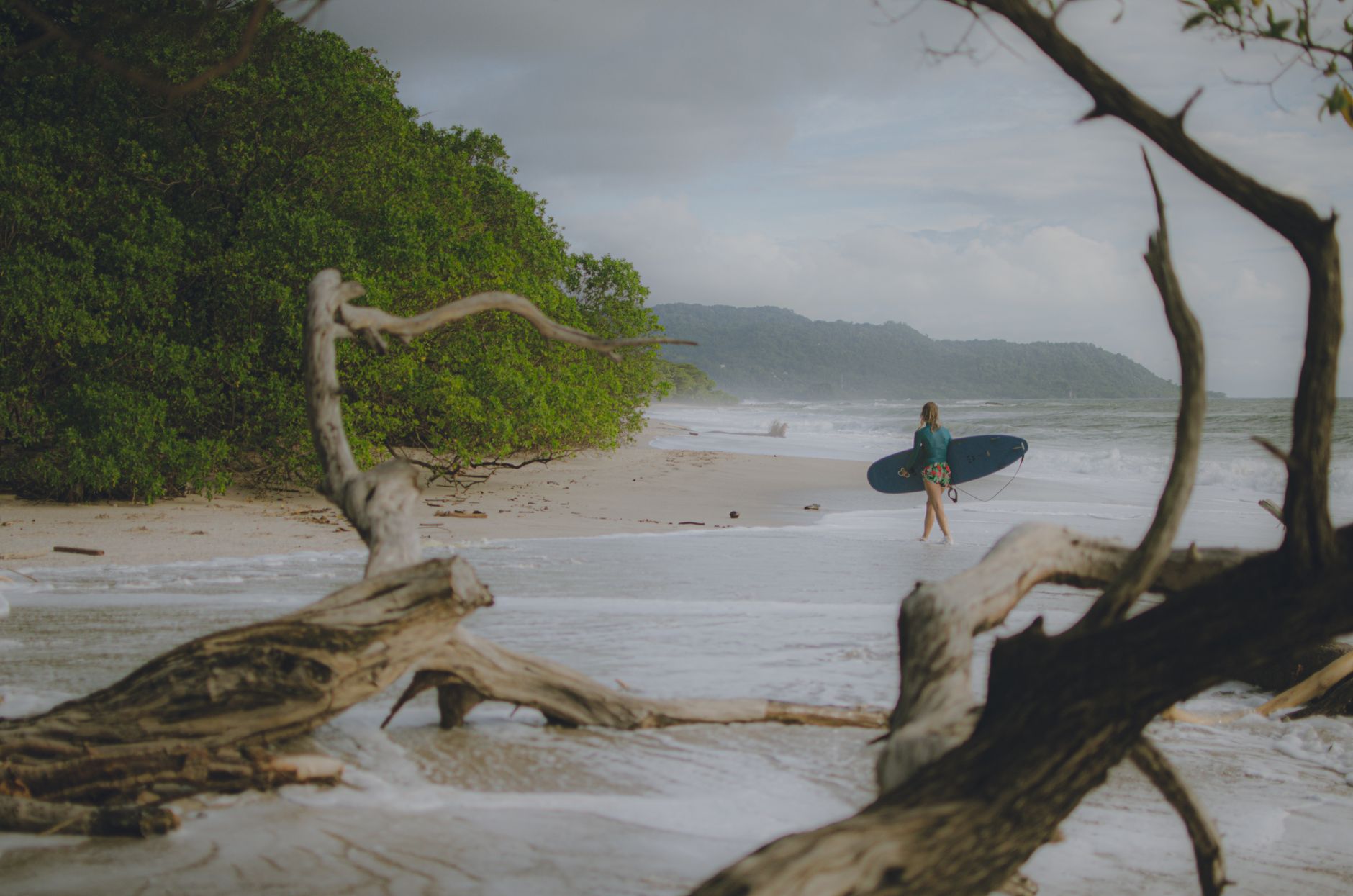
Tamarindo is the teaching beach for the whole northern Pacific, with schools on the sand and a wave that forgives.
People who want a night out
Tamarindo has the nightlife the rest of the Costa Rican coast does not, and most people give it 3 nights.
Families and older travellers
Against the party reputation, the beach is calm and the town is easy, and plenty of families base here.
Maybe not for you: anyone chasing the best waves, since those are half an hour away; anyone expecting rainforest wildlife, because this is dry deciduous forest and a mangrove estuary; and anyone pairing it with the south or the Caribbean, as people tend to pick one coast.
The best time to visit Tamarindo
Dry season
December to April
The sharpest dry season in Costa Rica: hot, cloudless and the turtle window, with the leatherbacks nesting at Las Baulas until February. The town's busiest and most expensive months.
Green season
May to November
The rain arrives in May and stops in November, both abruptly, with a dip in July. The estuary fills, the surf holds and the hotel rates fall by a third.
- January is the month most travellers plan Costa Rica for on Stippl, and Tamarindo is planned about 71 days ahead. The town has a long strip of hotels and rarely runs out; the turtle tours in the nesting months are the thing to book.
- Leatherbacks nest at Playa Grande from October to February, and the beach is closed at night outside a guided tour. The Las Baulas rangers run the night visits in those months only; the hatchlings emerge into April and sometimes early May.
- Tamarindo's dry season is the driest on the coast. February brings almost no rain at all and October the most; the swing is the sharpest of any Costa Rican destination we cover, so a February plan needs no rain layer.
- The July dip is the green season's best fortnight. The rain eases between June and August, the estuary is full, the surf is working and our own travellers make it the strongest wet-season month here.
Add your Tamarindo dates and we'll flag the weather
Stippl shows the season, crowds and prices for every stop on your route.
Describe your trip, get a Tamarindo itinerary in seconds
Everything in this guide is already in Stippl. Tell the planner how long you have and what you like: it builds the route, the days and the travel times, and you edit whatever you want.
Things to do in Tamarindo
A surf lesson
Take two hours on the teaching beach of the northern Pacific, sand bottom, forgiving waves and more schools than the town needs, about €45 group or €70 private. Mornings before the wind.
Sunset with a happy-hour drink
Sit on the beach at the end of the day with a drink from the beach bars, the fixed point of every Tamarindo day, from about €3. The rocks at the southern end have the quietest view.
The estuary by boat
Take a boat or a kayak into the mangroves of Las Baulas from the estuary mouth, about €35 with a naturalist guide or €15 for a kayak alone: two monkey species, wading birds and crocodiles. Early morning.
Leatherback nesting at Playa Grande
Take a night tour with a compulsory park-certified guide in dark clothing from October to February, about €40; sightings are unreliable and getting rarer. The rangers call the hotel when a turtle comes up.
Playa Avellanas
Drive thirty minutes south to the better surf and the quieter beach, with Lola's beach bar and the pig on the sand, free. The road is dirt; a four-wheel drive in the wet season.
Diving the Catalinas
Dive the islands thirty minutes up the coast for rays and the larger pelagics, about €120 for two dives, from December to April. The bull sharks are at the far site.
The neighbourhoods of Tamarindo
Tamarindo centre
The strip, surf shops, bars
The main strip behind the beach: restaurants, surf shops, bars, the shopping plaza and almost all the nightlife, with hotels from hostel to resort. For first visits and nightlife.
Everything on foot and the sunset happy hour, and the noise until late.
Playa Langosta
Quieter, residential, inside the park
Two kilometres south past the point: quieter, more residential, a nesting beach inside the park and no nightlife, with villas and a couple of resorts. For couples and families.
Quiet sand and the turtles, and a walk or a taxi to the strip.
Playa Grande
Across the estuary, leatherbacks
Across the estuary by boat: a surf beach, the leatherback nesting ground and a village with almost nothing in it, with surf camps and villas. For surfers and seclusion.
The better wave and the empty beach, and a boat back before dark.
Playa Avellanas
Twenty minutes south, surf, no town
The beach twenty minutes south by dirt road: a surf beach with a beach restaurant, a few lodges and villas and no town at all. For surfers and for the coast without Tamarindo.
The better wave and the empty sand, and a car on a dirt road for everything.
See every Tamarindo neighbourhood on one map
Save the areas you like and Stippl plots your days so you're not crossing the city twice.
Where to stay in Tamarindo
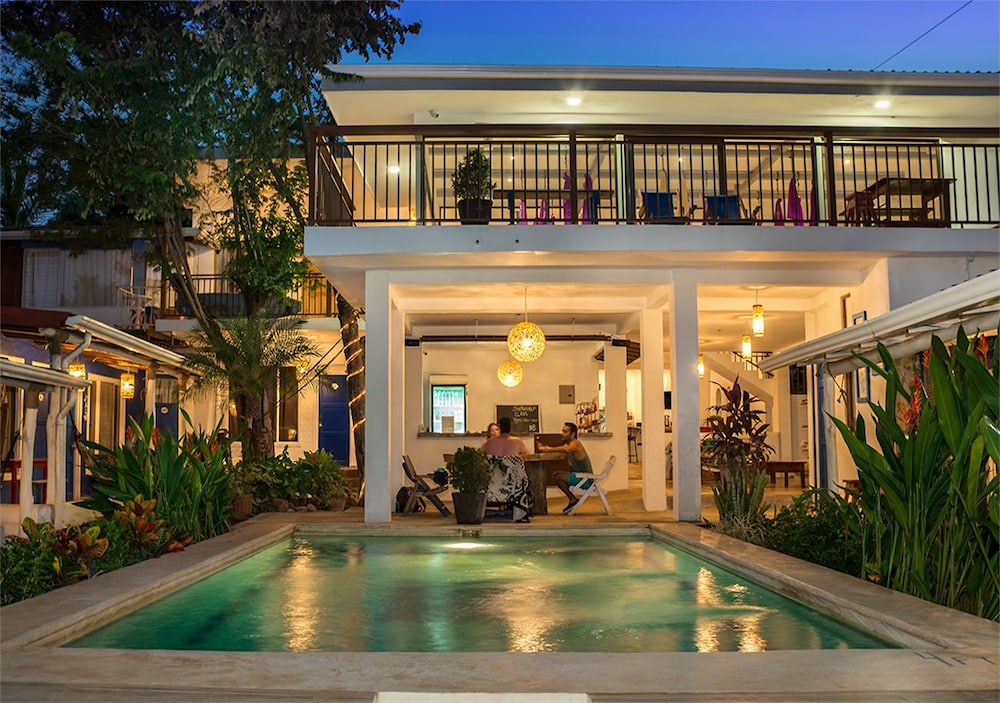
Stay in the centre for a first visit, on or just behind the main strip, with the beach, the surf shops and the nightlife on foot; Playa Langosta, two kilometres south, is the quiet answer. Most people give Tamarindo 3 nights on Stippl, the longest stay in Costa Rica, and most want a fourth. Book the dry season ahead.
Tamarindo centre
Surf hostels from €15 a bed, mid-range hotels with pools €80 to €180, and the beachfront resort from €200.
Playa Langosta
Villas and a couple of quieter resorts on the nesting beach, €150 to €400, with no nightlife.
Playa Grande
Surf camps and rented villas across the estuary, €60 to €250, with almost no village.
Playa Avellanas
A few lodges and villas by the surf beach, €80 to €220, twenty minutes down a dirt road.


What to eat in Tamarindo
The town's most-agreed taco bar
A beach-club restaurant where the meal is the occasion
The brewpub attached to Volcano Brewing
Barbecue
National plate of rice, beans, salad, plantain and a protein
Discover food spots in Stippl
Find restaurants and markets on the map, save them to your itinerary, works offline too.
Tamarindo customs and what not to do
The nickname is Tamagringo
The town wears its foreign-resident and package-holiday reputation openly; Spanish and usted still land better than English at the soda and the bus stop.
The turtle rules are the park's
A certified guide, dark clothing, no lights, and the beach at Playa Grande closes to unguided visitors at five during nesting season; the rangers enforce it.
Tip in colones, not dollars
The ten percent is on the bill; a tip for a surf instructor or a boat crew is in local cash, and dollars get change in colones at a poor rate.
The estuary is a border
Crocodiles come out of it and have been seen on Tamarindo beach itself; nobody local wades across to Playa Grande, and the boat is the crossing.
Do
- Book the turtle tour through the park's certified guides
- Take a surf lesson in the teaching zone
- Tip surf instructors and boat crews in colones
- Use Spanish at the soda and the bus stop
Don't
- Cross the estuary on foot
- Walk the nesting beach at night outside a tour
- Take a collectivo; they are unlicensed and uninsured
- Leave anything on the sand while you swim
What a Tamarindo trip costs
Budget
€47–75
Dorm bed or basic cabina, sodas for most meals, on foot in the centre, one paid activity every other day.
Mid-range
€105–170
Mid-range hotel double, a surf lesson and restaurant dinners, happy-hour drinks on the beach.
High-end
€300+
Occidental Tamarindo or JW Marriott Guanacaste, private guides, private transfers.
Track what you actually spend
Set a daily budget per country and log expenses in any currency while you travel.
Fun facts about Tamarindo
The largest leatherback colony on Costa Rica's Pacific coast nests here. About 800 females a year at Playa Grande, Ventanas and Langosta, in a national park that is 98% sea.
February averages 3 mm of rain and October 367 mm. A 122-fold swing, the sharpest anywhere in Costa Rica, on a coast that is bone dry from December to April.
The largest mangrove estuary in Latin America is at the end of the beach. The Estero de Tamarindo separates the town from Playa Grande, and the boat trips into it are the wildlife day.
Tamarindo keeps travellers longer than anywhere else in Costa Rica. On Stippl it has the longest average stay in the country, about three and a half nights, in a town built around surf, sunset and nightlife.
Las Baulas National Marine Park is 175 square kilometres, and only 7.7 are land. The park covers the whole bay, and it was created for the leatherbacks rather than for the beach.
Three turtle species use the park. Leatherback, olive ridley and black turtle, and the nesting tours at Playa Grande run on the dark nights between October and March.
Local tips for Tamarindo
Paved from Liberia
The whole route from the airport is paved, so no 4x4 is needed and it is fine to drive after dark. Book a shuttle or taxi ahead; there is no Uber at LIR.
Skip the collectivos
They are private cars working as taxis without a licence or insurance, and they charge about €17 for a mile. Take a licensed taxi or walk; the town is small.
The panga across the estuary
There is no bridge to Playa Grande. The boat is the crossing, about €2, and never wade it: crocodiles come out of the estuary and have been seen on Tamarindo beach itself.
How long to stay
Most people give Tamarindo 3 nights on Stippl: a surf lesson, a catamaran sunset and a day at Playa Conchal. Half of Tamarindo trips stay inside Costa Rica.
Surf in the teaching zone
Rip currents exist on a surf beach and the teaching zone in front of the town is the safe part of it. Ask the school where the flags are that day.
Theft is the main crime
Pickpocketing and things taken from the sand are the realistic risks in a town that is otherwise fine for families. Nothing valuable on the beach, and no nesting beach at night outside a tour.
Tamarindo questions, answered
Pair it with Liberia rather than San Jose. The airport is about ninety minutes away against four and a half hours from the capital, so a Guanacaste week works best flying in and out of the north. Tamarindo carries 3.6% of everything planned in Costa Rica on Stippl. Lay the coast days out in Stippl.
Three nights. The Tamarindo stops planned on Stippl run to 3 nights, among the longest in the country, because it is a town people settle into rather than tick off. Surf lessons, a sunset and one day trip up or down the coast fill it comfortably.
More evenly across the year than anywhere else in Costa Rica. Travellers planning Tamarindo on Stippl book about 71 days out, and arrivals spread rather than piling into the dry months, because the surf works all year and the rain here is lighter than on the southern Pacific.
It is the teaching beach for this coast. The break is sandy, forgiving and long, and the schools along the front run lessons all day. Experienced surfers drive half an hour north or south for something with more shape, which is exactly what makes the main beach so good to learn on.
Yes, in the estuary at the north end of the beach, and they have been reported on the sand. Do not wade the estuary on foot, however shallow it looks and however many people you watch doing it. Take the boat across instead: it costs almost nothing and runs all day.
No, though it has the reputation and a strip of bars that goes some way to earning it. The same beach carries surf schools full of families, retirees walking at dawn and turtle tours at night. It is busier and more built up than the rest of Guanacaste, which is a different complaint.
Every guide is written by the Stippl editors and checked against the trips our travellers actually plan. Spotted something out of date? Let us know.
Plan Tamarindo in Stippl
Day-by-day planning, stays and budget in one app, with every place from this guide already on the map.
Download the app