
Kampot
Kampot is the decompression stop after the temples and the Killing Fields, and stays here run longer than planned. A pepper you taste at the vine, crab thirty minutes away in Kep, and river bungalows from €9.
Kampot in a nutshell
Kampot: what to expect
This is what 164,000+ planned stops in Cambodia on Stippl say about Kampot.
Kampot is a river town rather than a beach town, and the distinction is the whole point. It sits five kilometres inland between the water and the Elephant Mountains, in French colonial shophouses that are the reason people photograph it. Kampot pepper has been a protected origin since 2010 and you taste it at the vine. Phnom Bokor is an hour of switchbacks up to an abandoned hill station, a church and a temple standing in mist, and the Green Cathedral is a three-kilometre kayak loop roofed over by trees.
Kampot has a reputation as the town nobody leaves, and the plans do not support it. 42.1% of stays here are exactly two nights, the tightest single length in Cambodia, and fewer than three in a hundred run to five nights or more, against a quarter on Koh Rong. What Kampot does have is the country's only real pairing: Kep turns up on its trips two and a half times more often than chance would put it there.
Spend 2 nights here, and spend them outside the town. The pepper plantations are east and best between January and March, the salt fields are south and worked by hand through the dry months, the Phnom Chhnork cave temple is fifteen minutes away, and Kep's crab market is half an hour on. Skip Kampot if you came to Cambodia for a beach, because there is not one here, and avoid the wet months between June and September.
Plan Kampot in Stippl
Day-by-day planning, stays and budget in one app, with every place from this guide already on the map.
Download the appWho Kampot is for
Anyone done with hard sights
After the Killing Fields or three days of temples, Kampot is the decompression stop, and its typical stay of 2 nights runs longer than Battambang's.
Food travellers
A pepper with a protected origin, a plantation you can taste it at, crab 30 km away in Kep, and a restaurant scene disproportionate to the town's size.
Budget travellers
Dorms from about €4 to 6, river bungalows from €9 to 12, and scooters at €4 to 9 a day.
Cyclists and scooter riders
The countryside is flat, the roads east are good, and the Bokor road is paved the whole way up.
Couples
Boutique hotels in heritage buildings and river bungalows at a fraction of the equivalent price in Thailand.
Climbers and cavers
A single operator runs half-day climbing and caving trips on the limestone karsts outside town for roughly €30 to 43.
Maybe not for you: anyone who came to Cambodia for a beach, since there is none and Kep's is small; anyone on a tight schedule, because it is a slow town; anyone coming June to September, when only the waterfalls improve; and anyone expecting nightlife beyond a few bars.
The best time to visit Kampot
Dry season
November to March
Clear views from Bokor, dry cave floors, the pepper harvest from January and the salt fields being worked. The season, and every source agrees.
Hot season
March to May
The heat peaks in April before the cloud arrives, and Khmer New Year fills the riverfront with Cambodian families while many foreign-run businesses close for the week.
Wet season
June to October
Green, the waterfalls running and Bokor lost in cloud, but rarely wet for days on end. Nothing in Kampot depends on a boat crossing, so the wet season is not the write-off it is on the islands. October is the cheapest month.
- January is the month most travellers plan Kampot for on Stippl, about 72 days ahead. 21.0% of Kampot plans are made inside a fortnight, which works here in every month; the riverside guesthouses rarely run out.
- The pepper plantations are only worth the ride when they are working. The harvest runs January to March; a tour in September sees the vines and none of the work.
- Bokor disappears in the wet season. The hill station sits in cloud from June to September and the views from the old casino go with it; a dry-season morning is the only version of the drive that pays.
- Khmer New Year in mid April is a domestic holiday here. Kampot fills with Cambodian families on the riverfront and many of the foreign-run guesthouses and restaurants close for the week; the town is open, just a different one.
Add your Kampot dates and we'll flag the weather
Stippl shows the season, crowds and prices for every stop on your route.
Describe your trip, get a Kampot itinerary in seconds
Everything in this guide is already in Stippl. Tell the planner how long you have and what you like: it builds the route, the days and the travel times, and you edit whatever you want.
Things to do in Kampot
 Photo by Angkor wat tuktuk driver By kakada via Pexels
A pepper plantation
Tour a plantation in harvest season from January to March, tasting the pepper at the vine, mostly free, twenty minutes from town. La Plantation and Sothy's are the two that run tours.
Phnom Bokor
Ride an hour of switchbacks to the abandoned French hill station at 1,081 metres: the Khmer Rouge-era hotel, the Catholic church and the temple in the mist, with the coast laid out below. About €1 park entry and a scooter, in the dry season only.
Kayaking the Green Cathedral
Paddle the three-kilometre loop off the main river, roofed over by arching vegetation, in a kayak from the riverside guesthouses for about €5 to €10. Late afternoon, and the fireflies on the way back in season.
Crab at Kep
Ride thirty minutes east to the crab market and eat steamed crab with fresh green Kampot pepper at a table over the water, about €10. Sunset, and pick the crab from the baskets yourself.
Phnom Chhnork cave temple
Climb to the small brick shrine inside a limestone cave, pre-Angkorian and from the Funan period, fifteen minutes from town, about €1. The village children guide you through the cave for a tip.
The salt fields
Cycle over the old French bridge to the flat white pans south of town, worked by hand from December to May, free. Only worth it when they are being worked; in the wet season they are ponds.
The neighbourhoods of Kampot
In town
Old market street, cafés, bars
The compact centre on the east bank between Old Market Street and the Durian roundabout: cafés, restaurants, bars, the museum, the night market and the travel agents, walkable end to end. For eating out and first stays.
Everything on foot, and a town rather than a river.
Riverfront north
Bungalows, hammocks, sunset
Bungalows and river resorts strung along the northern bank from three to nine kilometres out, up to twenty minutes by tuk-tuk: swimming, kayaks, hammocks and the sunset over the mountain. For stopping still.
The river and the sunset, and a tuk-tuk for every meal in town.
Thvi
Across the river, quieter, close
Directly across the river from the centre on the west bank: quieter but still close in, with riverside places north of the bridge and a couple of resorts south. For quiet with the town ten minutes away.
Town in ten minutes without its noise, and a bridge to cross at night.
The villages
Rice fields, salt pans, homestays
Tuek Chhou and Trapeang Sangkae, the satellite villages east and south-east among the rice fields, salt pans and mangroves: homestays, over-water bungalows in a fishing village and one glamping site. For the landscape with nobody in it.
The countryside people come for, and a ride for everything.
The south bank
Garden bungalows, pagodas
Garden bungalows in the villages across the river a short ride from town, with local pagodas and no tourist infrastructure. For a leafy retreat that is quiet without being remote.
Quiet and green, and a scooter or a tuk-tuk for the town.
See every Kampot neighbourhood on one map
Save the areas you like and Stippl plots your days so you're not crossing the city twice.
Where to stay in Kampot
Stay on the riverfront north of town for a first visit, in a bungalow on the bank with a kayak and a hammock, and take a tuk-tuk in for dinner; in town is the answer if you want the cafés on foot. Most people give Kampot 2 nights on Stippl. Book ahead for December to February and for any weekend; the town is small and Phnom Penh comes down.
In town
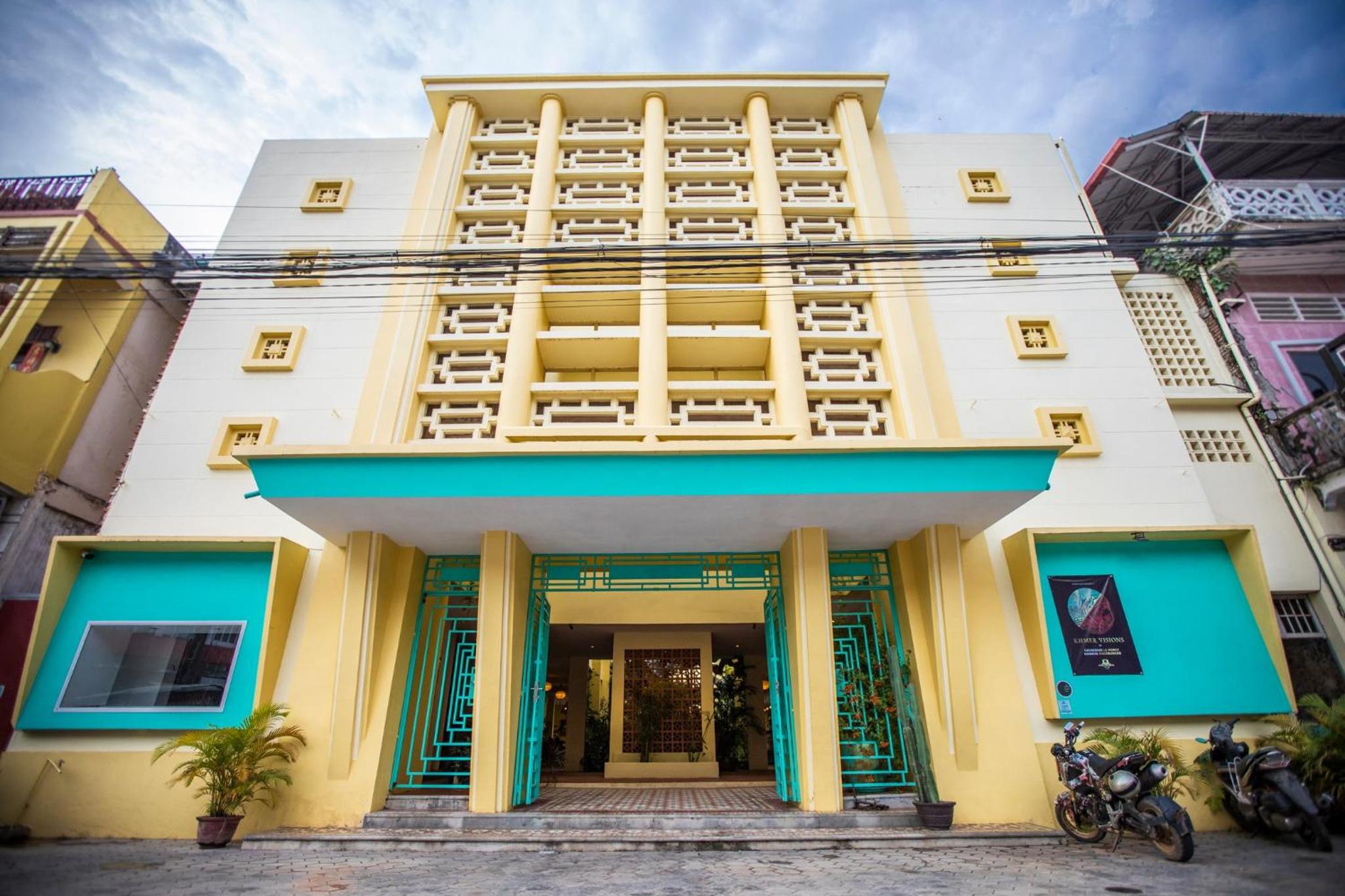
Heritage conversions of the cinema and the shophouses, €40 to €65, and social hostels with pools from €5 a bed.
Riverfront north
€10–40
River bungalows, tree houses and over-water platforms, from €9 rustic up to €60 with a pool.
Thvi
Riverside guesthouses and a couple of small resorts across the bridge, €15 to €50.
The villages
Homestays, over-water village bungalows and one glamping site, from about €7, the cheapest and most remote.
The south bank
Garden bungalows in the villages across the river, €12 to €35, with no tourist infrastructure.


What to eat in Kampot
The town's protected-origin peppercorn, sold green, black, red and white. Green is fresh off the vine and only exists in season
Kep's dish rather than Kampot's, but eaten by most people who base here: steamed crab tossed with fresh green Kampot peppercorns
The Cambodian pepper-sauce beef that is the reason the pepper matters domestically
Steamed fish curry in banana leaf, the national dish
Local stalls beside the Durian Roundabout, the cheapest full meal in town
Bakeries, craft beer, wood-fired pizza, cafés, disproportionate to a town this size
A plantation's own novelty, and named unprompted by more than one source
Grilled at the riverside guesthouses, which is where you will eat if you sleep out of town
Discover food spots in Stippl
Find restaurants and markets on the map, save them to your itinerary, works offline too.
Kampot customs and what not to do
A working town, not a resort
Outside the two or three tourist streets the salt workers, pepper farmers and fishing families whose landscape you cycle through are at work; a wave, and no photographs without a nod.
People live on the river
The villages along the Green Cathedral loop use the water for washing and fishing; kayak past them in a shirt, not in swimwear, and keep the noise down under the trees.
The expats are settled
Which is why the café scene exists and why the town does not feel like a backpacker strip; the long-stayers are part of the town, and the bars close early.
The pepper is the pride
Kampot pepper carries a protected origin and the plantations show it with pride; buy at the farm or the Old Market, taste before buying, and the airport price is double.
Do
- Cover shoulders and knees at Wat Ey Sey, the cave temples and any working pagoda
- Buy the pepper at the plantation or the Old Market rather than at the airport
- Take a jacket up Bokor; it is over a thousand metres and cold at the top
- Agree the tuk-tuk fare before you get in, or use the app
Don't
- Assume the riverfront is walking distance from dinner
- Ride the Bokor road in heavy rain or cloud; the bends are not forgiving
- Kayak past the villages in swimwear
- Expect the waterfalls to be running in February; they are a wet-season sight
What a Kampot trip costs
Budget
€15–25
Dorm or basic river bungalow, market and street food, a bicycle, one shared tour.
Mid-range
€45–90
Boutique or heritage hotel with a pool, the restaurant scene, a private Bokor and Kep day.
High-end
€90+
The best of the town's boutique hotels or a river villa, private driver, guided everything.
Track what you actually spend
Set a daily budget per country and log expenses in any currency while you travel.
Fun facts about Kampot
Kampot pepper was one of Cambodia's first two protected origins, in 2010. The Ministry of Commerce registered it alongside Kampong Speu palm sugar, and the EU granted it protected status six years later.
The pepper trade nearly died twice in a century. It supplied European royal households in the early 1900s, then production collapsed almost completely under the Khmer Rouge before the plantations were replanted.
Kampot was Cambodia's main port until Sihanoukville was built. The deep-water port 100 km west only opened after independence in 1954, which ended Kampot's trade and preserved its French streets.
The town gets barely half the rain of the coast 100 km west. About 1,900 mm a year against 3,200 mm at Sihanoukville, because the Elephant and Cardamom ranges take the monsoon out of the air first.
The cave temple at Phnom Chhnork is older than Angkor. A small brick shrine inside a limestone hill, attributed to the Funan period and put at over a thousand years old.
The town's landmark is a roundabout with a giant concrete durian on it. It is the orientation point in every set of directions, and the night market sets up beside it.
Local tips for Kampot
Take the train in
Kampot is on Cambodia's only railway, the Phnom Penh to Sihanoukville line, about €6 and four hours, a genuinely better way than the bus. It runs a few days a week; check the timetable.
Rent a scooter
About €5 to €8 a day and the whole province opens up: the plantations, the caves, the salt flats and Bokor. PassApp works for tuk-tuks if you are staying out along the river.
The Bokor road is paved
Over a thousand metres of switchbacks and about an hour from town, manageable on any vehicle in daylight. It is a long series of blind bends; not the road to learn on.
How long to stay
Most people give Kampot 2 nights on Stippl: the pepper and Bokor one day, the river and Kep the next. The riverside guesthouses are the reason for a third.
The caves need a lamp
Unlit, wet and uneven; the commercial caving trips supply helmets and lamps, and walking into Phnom Chhnork in flip-flops is the injury. The river has current and no lifeguards.
Kampot is not Sihanoukville
The guides that warn hard about the coast an hour west say nothing comparable here, and it has no security reputation of any kind. The road is the risk, as everywhere.
Kampot questions, answered
Base in Kampot and day-trip to Kep. It is half an hour down the road, Kep's beds are pricier and thinner on the ground, and the crab market is a lunch rather than a stay. Put Kampot into Stippl as the base and hang Kep, Bokor and the pepper farms off it as separate days.
Two or three nights. Most people give Kampot 2 nights in the plans they build on Stippl, and three is right if Bokor and Kep are going to be proper days rather than a rushed one. The town itself wants an afternoon and an evening, no more.
A base, and one of the strongest in Cambodia. Hardly ever, and 22.9% of Kampot stops planned on Stippl are the exception at one night, low for a town this size, because everything around it, Kep, Bokor, the pepper farms and the river itself, is a day out from here.
Less than most of Cambodia. 21.0% of the trips that include Kampot come together inside a fortnight on Stippl, one of the highest last-minute shares in the country, which fits a town people add once they are already travelling. The riverside places still fill in the dry season.
In town if you intend to eat out, on the river if you intend to stop. The far riverfront runs several kilometres from the centre, which is a twenty-minute tuk-tuk to dinner and another one back, twice a day. The river places are lovely, and choosing one is a commitment.
In the dry season, yes: a paved road climbing a thousand metres to an abandoned French hill station with the whole coast laid out below it. Between June and September it sits inside cloud, and you will have driven two hours to look at the inside of a cloud. Check the weather first.
Every guide is written by the Stippl editors and checked against the trips our travellers actually plan. Spotted something out of date? Let us know.

Plan Kampot in Stippl
Day-by-day planning, stays and budget in one app, with every place from this guide already on the map.
Download the app