

Manaus
Manaus is the way into the rainforest rather than the end, and the lodges upriver are what the nights are for. Pink river dolphins, sloths, caimans and a night safari on a two-to-four-day package.
Manaus in a nutshell
Manaus: what to expect
Before writing this we counted 71,000+ planned stops in Brazil on Stippl.
Manaus is a two-million-person city in the middle of the Amazon, and the reason to be here is upriver. The jungle tours run two to four days out of the port, sleeping in a floating or land lodge, with boat safaris morning and evening and pink river dolphins, sloths, caimans and macaws on the list. Fifteen kilometres downstream the blackwater Negro and the sandy Solimões run side by side for six kilometres without mixing. The Teatro Amazonas, built out of the rubber boom and inaugurated in 1896, became a World Heritage Site in 2026.
Manaus is booked twenty days further ahead than anything else in Brazil. Nothing else in the country comes close, and almost nobody passes through without sleeping: under two stops in a hundred here carry no night. It is also the country's first destination whose peak is the middle of the year rather than the start of it, and December and January, the coastal peak, are its two quietest months.
Give the city one night at each end and put the rest on the river. The stays here bunch at three and four nights, which is the lodge package showing through, and that happens at no coastal destination in Brazil. Presidente Figueiredo is two hours out by road for waterfalls and caves if you want a day off the water. Do not plan Manaus as a city break, because the city is the means and the forest is the end.
Plan Manaus in Stippl
Day-by-day planning, stays and budget in one app, with every place from this guide already on the map.
Download the appWho Manaus is for
Anyone here for the rainforest
Manaus is the means rather than the end, and the lodges upriver are what the 3 nights are for.
Wildlife travellers
Pink river dolphins, sloths, caimans, monkeys and piranha fishing are the standard list, and the standard list delivers.
Families
On the lodge circuit the tours are structured, and the operators run two-to-four-day packages with children's rates.
History and opera people
The Teatro Amazonas, a 701-seat opera house with a 36,000-tile dome, is a World Heritage Site, and the rubber boom that paid for it is the city's story.
Maybe not for you: anyone wanting a city break, since one night in the city is enough before and after the river; the opera house is the sight, and the rest is a port town in the heat.
The best time to visit Manaus
High water
February to July
The rivers rise through the rainy months and the forest floods, which opens the canoe routes into the igapó and is the best time to see the pink river dolphins. Wet, hot and the mosquitoes at their worst.
The crossover
July and August
High water with the rain already gone: the flooded forest still there and the sky clear. The best weeks by our own data and the driest by the record.
Low water
September to January
The rivers fall, the beaches appear on the Rio Negro and the forest hikes open up. Easier walking, more wildlife on the banks and the Meeting of the Waters at its most distinct.
- January is the month most travellers plan Brazil for on Stippl, and Manaus is planned about 118 days ahead, the longest lead of any Brazilian destination. The lodges are what set that lead; the city itself never fills.
- The river lags the rain by two to three months. Manaus is wettest in March and April and the Rio Negro peaks in June, so a flooded-forest trip is dated off the river level, not the rain forecast.
- The Boi-Bumbá festival in Parintins fills the last weekend of June. Every boat and flight from Manaus is booked for it and the town has no spare bed; it is the one event on the river worth planning a year around.
- Manaus is hot and humid in every month. The only thing the calendar changes is the water and the rain; a dry-season day is a little clearer, never cooler.
Add your Manaus dates and we'll flag the weather
Stippl shows the season, crowds and prices for every stop on your route.
Describe your trip, get a Manaus itinerary in seconds
Everything in this guide is already in Stippl. Tell the planner how long you have and what you like: it builds the route, the days and the travel times, and you edit whatever you want.
Things to do in Manaus
 Photo by Lucia Barreiros Silva via Pexels
A jungle tour
Book two to four days in a floating or forest lodge with boat safaris morning and afternoon, a night safari and jungle walks, from about €120 a night all in. The lodges on the Rio Negro have no mosquitoes; the ones on the Solimões have the wildlife.
The Meeting of the Waters
Take the boat to where the Rio Negro and the Solimões run side by side for six kilometres without mixing, about €25 on a half-day trip. The line is sharpest at midday.
The Teatro Amazonas
Take the tour of the 701-seat opera house with its 36,000-tile dome, built on rubber money and now a World Heritage Site, about €4; or see the Amazonas Philharmonic for a few euros more. Concerts most weeks.
Pink river dolphins
See the botos at a dolphin-feeding platform or from a canoe at dusk on the Rio Negro, included in most lodge stays. The touching and feeding stops are contested; the canoe version is the better one.
The Mercado Adolpho Lisboa
Walk the iron market on the waterfront, a copy of Les Halles, for the river fish, the herbs and the floating port beside it, free. Mornings, when the boats unload.
Presidente Figueiredo
Drive two hours north for the waterfalls and the caves, about €40 on a day tour, and swim under the falls in the dark river water. The dry-land day of an Amazon week.
The neighbourhoods of Manaus
Centro
Opera house, market, the port
The historic core: the Teatro Amazonas, the Largo de São Sebastião, the Adolpho Lisboa market and the floating port, with the older hotels. For the sights on foot; it empties after dark.
The sights on foot, and a taxi after dark.
Ponta Negra
River beach, promenade, hotels
The riverside district north-west of the centre with the beach, the promenade and most of the better hotels, one of the safer areas. For families and for the evening on the river.
The river and the safer streets, and half an hour to the centre.
Adrianópolis
Modern, residential, restaurants
Modern and residential, with the city's restaurants outside the centre and the business hotels, and well policed. For a practical base and for eating out.
Restaurants and quiet, and a taxi to the sights.
The lodges
Forest, river, an hour out
The jungle lodges up the Rio Negro an hour or more from the city by road and boat, with the forest at the balcony and the tours from the dock. For the reason people come.
The forest at the door, and a transfer for everything.
See every Manaus neighbourhood on one map
Save the areas you like and Stippl plots your days so you're not crossing the city twice.
Where to stay in Manaus
Book the lodge before the hotel: the operator and the guide decide the trip, and a floating lodge on the Rio Negro is the distinctive stay. In the city, sleep in Centro for the sights or Ponta Negra for comfort, one night before and one after. Most people give Manaus 3 nights on Stippl, and most of those are spent at the lodge.
Centro
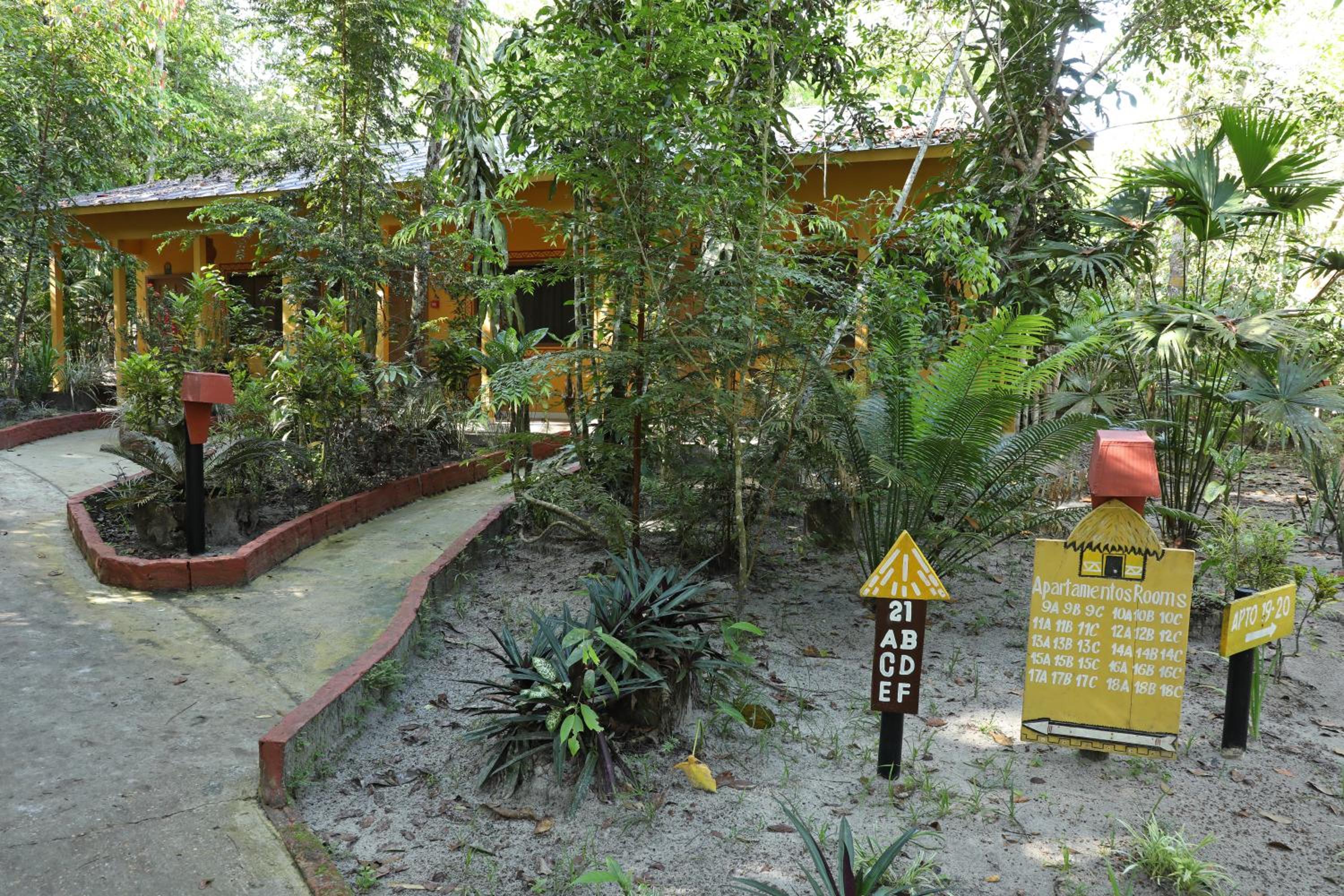
Older hotels near the theatre and the port, €35 to €70, and hostels from €10 a bed.
Ponta Negra
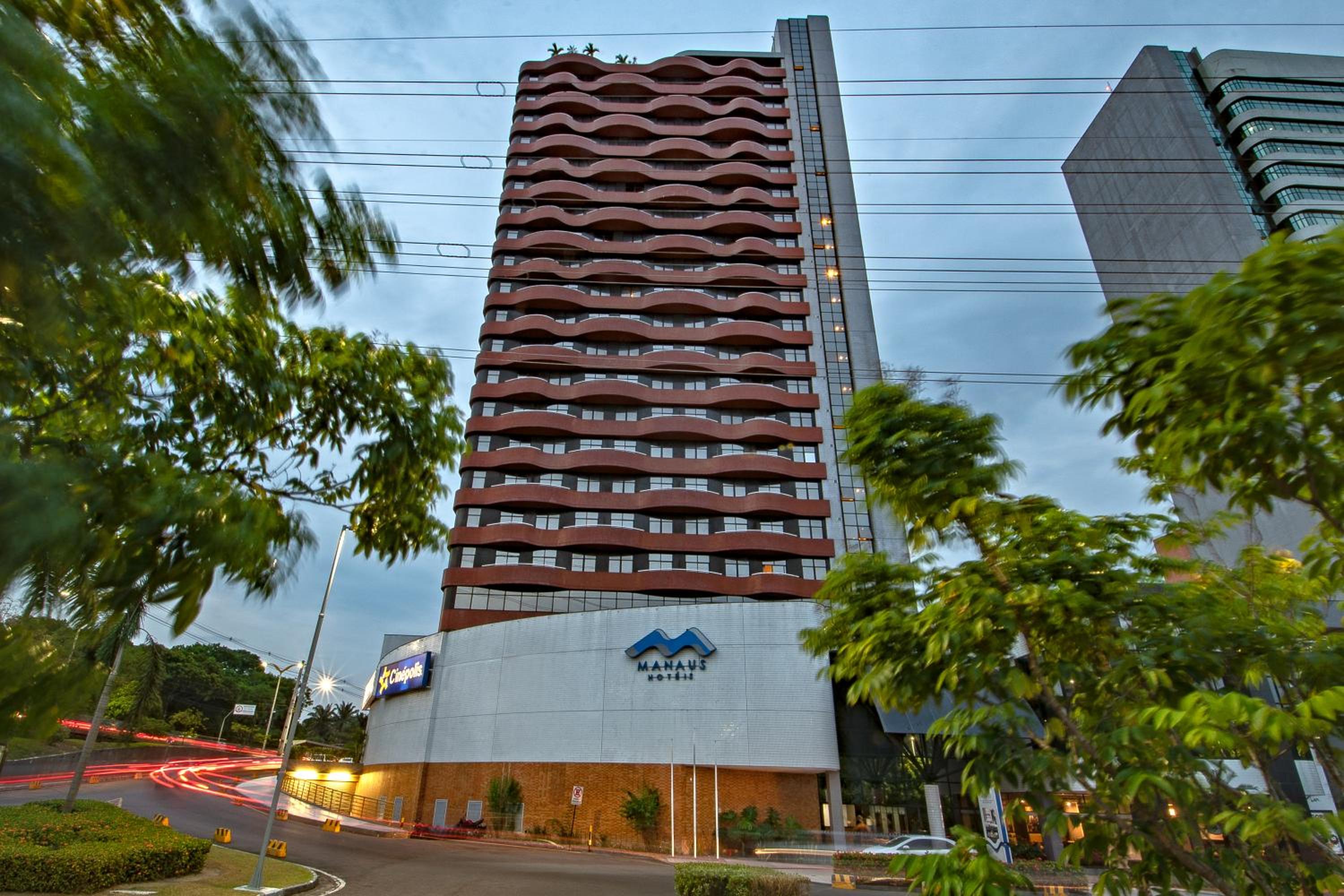
The better hotels and apartment towers on the riverside, €60 to €150, in one of the safer areas.
Adrianópolis
Business hotels among the restaurants, €50 to €100, well policed and practical.
The lodges
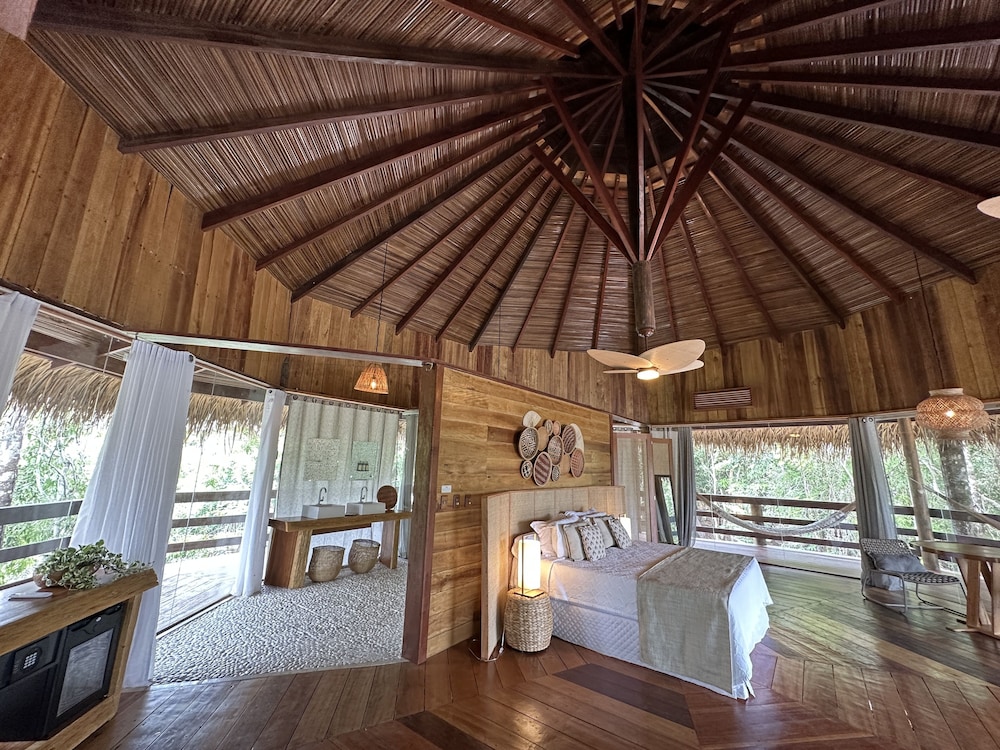
Floating and land-based jungle lodges, €150 to €400 a night with meals, boats and guided tours.


What to eat in Manaus
Large fruit-eating river fish, usually barbecued ribs or a caldeirada stew with rice and cassava flour
Hot broth of tucupi (fermented wild-manioc juice) with dried shrimp and jambu, a leaf that numbs the mouth
Amazonian palm fruit, sold alongside fish, fruit and herbs
Discover food spots in Stippl
Find restaurants and markets on the map, save them to your itinerary, works offline too.
Manaus customs and what not to do
The lodge tours visit villages
River communities, and on some itineraries an indigenous one; treat the stop as a visit to people's homes, not an exhibit, and buy the crafts from the maker.
Ask before you photograph
In river and indigenous communities especially; a photograph of a child is a request to the parent, and the guide will make the introduction if asked.
Manauara, not Amazonense
Amazonense is anyone from the state; the city has its own identity, the opera house and the rubber boom are its pride, and the Teatro Amazonas is still a working theatre.
The forest has rules
On any lodge trip the guide's word on the water, the animals and the trails is final; no holding caimans on the night walk whatever is offered, and no feeding the dolphins.
Do
- Book a lodge with a local guide and ask who owns it
- See a performance at the Teatro Amazonas if one is on
- Carry repellent, long sleeves and a torch for any forest stay
- Eat tambaqui and tacacá at the Mercado Municipal
Don't
- Swim in the river near the city
- Photograph in a river community without asking
- Touch or hold wildlife on a tour, whatever the guide offers
- Expect English outside the lodges
What a Manaus trip costs
Budget
€39
Hostel dorm, prato feito or marmitex set plates, city buses and the occasional overnight coach, free beaches and free blocos.
Mid-range
€105
A pousada double with breakfast and air conditioning, restaurant meals, Ubers, one or two domestic flights, paid attractions.
High-end
€340
Beachfront hotels, private guides, a Pantanal lodge with full board and boat safaris, Noronha, camarote seats at Carnaval.
Track what you actually spend
Set a daily budget per country and log expenses in any currency while you travel.
Fun facts about Manaus
Manaus gained a UNESCO World Heritage Site in July 2026. The Teatro Amazonas and the Largo de São Sebastião were inscribed jointly with Belém's theatre as Amazonia Theaters.
An opera house was built in the rainforest from European parts. Alsatian roof tiles, Glaswegian steel, Carrara marble and French furniture, with a dome of 36,000 tiles in the colours of the flag.
The two rivers refuse to mix for 6 kilometres. The Rio Negro runs at 2 km/h and 28 degrees, the Solimões at up to 6 km/h and 22, and traces of the boundary persist for another 30 km.
Manaus is booked further ahead than anywhere else in Brazil. About 118 days on Stippl against 98 nationally, because the lodge and the boat have to be arranged before the flight.
The theatre opened on 31 December 1896. The first performance was Ponchielli's La Gioconda a week later, in a city built on the rubber boom of 1879 to 1912.
Manaus is the only Brazilian destination that peaks in the third quarter. Demand follows the rainfall at a three-month lag, because the flooded forest arrives after the rain does.
Local tips for Manaus
The airport is the only way in
Eduardo Gomes is thirteen kilometres north of the centre and the river boats are days, not hours. A taxi to the centre is about €15; the lodges collect from the airport.
The lodge arranges the transfer
It is part of the tour, not something to book separately: a speedboat, a road leg and another boat, and every lodge does it the same way. Give them the flight number.
Get the yellow fever jab
Vaccination is recommended for Amazonas state and it is the health rule that separates Manaus from the coast. Malaria prophylaxis is a doctor's decision, arranged before travel.
How long to stay
Most people give Manaus 3 nights on Stippl, and most of them are at a lodge. One night in the city for the opera house and the market is enough.
Stay in the policed districts
Ponta Negra, Adrianópolis and Vieiralves are reasonably safe in the evening; the centre after dark is not. A ride-hail between them, not a walk.
The forest is not the risk
The lodge portion is the safe part of the trip; the city is where the ordinary Brazilian precautions apply. Nothing on show, and the passport in the safe.
Manaus questions, answered
One night in the city, then two to four upriver at a lodge. Travellers planning Manaus on Stippl book about 118 days out, the longest lead in Brazil, because the lodges are small and the flights are limited. Put the transfer days into Stippl as travel rather than sightseeing.
Three nights, and most of them upriver. Manaus gets 3 nights in the trips people plan on Stippl, with four the next most common. The city itself is half a day; everything else is the boat out and the time you spend past the end of the road.
More often than not. 39.6% of the trips that include Manaus stay inside Brazil on Stippl, above the national figure, because getting here is a commitment: there is no usable road, so it is flights or a multi-day riverboat in both directions.
By air or by river, and nothing else. The road south has been impassable for decades and is still only being licensed for rebuilding. Flights from Sao Paulo take about four hours. The riverboat from Belem takes four days downstream and five coming back up, sleeping in a hammock.
High water, roughly February to July, floods the forest and lets canoes go in among the trees, and it is the better season for dolphins. Low water opens hiking trails and river beaches instead. The high-water peak comes reliably around June; the low-water end moves around a great deal.
Half a day. The opera house is the reason: an Italian-built theatre dropped into the rainforest at the height of the rubber boom, with the municipal market next to it worth an hour more. Past those two it is a working river port, and the forest is what you came for.
Every guide is written by the Stippl editors and checked against the trips our travellers actually plan. Spotted something out of date? Let us know.

Plan Manaus in Stippl
Day-by-day planning, stays and budget in one app, with every place from this guide already on the map.
Download the app