

Melbourne
Melbourne is Australia's art, coffee and sport city, with a free national gallery, laneways repainted overnight and footy at a hundred-thousand-seat stadium. Over 150 cuisines, each with its own suburb, and no lockout laws.
Melbourne in a nutshell
Melbourne: what to expect
366,000+ stops in Australia have been planned on Stippl. Here is what they say about Melbourne.
Melbourne is a set of neighbourhoods rather than a centre, and the laneways are where it shows. Hosier Lane can change overnight, and AC/DC Lane, Union Lane, Centre Place and Degraves finish the circuit. The Block Arcade has laid mosaic floors since 1891, the National Gallery of Victoria opens its permanent collections free, and Old Melbourne Gaol holds Ned Kelly's armour. At St Kilda, Luna Park runs the oldest wooden roller coaster still operating and little penguins come ashore at the pier for nothing.
Melbourne is a long stay that happens rarely. Around a quarter of the stops planned here are a single night and one stay in ten runs a full week, second only to Sydney, and yet Melbourne appears on fewer Australian trips than its size alone would predict. Sitting off the east-coast road is what does it: the same places turn up beside Melbourne as beside Sydney, every one of them more weakly.
Melbourne wants 3 nights, and another one or two for what leaves from it. The Great Ocean Road, Phillip Island, the Yarra Valley and the Grampians all start here, and the trams inside the central grid cost nothing. March to May and September to November are the two comfortable windows. Skip Melbourne if you came for a beach holiday, because the ocean is an hour out and Sydney wins that argument.
Plan Melbourne in Stippl
Day-by-day planning, stays and budget in one app, with every place from this guide already on the map.
Download the appWho Melbourne is for
Coffee people
Melbourne is the city where ordering a regular coffee marks you out, and where the café is a civic institution rather than a chain outlet.
Arts and street-art travellers
The NGV's free permanent collections, ACMI, and laneways that get repainted overnight make it the country's art city.
Sport pilgrims
AFL at the MCG is the single most-recommended experience, and the Australian Open, the F1 and the Melbourne Cup fill the rest of the calendar.
Eaters on any budget
Over 150 cuisines mapped onto suburbs: Italian in Carlton, Vietnamese in Richmond and Footscray, Greek in the CBD.
Backpackers on working holidays
No lockout laws, 24-hour weekend transport, and hostels that trade beds for hours, which is why 3 nights is only the start.
Road-trippers
The Great Ocean Road, Phillip Island, the Yarra Valley and the Grampians all start here.
Maybe not for you: beach holidays, since Sydney wins on sand and setting and Melbourne's ocean beaches are an hour out; and anyone who needs reliable weather, because the city famously does four seasons in a day.
The best time to visit Melbourne
Summer
December to February
Hot rather than warm, with heatwaves that push past forty for a few days at a time and the Australian Open filling the city in January. Long light evenings and the rooftop bars open late.
Autumn
March to May
Mild days, the Grand Prix in March and the AFL season starting. Most people would call this the best of the year here, and the prices agree with them.
Winter
June to August
Cold, grey and damp by Australian standards, and the city at its most itself: laneway cafés, galleries and football every weekend. The cheapest beds of the year.
Spring
September to November
Warming and unpredictable, with the Grand Final in late September and the Melbourne Cup on the first Tuesday of November. Four seasons in a day is a spring speciality.
- January is the month most travellers plan Australia for on Stippl, and Melbourne is planned about 97 days ahead. Only 11.2% of Melbourne plans are made inside a fortnight; the Open and the Grand Prix are the weeks where that matters.
- Melbourne's weather changes inside a day in any month. Carry a warm layer and a raincoat whatever the forecast; the city's wet reputation is about frequency, not volume, and it is drier than Sydney over a year.
- The Australian Open in late January and the Grand Prix in March are the two weeks to book early. Both fill the city centre hotels and both are worth being here for, if the room is sorted first.
- The Melbourne Cup on the first Tuesday of November is a public holiday in Victoria. Shops and offices close, Flemington and the city bars fill, and a museum plan for that day is a plan for the day after.
Add your Melbourne dates and we'll flag the weather
Stippl shows the season, crowds and prices for every stop on your route.
Describe your trip, get a Melbourne itinerary in seconds
Everything in this guide is already in Stippl. Tell the planner how long you have and what you like: it builds the route, the days and the travel times, and you edit whatever you want.
Things to do in Melbourne
A footy match at the MCG
Sit among a hundred thousand at the largest stadium in the southern hemisphere for an Australian Rules game from March to September, about €20 for a general seat. Rival fans sit together and you do not need to know the rules.
The laneways
Walk Hosier Lane, the most photographed and repainted overnight, then AC/DC Lane, Union Lane, Centre Place and Degraves for the circuit. Free, and the coffee in Degraves is the stop.
The arcades
Walk the Block Arcade of 1891 with its mosaic floors and the quieter Royal Arcade beside it, the Victorian shopping city that survived. Free, and the Hopetoun Tea Rooms are the reason to queue.
The Skydeck
Ride to the eighty-eighth floor of Eureka Tower, the southern hemisphere's tallest observation deck, about €18, with the Edge glass cube cantilevered out from the building for a few euros more. Dusk for both lights.
NGV
Spend an afternoon at Australia's oldest and most-visited art museum, the Australian collection at Federation Square and the international one on St Kilda Road, both permanent collections free. The water wall entrance is the way in.
St Kilda at sunset
Take the tram to St Kilda for the pier at dusk, when the little penguins come ashore free at the breakwater, and Luna Park's 1912 Scenic Railway, the world's oldest continuously running wooden roller coaster. Bring no torch; the volunteers ask.
The neighbourhoods of Melbourne
CBD
Laneways, arcades, free trams
The laneways, the arcades and most sights within a few blocks, with the free tram zone and hotels of every grade. For first visits and short stays that want everything on foot.
Everything walkable and the trams free, and a centre that empties on Sunday.
Fitzroy
Vintage, bars, street art
Brunswick Street's vintage racks, bookshops, bars and street art, the bohemian flagship, with boutique hotels and apartments. For nightlife and for feeling local.
The best evenings and the character, and a tram to the centre.
Collingwood
Breweries, food strip
Smith Street's food, music and art strip on the Fitzroy border, with the breweries and the warehouse apartments. For bars and breweries and for a base between two good streets.
Smith Street at the door, and a tram for everything else.
Richmond
Pubs, Vietnamese food, the MCG
Gentrified pubs, breweries, the best Vietnamese food in the city on Victoria Street and the MCG, with apartments and a few hotels. For sport and for eating.
The G on foot and the food, and match-day crowds.
Brunswick
Live music strip, working holidays
Sydney Road's live-music strip with specialist roasters behind it, working-holiday territory with share houses and cheap rooms. For long stays and budget travellers.
Cheap and the music, and half an hour by tram to the centre.
St Kilda
Bayside, penguins, backpacker bars
Bayside: Luna Park, the pier penguins at dusk, Acland Street's cakes and the backpacker bars, with hostels and apartments. For beach access and for hostels by the sea.
The bay and the penguins, and the backpacker strip's noise.
See every Melbourne neighbourhood on one map
Save the areas you like and Stippl plots your days so you're not crossing the city twice.
Where to stay in Melbourne
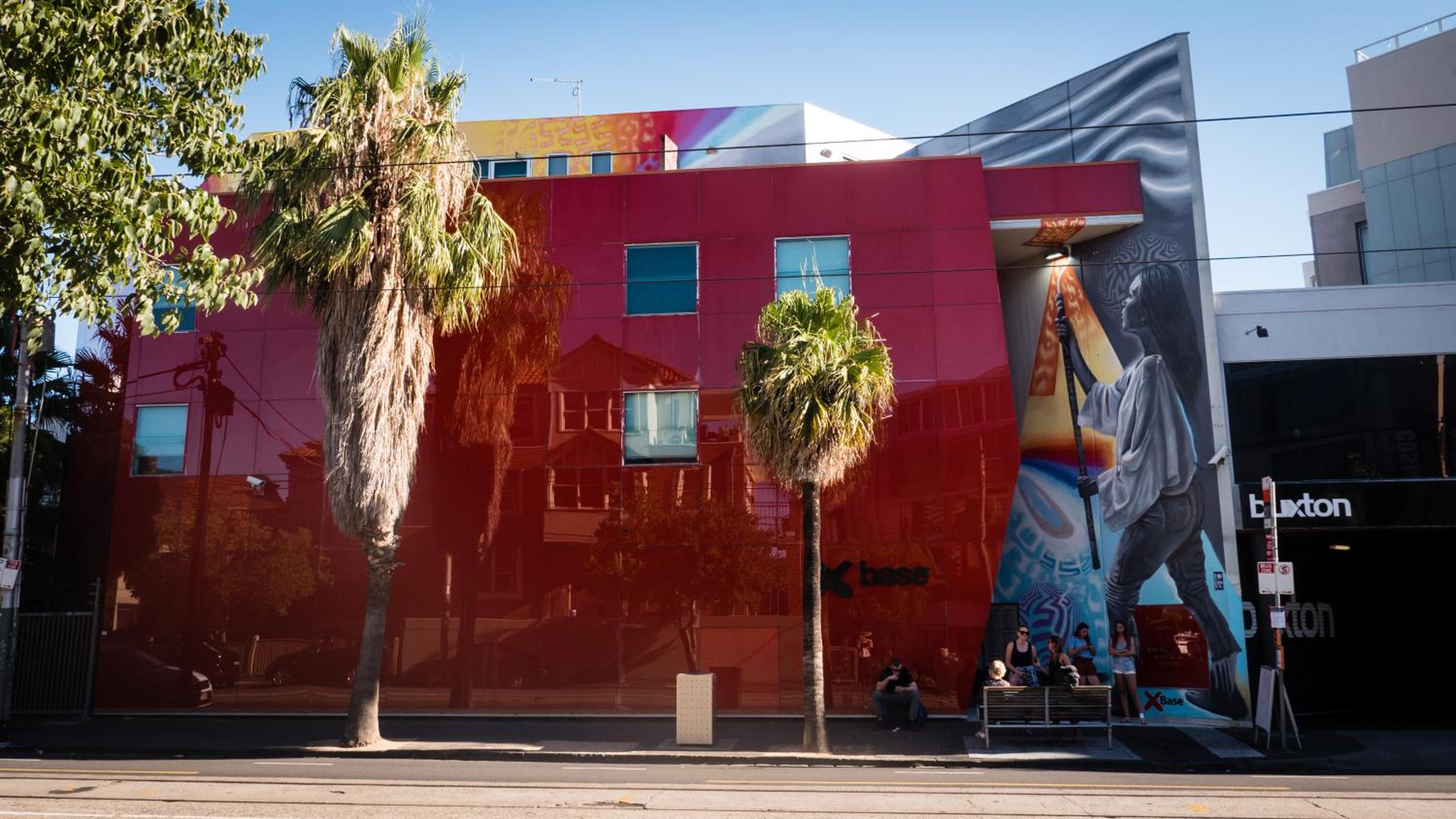
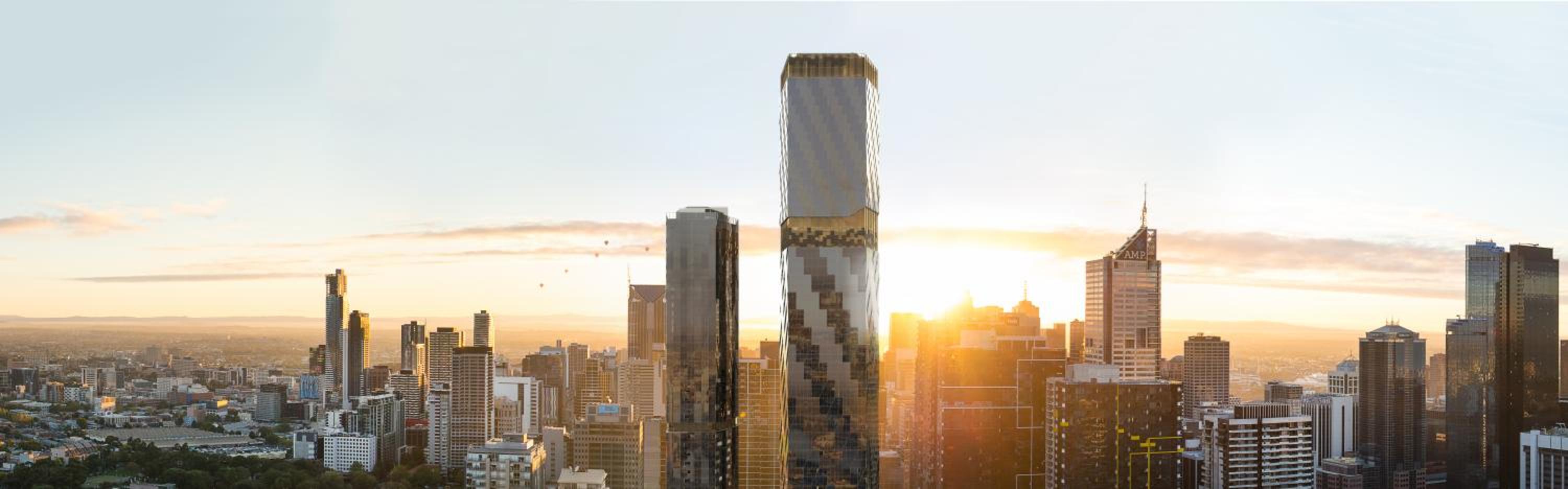
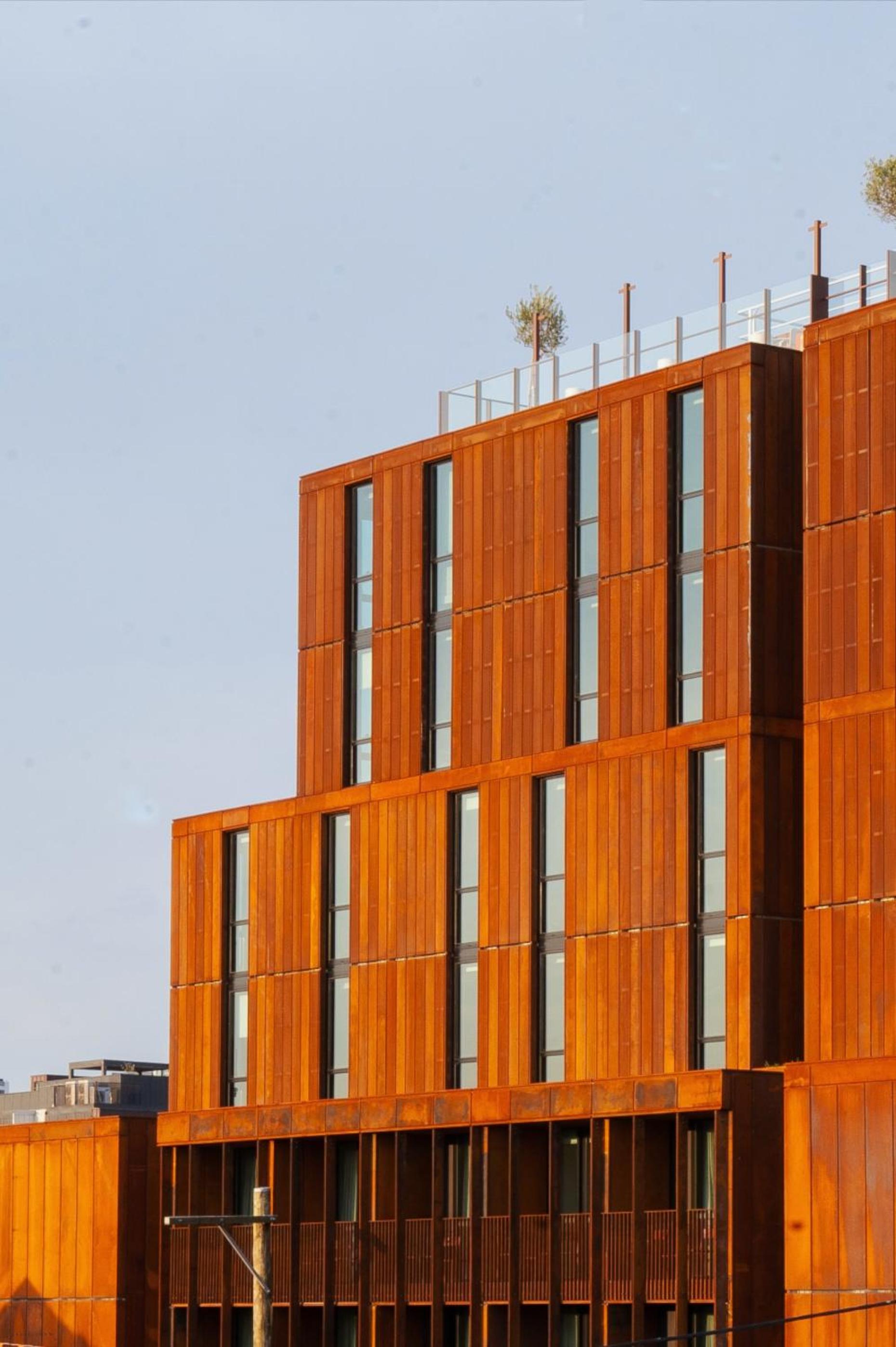
Stay in the CBD for a first short visit, inside the free tram zone with the laneways on foot, and in Fitzroy or Collingwood to feel like a local. Most people give Melbourne 3 nights on Stippl. The mid-range is the city's weak spot, so a good three-star is hard to find and the step up to four is often worth it; tighter short-stay rules have pushed prices up everywhere.
CBD
Big pod hostels from €30 a bed, and four-star hotels €150 to €300 among the laneways.
Fitzroy
Boutique hotels and a heritage hostel, €35 a bed to €250 a room, above Brunswick Street.
Collingwood
Warehouse apartments and design hotels near the breweries, €130 to €260.
Richmond
Apartments and a few mid-range hotels near the MCG, €120 to €220.
Brunswick
Working-holiday hostels and share-house rooms, €25 to €40 a bed and €80 to €140 a room.
St Kilda
Party hostels €28 to €45 a bed and bayside apartments, €130 to €250.


What to eat in Melbourne
espresso with steamed milk, the vocabulary of the city's café ritual
Cantonese dumplings, Chinatown's specialty
Italian cooking in the historic Italian quarter
Vietnamese noodle soup, a Richmond and Footscray specialty
Footscray and Fitzroy's Ethiopian food scene
laminated pastry, baked in a climate-controlled glass room
served since 1892 in a heritage arcade
Discover food spots in Stippl
Find restaurants and markets on the map, save them to your itinerary, works offline too.
Melbourne customs and what not to do
Order coffee by name
A flat white, a long black, a magic; not by size and never regular, and the barista will ask which milk before you have finished.
Sport is the civic language
The MCG is its cathedral and a match opens with an acknowledgement of the Wurundjeri custodians; a footy game is the fastest way into a conversation here.
Wurundjeri and Kulin country
The city acknowledges it visibly: the Koorie Heritage Trust at Federation Square, the Botanic Gardens' Aboriginal Heritage Walk and Bunjilaka inside the Melbourne Museum.
The tram has rules
Give up your seat, cross the tracks at marked crossings, and the free tram zone ends where the signs say; a myki card beyond it, and the inspectors are real.
Do
- Give up your seat on the tram, and cross tram tracks at marked crossings
- Book AFL tickets early for big matches; they sell out
- Watch the penguins from the platform, without flash
- Order the coffee by name
Don't
- Assume the weather at breakfast is the weather at dinner
- Drive into the CBD; trams, hook turns and parking prices all argue against it
- Take the bay's calm water as a guide to the ocean beaches
- Ride the tram beyond the free zone without a myki
What a Melbourne trip costs
Track what you actually spend
Set a daily budget per country and log expenses in any currency while you travel.
Fun facts about Melbourne
Melbourne's café culture beat Starbucks in 2008. The chain closed 61 of its 84 Australian stores that year, and the city's independent coffee scene is the reason most often given.
Luna Park's Scenic Railway is the world's oldest continuously operating wooden roller coaster. It opened in 1912 and still runs with a brakeman standing on board, at the St Kilda seafront.
Cooks' Cottage was shipped brick by brick from England. The Yorkshire cottage of the explorer's parents was re-erected in Fitzroy Gardens in 1934 for the city's centenary.
Wild possums live in the Carlton Gardens. Locals call it Possum Park, and the brushtails come down from the trees after dark beside the World Heritage exhibition building.
Flinders Street Station has Australia's longest railway platform at 708 metres. The station is the city's anchor and meeting point, under the clocks, and the platform runs the length of the block.
Melbourne's Chinatown is the oldest in the southern hemisphere. It dates to the 1850s gold rush on Little Bourke Street, and it has been continuously Chinese ever since.
Melbourne held the world's most liveable city title for seven straight years. From 2011 to 2017, until Vienna took it in 2018; the city is also called Naarm, on Wurundjeri land.
Local tips for Melbourne
The Free Tram Zone
Trams inside the central grid, Docklands to Spring Street and Flinders Street to the market, are free; touch on with a Myki or a bank card outside it. The stop maps show the edge.
Trams are quiet and fast
They are the everyday urban hazard: large, heavy and nearly silent. Cross at the marked crossings and look both ways on the shared streets.
Sydney is a flight, not a train
About nine hours by road on the inland highway, eleven by train and ninety minutes by air. The Great Ocean Road west is two or three days, not one.
How long to stay
Most people give Melbourne 3 nights on Stippl: the laneways and the arcades, a footy match or the NGV, and a Great Ocean Road day. A quarter stay one.
Bay beach or ocean beach
St Kilda and Brighton on Port Phillip Bay are calm; the ocean beaches down the Mornington and Bellarine coasts have rips that kill. Swim between the red-and-yellow flags on any surf beach.
Four seasons in one day is real
On the Great Ocean Road walks, the Dandenongs and the Grampians the weather turns in an hour. Carry the layer and the raincoat in every month, and the sun cream in summer.
Melbourne questions, answered
By laneway and by day trip. Trips that include Melbourne run 38 days on Stippl, and the city is usually one end of the east coast run. Put three nights into Stippl, and decide early whether the Great Ocean Road is a day or an overnight, because it changes everything.
Two or three for the city, four or five with day trips. Most people give Melbourne 3 nights in the plans they build on Stippl. The laneways, the markets and the galleries are two days; the Great Ocean Road, the Mornington Peninsula and the Grampians are each another.
14.3% of Melbourne stops planned on Stippl carry no night at all, the highest share of the big east coast cities, and usually a domestic connection. That is a shame, because Melbourne is the Australian city that gets better the longer you give it.
Sydney for the immediate visual hit: the harbour, the bridge, the beaches. Melbourne for food, coffee, arts and neighbourhoods, which take longer to find and last longer once you have. The usual verdict is Sydney for a weekend and a postcard, Melbourne for a week and everything else.
Yes. Little penguins come ashore at the St Kilda pier breakwater at dusk, from a managed viewing platform, and it is free. It is smaller and far less staged than Phillip Island, twenty minutes from the city rather than two hours, and no less moving. Go quietly and use no flash.
Inside the central city and Docklands zone, yes: no card, no tapping, just get on. The moment you cross the boundary you need a Myki, and inspectors do check on the routes running out to St Kilda and Brunswick. Tap on before the boundary rather than after it.
Every guide is written by the Stippl editors and checked against the trips our travellers actually plan. Spotted something out of date? Let us know.

Plan Melbourne in Stippl
Day-by-day planning, stays and budget in one app, with every place from this guide already on the map.
Download the app