

Yogyakarta
Yogyakarta puts two of the greatest monuments in Southeast Asia within an hour of a working royal court, at the cheapest prices of any big Indonesian destination. Batik's heartland, with the best trains in the country.
Yogyakarta in a nutshell
Yogyakarta: what to expect
Before writing this we counted 688,000+ planned stops in Indonesia on Stippl.
Yogyakarta is Java's cultural capital, and the two monuments people come for are both out of town. Borobudur is the largest Buddhist temple in the world, a stepped mandala of 504 Buddhas climbed in a spiral, and Prambanan is Indonesia's largest Hindu complex, its tallest shrine standing in a field of some 240 temples. In the city itself the Kraton is a working palace with the Sultan still in it, Taman Sari hides a circular underground mosque, and Kotagede has been silversmithing since the sixteenth century.
Yogyakarta is not added to a Bali trip, it turns up once a trip is long enough to leave Bali. Plans that carry Yogyakarta run close to twice as many Indonesian stops as the national picture, the longest itineraries in the country. Every one of its strongest neighbours is on Java and every one of its weakest is on Bali's beach strip, so for our travellers those are two different holidays rather than two halves of one.
Jogja wants 3 nights, one for the city, one for the temples and one for a day trip. Book Borobudur's upper levels three to seven days out, because the timed sessions are capped and they sell out. A room here runs €98, well under Ubud. Skip Jogja if you want a beach, and avoid November to March, when the rain lands on an itinerary built out of open-air monuments.
Plan Yogyakarta in Stippl
Day-by-day planning, stays and budget in one app, with every place from this guide already on the map.
Download the appWho Yogyakarta is for
History and architecture people
Two of the greatest monuments in Southeast Asia inside an hour, plus a working royal court and a sixteenth-century capital in the suburbs.
Culture travellers
Gamelan, wayang kulit, court dance and the Ramayana ballet at Prambanan, all running to a published schedule rather than laid on.
Craft buyers
Yogyakarta is the heartland of Javanese batik, on UNESCO's intangible heritage list, and Kotagede has been silversmithing since the sixteenth century.
Budget travellers
The cheapest of Indonesia's major destinations: hostels from €4.50 and guesthouses from €10 with breakfast, and most people give it 3 nights.
Food travellers
Gudeg, a student-city street-food economy and a genuine café scene, at a fraction of Bali's prices.
Java circuit travellers
Yogyakarta is the anchor of the island's overland route, and the train network out of it is the best in Indonesia.
Maybe not for you: beach travellers, since the south coast is an hour away with dangerous surf; anyone expecting Bali's ease, because the city is a working city first; anyone travelling November to March, when heavy rain lands on outdoor monuments; and anyone hoping to climb Borobudur on impulse.
The best time to visit Yogyakarta
Dry season
May to October
A far sharper dry season than Bali's, with August almost rainless. July and August plus Christmas to New Year are the peak, when Borobudur's climb quota turns crowding into a booking problem.
Wet season
November to April
Wetter than Bali's and a month later: April is still wet here while Bali is already dry. Afternoon downpours, and the temples empty.
- Borobudur's climb quota makes the peak a booking problem, not a queue. The timed tickets for the upper terraces sell out in July and August and around New Year; book the slot before the flight.
- The Ramayana Ballet at Prambanan plays Tuesday, Thursday and Saturday, half past seven to half past nine. On the open-air stage with the temple lit behind it in the dry season, indoors in the wet; the dry-season nights sell out.
- Yogyakarta is planned about 77 days ahead on Stippl, and July is its month. It is the anchor of the Java route, fixed with the train tickets.
- Ramadan and Idul Fitri empty the city; Nyepi does not apply. The court's own calendar of Sekaten, the week-long fair around the Prophet's birthday, moves with the Islamic year; ask at the Kraton rather than assuming a nightly show.
Add your Yogyakarta dates and we'll flag the weather
Stippl shows the season, crowds and prices for every stop on your route.
Describe your trip, get a Yogyakarta itinerary in seconds
Everything in this guide is already in Stippl. Tell the planner how long you have and what you like: it builds the route, the days and the travel times, and you edit whatever you want.
Things to do in Yogyakarta
 Photo by 明珠 梁 via Pexels
 Photo by Rendy Novantino via Unsplash
Borobudur
Climb the ninth-century Buddhist monument of 2,500 relief panels and 504 Buddha statues in a spiral, with a guide and the issued sandals; the upper levels are capped and ticketed by the hour, about €25. Book the slot online days ahead.
Prambanan
Walk Indonesia's largest Hindu complex, three main shrines to Shiva, Vishnu and Brahma with the tallest at forty-seven metres inside a field of some 240 temples, about €22. Open from half past six; the late afternoon has the light.
The Ramayana Ballet
Watch the epic told in Javanese dance and gamelan on the open-air stage with Prambanan floodlit behind it, on Tuesdays, Thursdays and Saturdays from half past seven, about €10. The indoor theatre runs in the wet season.
Taman Sari and the underground mosque
Walk the Sultan's eighteenth-century pleasure garden, the bathing pools and tunnels and Sumur Gumuling, the circular subterranean mosque with five staircases meeting under one dome, about €1. Go at opening for the mosque empty.
The Kraton
Visit the living palace where the Sultan still rules, with gamelan, dance and wayang rehearsals open to visitors in the pavilions from about nine, about €1. Take a guide; the building explains almost nothing on its own.
Jomblang Cave
Descend by rope into the collapsed doline, then walk through deep mud to the chamber where a shaft of light falls through the roof around midday, about €30. Daily numbers are capped; book days ahead.
The neighbourhoods of Yogyakarta
Malioboro
Main artery, becak, night stalls
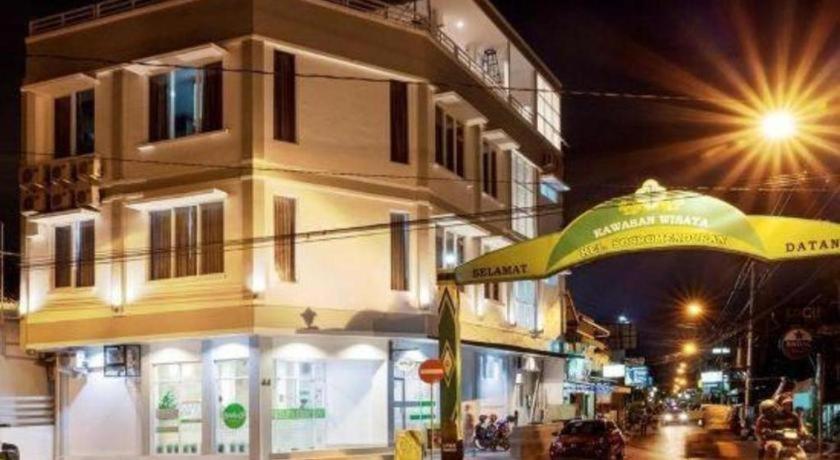
The city's main street running from the station toward the Kraton: batik shops, becak and horse-carts, buskers and a street-food strip that opens at dusk, with hotels at every price. For first visits and the trains.
Everything and the station on foot, and the crush from four until midnight.
Prawirotaman
Leafy lanes, cafés, batik studios
The leafy quarter south of the Kraton: independent cafés, galleries, boutique guesthouses, batik studios and the city's best breakfasts. For budget travellers and couples who want the quiet version of the city.
The best eating and sleeping in the city, and a becak to the palace.
Kraton and Taman Sari
Walled city, the court, water garden
The old walled city around the Sultan's palace, with gamelan and dance in the pavilions and the ruined water garden ten minutes west, and homestays in the lanes inside the walls. For first visits that want the court on foot.
The palace and the water garden from the door, and the walled city's early nights.
Kotagede
Silversmiths, old capital, joglo houses
The sixteenth-century Mataram capital south-east of the centre: joglo houses, the royal cemetery, a spring-fed bathing pool and family silversmiths, with a few heritage guesthouses. For history and for the oldest streets without a crowd.
The oldest streets and the silver, and a taxi to the centre.
The Merapi foothills
Cooler ground, jeep tours
Cooler ground toward the volcano on the Kaliurang side, with the museums, the jeep-tour operators, viewpoints and hill hotels. For volcano days and for a cooler night; read the alert level first.
Cool air and the jeeps at the door, and an hour to the city and the temples.
See every Yogyakarta neighbourhood on one map
Save the areas you like and Stippl plots your days so you're not crossing the city twice.
Where to stay in Yogyakarta
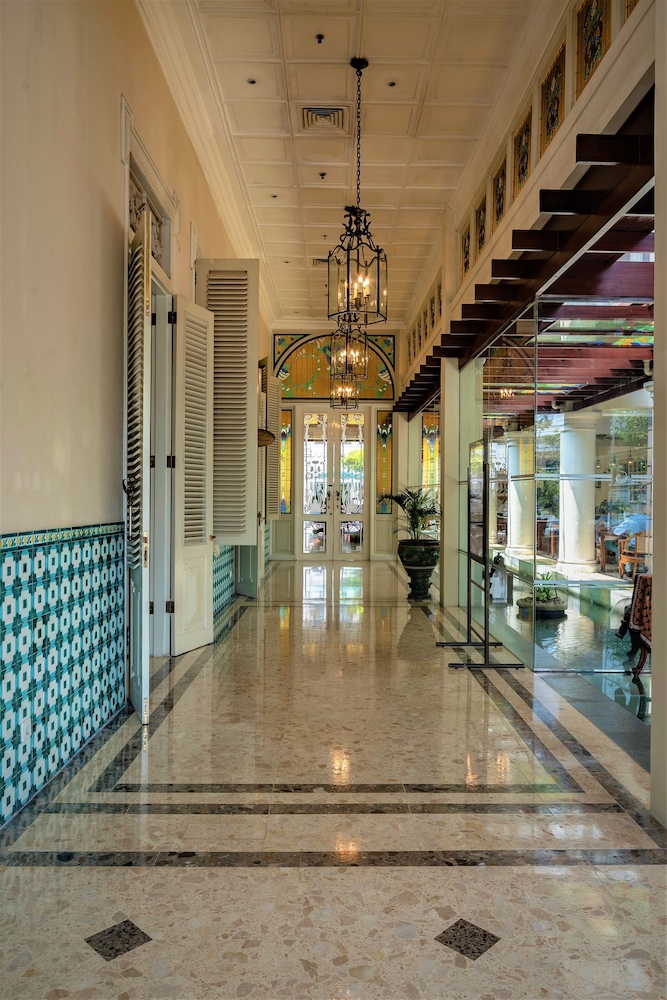
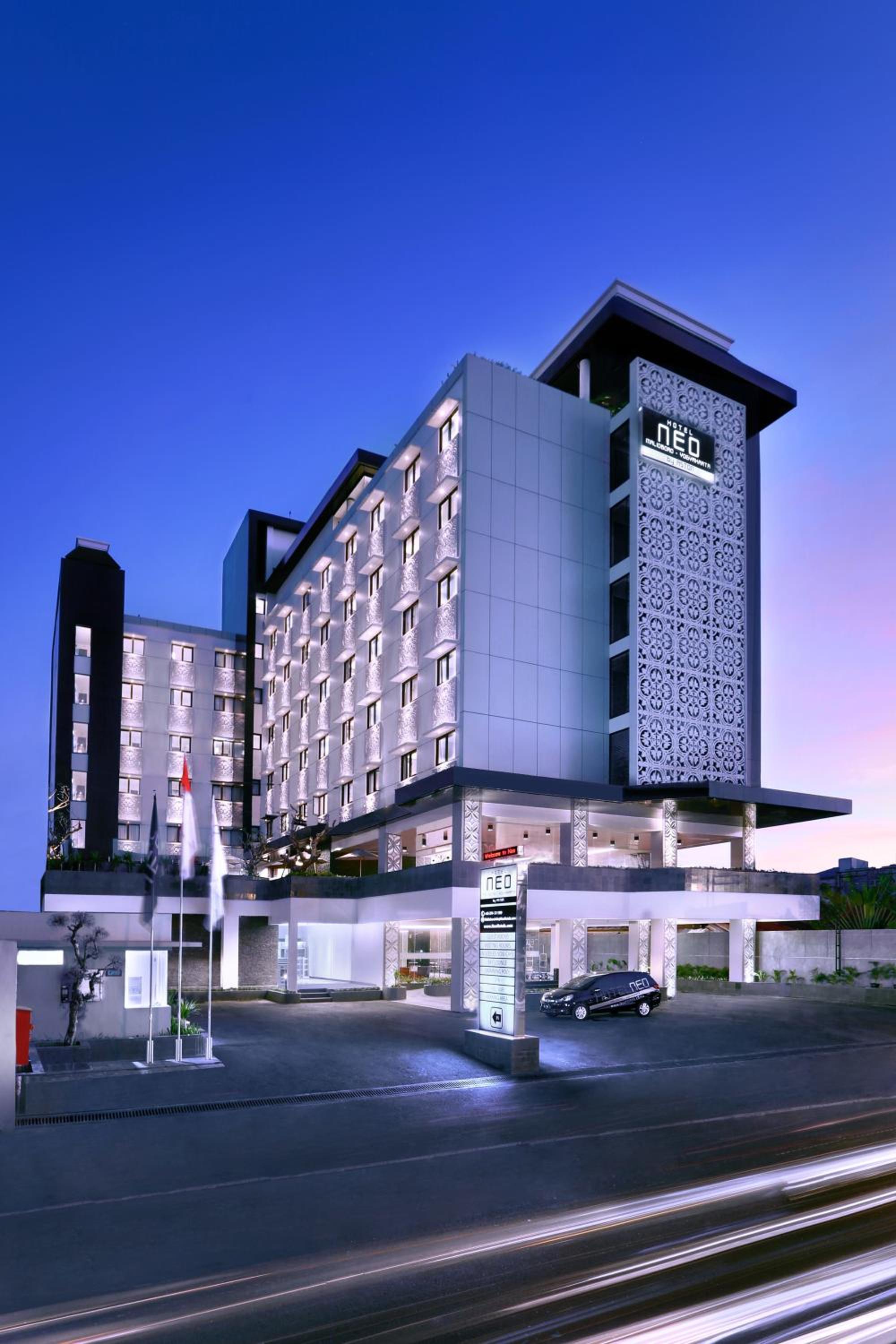
Stay in Prawirotaman unless you have a reason not to: cafés, galleries and guesthouses on quiet streets, ten minutes by ride from the Kraton. Malioboro is louder, nearer the station and better for one night than for three. A hotel here runs about €98 a night in what travellers log, though guesthouses with breakfast start around €10. Book a pool for the dry season.
Malioboro
€10–45
Budget hotels and hostels off the main street, dorms €4.50 to €10 and rooms €15 to €40, near the station.
Prawirotaman
€12–60
Boutique guesthouses with pools and breakfast, €15 to €50, and a few design hotels from €60.
Kraton and Taman Sari
Homestays in family compounds inside the walls, €10 to €30, with gamelan practice in earshot.
Kotagede
Rooms in old joglo houses and small heritage guesthouses, €20 to €60, among the silversmiths.
The Merapi foothills
Hill hotels and cool-air resorts on the Kaliurang side, €30 to €100, for an early jeep tour.


What to eat in Yogyakarta
Young jackfruit stewed for hours in palm sugar and coconut milk until it is sweet and mahogany-brown, served with rice, egg, chicken and krecek
Black coffee with a lump of glowing charcoal dropped into the glass, drunk at street stalls near the station
Small baked pastries filled with sweet mung bean, the standard thing to take home
Goat satay skewered on iron bicycle spokes rather than bamboo, so the meat cooks from the inside
"Cat rice": tiny banana-leaf parcels of rice with a scrap of topping, sold for a few thousand rupiah at angkringan carts
Chicken simmered in coconut water and spices, then fried, from the village next to Prambanan
Discover food spots in Stippl
Find restaurants and markets on the map, save them to your itinerary, works offline too.
Javanese customs and what not to do
Muslim-majority, not Bali
Dress more conservatively than on the coast, particularly in the Kraton, in Kotagede and away from the tourist streets; shoulders and knees covered is the working rule.
The Kraton is a residence
People live inside the palace walls, the Sultan is a serving governor, and the dance and gamelan you see are practice and ritual, not performance; behave as a guest in a house.
Shoes off at the pavilions
Remove them where indicated at the palace pavilions and at religious sites, and ask before photographing people at prayer or at work in the batik studios.
Batik has a hierarchy
Hand-drawn batik tulis takes weeks, stamped batik cap takes hours, and printed cloth is not batik at all and is what most of Malioboro sells; buy from a studio.
Bargain in markets, not studios
It is expected on the street and at Beringharjo and is not done in studios, boutiques or cafés; a studio price reflects the weeks of work.
Do
- Book Borobudur's climb-up slot three to seven days ahead, and take the earliest one you can
- Hire a driver for the temple day; it is cheap and it saves the whole logistics problem
- Go to Malioboro twice, by day for the market and after five for the food carts
- Take the train in or out; it is the best rail network in the country
Don't
- Assume the Borobudur ticket you bought lets you climb; courtyard and structure tickets are different products
- Fly a drone at either temple
- Book a Merapi jeep tour without checking the current alert level
- Dress for Bali; this is a court city in a Muslim-majority province
What a Yogyakarta trip costs
Budget
€13–26
Hostel dorm, warung and street-food meals, Grab bikes, the free half of the city.
Mid-range
€39–80
Prawirotaman guesthouse with breakfast, café eating, a shared driver day, both temple tickets.
High-end
€110–220
Heritage hotel, private driver on call, guided temple access, the Ramayana ballet in good seats.
Track what you actually spend
Set a daily budget per country and log expenses in any currency while you travel.
Fun facts about Yogyakarta
Yogyakarta is the only part of Indonesia still ruled by a monarch. The Sultan is simultaneously the hereditary ruler and the appointed Governor of the Special Region, and the Kraton is a working palace.
Borobudur is the largest Buddhist temple in the world. It carries 2,504 relief panels and 504 Buddha statues, about 40 km north-west of the city, and was buried under volcanic ash for centuries.
Kopi joss is served with a lump of burning charcoal in the glass. The street coffee was invented at a stall by the railway station in the 1960s, and the charcoal is said to settle the stomach.
Sate klathak is skewered on bicycle spokes. The iron conducts heat into the goat meat from the inside, and the dish is a Bantul speciality from south of the city.
Prambanan's Shiva shrine is 47 metres tall. The Hindu complex holds about 240 temples, 17 km north-east of the city, and the Ramayana ballet is performed in front of it.
UNESCO lists Indonesian batik as intangible heritage, and Yogyakarta is its heartland. The court patterns are still drawn by hand with wax in workshops around the Kraton, and some motifs were once reserved for the Sultan.
Local tips for Yogyakarta
The train is the thing
It is the best network in Indonesia: Jakarta and Malang about eight hours, Surabaya four to five, and executive class about €25. Book on the KAI app a week ahead for weekend trains.
The airport is not in town
Yogyakarta International is forty kilometres out in Kulon Progo, not the old in-town airport; allow an hour and check which one the booking names. The airport train is about €1.50.
Grab, TransJogja or a becak
Grab and Gojek work well in town, the TransJogja buses run nineteen lines for about €0.20, and a becak is the way down Malioboro. Nothing needs a scooter inside the city.
How long to stay
Most people give Yogyakarta 3 nights on Stippl: Borobudur at dawn, Prambanan in the afternoon and a day for the palace and the old town. A driver for the temple day is about €35.
Merapi is at Alert Level III
The volcano has been at the second-highest level since 2020, thirty kilometres north; the jeep tours run to the exclusion line and no further. Check the status before a sunrise trip.
No swimming on the south coast
Parangtritis and its neighbours face the open Indian Ocean with strong rips and drownings every year. Go for the sunset and the dunes and stay out of the water.
Yogyakarta questions, answered
Book Borobudur before anything else, because upper-level access is capped and timed and it sells out. Yogyakarta opens 15.39% of the trips it appears in on Stippl, usually a Java overland run. Put three nights into Stippl with the two temples on separate days.
Three. Travellers planning Yogyakarta on Stippl give it 3 nights: one day for the city and the kraton, one for Borobudur and Prambanan, and one for a day trip out to the caves or down to the coast.
No, and few people try: only 15.47% of Yogyakarta stops planned on Stippl are a single night. Borobudur is an early start an hour out of town and Prambanan is a separate afternoon, so one night means choosing one temple and skipping the city altogether.
No. Access to the upper levels is capped at a limited number of people a day in timed sessions and it sells out, so book several days ahead. Check that you are buying the ticket which includes the temple structure rather than the courtyard-only one, which is a common and expensive mistake.
The city is not in the exclusion zone and never has been. Merapi has sat at a raised alert level for years and the volcano observatory publishes bulletins on it. What actually matters is whether a jeep tour is operating inside the zone, so read the current bulletin before you book one.
Prawirotaman. Better food, quieter streets, more character and ten minutes from everything, against Malioboro's noise and its wall of shops. Malioboro is worth walking in the evening and is not worth sleeping on. The station sits between the two, so neither is inconvenient.
Every guide is written by the Stippl editors and checked against the trips our travellers actually plan. Spotted something out of date? Let us know.

Plan Yogyakarta in Stippl
Day-by-day planning, stays and budget in one app, with every place from this guide already on the map.
Download the app