

Uluwatu
Uluwatu is a chain of reef breaks with one of the best-known lefts anywhere, and cliffs that keep the crowds thin. The temple on the cliff with the Kecak at sunset is the best evening in southern Bali.
Uluwatu in a nutshell
Uluwatu: what to expect
Our travellers have planned 688,000+ stops in Indonesia on Stippl. That is where the numbers here come from.
Uluwatu is not a town but the southern tip of the Bukit Peninsula, and every beach here is at the bottom of a cliff. Pura Luhur Uluwatu stands on seventy metres of limestone with the Indian Ocean straight below the wall, and the Kecak fire dance runs beside it at sunset, sixty-five men chanting the Ramayana with no instruments. The reef breaks run from Balangan through Padang Padang and Bingin to Green Bowl, Nyang Nyang is a long white beach at the foot of a punishing staircase, and Jimbaran grills fish on the sand twenty-five minutes north-east.
Uluwatu is where a Bali trip ends. Uluwatu closes about one in four of the trips that carry it and opens about one in nine, twice as often last as first, and nothing else on the island runs that way. Denpasar, forty-five minutes up the road, is the exact mirror. Its strongest partner anywhere in the country is Canggu, two surf towns at opposite ends of the same coast.
So put Uluwatu at the end of the trip and give it 3 nights. The airport is forty-five minutes away, which is what makes it work as a last stop, and a scooter is not optional because there is no centre to walk. Skip Uluwatu if you want to swim, because the beaches are reef, rip and shore break, and skip it as an island base, because everything north goes through the Jimbaran and Kuta traffic.
Plan Uluwatu in Stippl
Day-by-day planning, stays and budget in one app, with every place from this guide already on the map.
Download the appWho Uluwatu is for
Surfers
Uluwatu is the reason the place exists: a chain of west-facing reef breaks from Balangan to Green Bowl, with the Uluwatu break itself among the best-known lefts anywhere.
Beach-club and sunset people
The highest concentration of clifftop and beach clubs in Bali, from cable-car coves to cliff-edge pools.
Anyone wanting beach, not town
The cliffs keep the crowds thin and the development off the sand.
Culture travellers, briefly
The temple and the Kecak at sunset are the single most-recommended evening in southern Bali.
Luxury travellers
Ungasan's clifftop resorts are the most dramatic addresses on the island, and the only ones with the ocean directly below the pool.
Anyone arriving or leaving
Forty-five minutes from the airport, Uluwatu is the destination most likely to close a Bali trip on Stippl, and most people give it 3 nights.
Maybe not for you: swimmers, since the beaches are reef, current and shore-break; anyone who will not ride a scooter, because there is no walkable centre; people with limited mobility, as every beach is a steep staircase; and anyone booking December to February, when the wind turns onshore.
The best time to visit Uluwatu
Dry season and surf season, the same season
April to October
The south-east trades blow offshore into the Uluwatu, Padang Padang and Bingin breaks and the swell comes in from the Indian Ocean. July and August bring the best waves and the worst crowds together.
Shoulder pair
May to June and September to October
Dry, offshore, and before or after the peak.
Wet season
November to March
The wind swings onshore and the rain comes in afternoon showers; the Bukit is the driest corner of Bali, so it is usually one heavy shower and a clear day.
- Uluwatu is the driest of Bali's big three, and its nights are the warmest. A low limestone plateau with no highland behind it catches less rain than Canggu and far less than Ubud; the pullover Ubud needs is dead weight here.
- The Kecak fire dance runs every day at sunset, not on a festival calendar. Six to seven in the clifftop amphitheatre beside the temple, gates earlier; in the peak the tickets go by mid afternoon.
- The best waves and the worst crowds arrive together in July and August. That is a genuine trade, not a scheduling accident; a surfer who wants the break to themselves takes May or September.
- Temple anniversaries close the temple road on the 210-day calendar. Pura Luhur Uluwatu's odalan fills the clifftop with ceremony for a day or two; check the date if the temple is the point of the visit.
Add your Uluwatu dates and we'll flag the weather
Stippl shows the season, crowds and prices for every stop on your route.
Describe your trip, get a Uluwatu itinerary in seconds
Everything in this guide is already in Stippl. Tell the planner how long you have and what you like: it builds the route, the days and the travel times, and you edit whatever you want.
Things to do in Uluwatu
 Photo by Tom Fisk via Pexels
 Photo by Takashi Miyazaki via Unsplash
 Photo by Corey Serravite via Unsplash
Pura Luhur Uluwatu at sunset
Walk the eleventh-century temple on a seventy-metre cliff, one of Bali's six directional sea temples with the ocean straight below the wall, about €3 with the sarong. The monkeys steal glasses; keep them in a pocket.
The Kecak fire dance
Watch sixty-five men chant the Ramayana in the clifftop amphitheatre beside the temple with no instruments at all as the sun goes down, from six, about €9. Book the ticket online in high season; it sells out.
Surfing the Bukit reefs
Paddle out at Padang Padang or Dreamland for the beginner and intermediate waves, about €15 for a lesson; Uluwatu itself is an expert wave paddled out through a cave at low tide. The schools are at Padang Padang.
Nyang Nyang
Descend the very steep path to the one-and-a-half-kilometre white beach with a few huts, no music and almost nobody on it, the best beach in Bali by more than one account. Free, and carry water for the climb back.
Sunset from the Suluban cliff
Sit at one of the warungs and bars stacked above the Uluwatu break and watch the surfers on the wave from a table, a beer for about €3. The most repeated evening on the Bukit.
Grilled seafood on Jimbaran beach
Choose the fish at the market and eat it grilled at a table on the sand at sunset, twenty-five minutes north-east, about €15 a head. Go to the northern end of the beach for the fishermen's own warungs.
The neighbourhoods of Uluwatu
Pecatu
Surf-town centre, temple road
The lanes around the temple road: warungs, surf shops, guesthouses, the markets and the access tracks to the beaches. For first visits and surfers who want everything on the Bukit within a twenty-minute ride.
Everything on the peninsula nearby, and no beach at the door.
Bingin
Cliff village, steps to the reef
A cliff village above a reef break reached by steps: warungs on the sand, small clifftop rooms and no road to the beach. For surfers and for the most complete cliff-village life left on the Bukit.
The reef from the terrace, and a hundred steps with the bags.
Suluban
Cliff cluster, the famous wave
The cliff cluster above the Uluwatu break itself, entered through a maze of buildings and a cave passage at low tide, with bars and a few rooms on the edge. For surfers and the sunset bar; not for sleep.
The wave and the sunset bar, and the noise of both.
Balangan
Wide bay, warungs, sunset point
A wide bay north of the others with a long beach, warungs and a sunset viewpoint on the headland, and budget bungalows on the cliff. For budget travellers and the most spacious beach on the Bukit.
Space and the cheapest beds, and a rough track to the road.
Ungasan
Clifftop resorts, day clubs
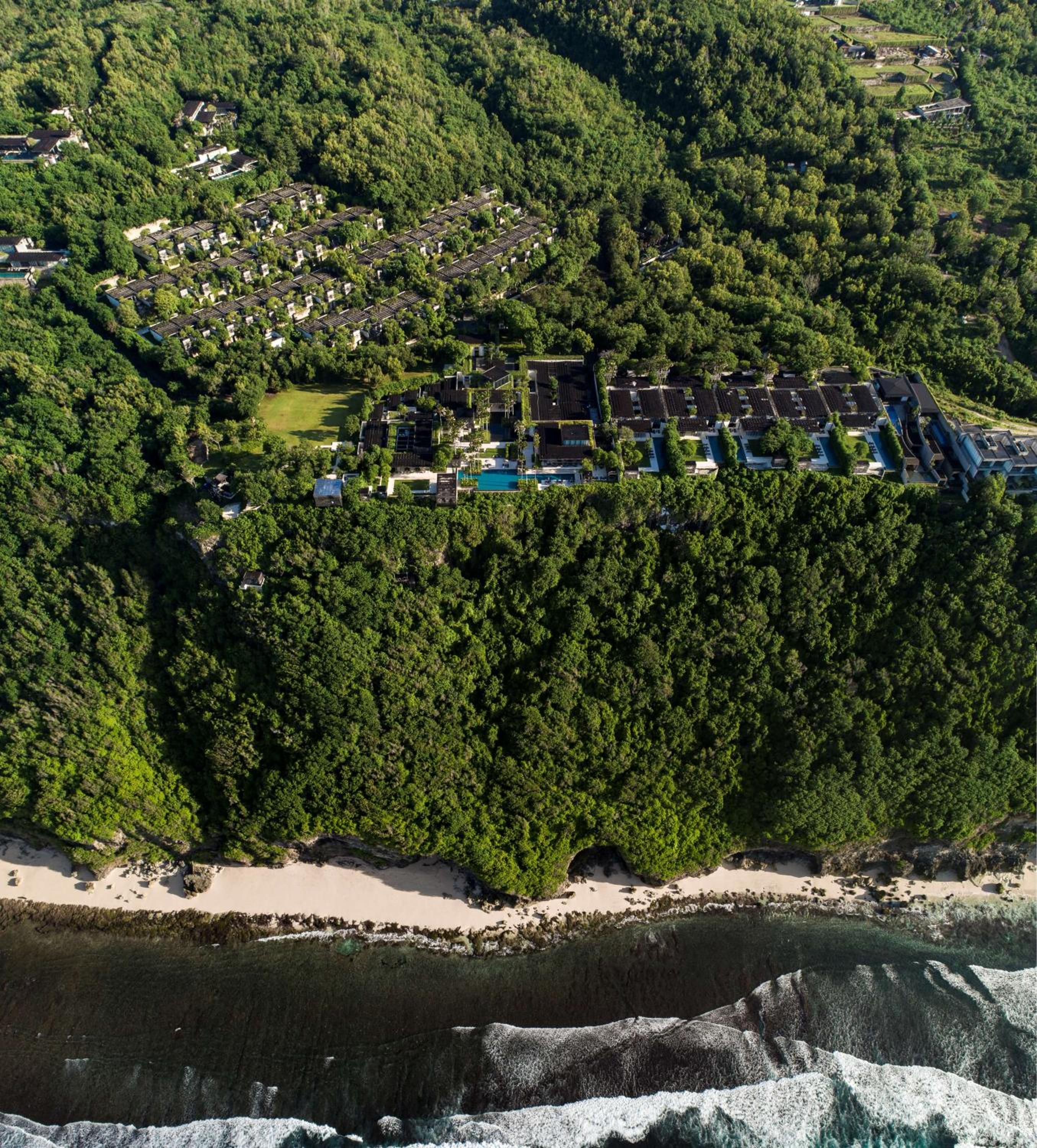
The quiet south-east: cliff resorts and day clubs high above the water, nothing walkable, the most dramatic addresses on the peninsula. For clifftop luxury and honeymoons.
The best view on Bali, and a car for every meal off the resort.
Nyang Nyang
Empty beach, steep descent
Almost nothing: a long white beach at the bottom of a very steep descent, a few huts, no music, and a handful of clifftop villas above. For the emptiest good beach in the south and people who need nothing.
The beach to yourself, and a climb that keeps it that way.
See every Uluwatu neighbourhood on one map
Save the areas you like and Stippl plots your days so you're not crossing the city twice.
Where to stay in Uluwatu
Stay in Pecatu for a first visit: it is the practical centre and the cheap one, with the warungs, the surf shops and the access tracks to the beaches. Book for the walk, not the map; the beach below a room may be a ten-minute descent by steps. Most people give Uluwatu 3 nights on Stippl. Around Suluban and the temple road, nightlife noise is now a real booking consideration.
Pecatu
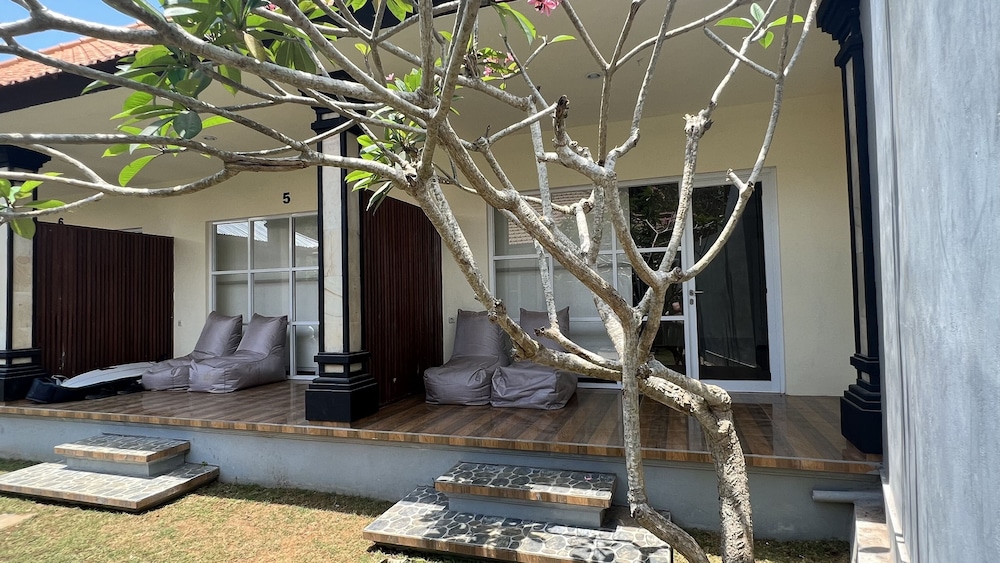
Surf camps with dorms, a pool and board storage, €12 to €25 a bed, and guesthouses €30 to €70.
Bingin
€25–90
Small clifftop rooms and surf guesthouses above the steps, €30 to €90, with warungs on the sand below.
Suluban
A few rooms and guesthouses in the cliff cluster, €40 to €100, loud until late.
Balangan
Budget bungalows on the cliff and simple beach huts, €15 to €50, with the sunset from the headland.
Ungasan
€120+
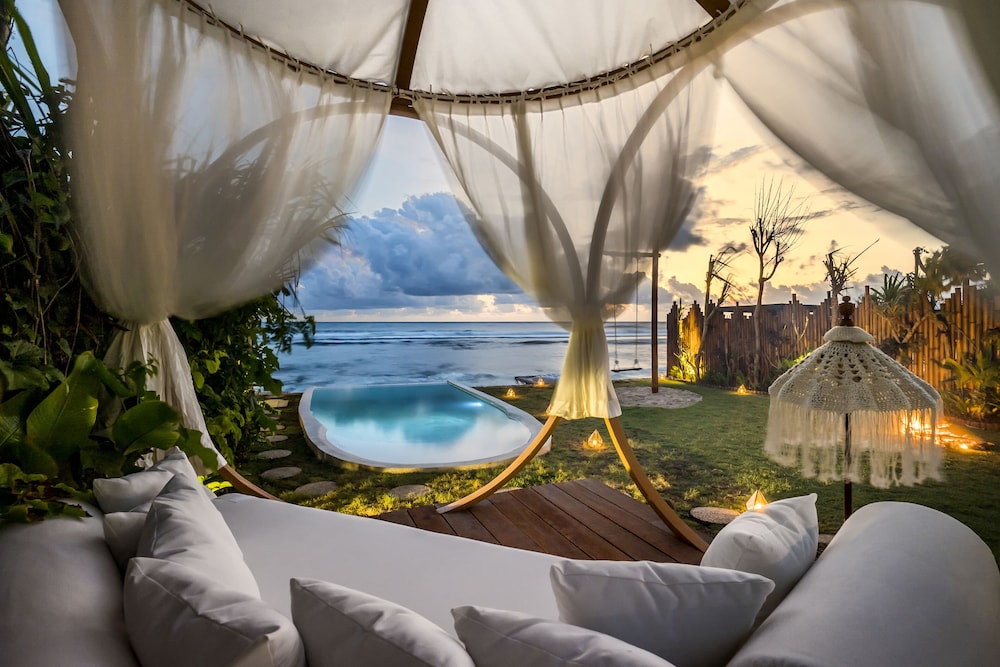
Clifftop resorts and private-pool villas from €250, with nothing walkable and the most dramatic views.
Nyang Nyang
A handful of clifftop villas from €150 and a few huts on the beach below, with no music at all.


What to eat in Uluwatu
Whole fish, split, marinated in sambal and grilled over coconut husk
Rice with six or eight small Balinese sides, the everyday warung meal
Minced fish or chicken with coconut and spice moulded onto lemongrass
Prawns, squid, clams and fish grilled together and eaten at a table on the sand at sunset
The surf-town breakfast; not Balinese, and unavoidable here
The national lager, and the correct thing to drink at a clifftop warung at sunset
Discover food spots in Stippl
Find restaurants and markets on the map, save them to your itinerary, works offline too.
Uluwatu customs and what not to do
The temple is not a view
Pura Luhur is an active directional temple: sarong and sash are lent at the gate, the inner courtyards are for worship, and the sunset Kecak is a performance inside a temple.
The macaques are a problem
Glasses, phones, hats and bags are the targets and they work in teams; leave everything loose in the scooter box before the temple gate and keep the pockets zipped.
Surf etiquette matters here
The breaks are crowded, shallow and full of people who have surfed them for years; dropping in on a local at Uluwatu is the fastest way to a bad session.
The beach tolls are local
The Bukit's accesses run through private land and village tracks, and the parking and toll charges of a few thousand rupiah are how the villages take a share; pay them without argument.
Do
- Carry a sarong, and cash for the temple, the Kecak and the parking
- Leave everything loose in the scooter box before you go through the temple gate
- Check the tide before you walk down to Suluban or Thomas; both are different beaches at high water
- Go to the temple before the traffic builds, and eat before five
Don't
- Swim where there is nobody swimming; the Bukit's beaches are reef, current and shore-break
- Paddle out at Uluwatu unless you can surf a shallow reef break
- Ride the cliff lanes after dark on an unfamiliar scooter
- Plan a day of island sightseeing from here; the traffic north eats it
What a Uluwatu trip costs
Budget
€17–34
Surf-camp dorm or simple Pecatu guesthouse, warung meals, a shared scooter, free beaches.
Mid-range
€50–140
A pool guesthouse or small clifftop hotel, café and restaurant eating, your own scooter, a beach-club day.
High-end
€170–430+
Ungasan or Bingin clifftop villa, restaurant dining, a driver, day-club beds with a minimum spend.
Track what you actually spend
Set a daily budget per country and log expenses in any currency while you travel.
Fun facts about Uluwatu
Pura Luhur Uluwatu has stood on its cliff since the eleventh century. It is one of Bali's six directional temples, believed to protect the island from sea spirits, 70 metres above the surf.
The Garuda Wisnu Kencana statue is taller than the Statue of Liberty. The 120-metre figure of Vishnu on the eagle took 28 years to finish and was unveiled in 2018 on the way up the Bukit.
Padang Padang owes its crowds to Eat Pray Love. One small bay fills by ten in the morning because of the film, while a far better beach twenty minutes away stays empty.
The Uluwatu break can run over six metres. The long left-hand reef break under the temple is rated among the world's top ten waves, and it has drawn surfers since the 1970s.
Every beach on the Bukit is at the bottom of a cliff. Steep steps, a rock tunnel or a track, which is why the beaches stay quiet, why there is no promenade and why a scooter is not optional.
Karang Boma cliff carries an informal toll of about €0.30. Locals set up the 5,000 rupiah access charge on the track, and the view is close to the temple's with a fraction of the visitors.
Local tips for Uluwatu
A first or last stop
Forty-five minutes from the airport and an hour and a half from Canggu, which is how it is used: the first or last nights of a trip. A Grab from the airport is about €10.
A scooter is compulsory here
The Bukit is too hilly and spread out to walk, and Grab bike coverage thins on the cliff lanes. About €5 a day, and take the back lanes; the main road carries the water trucks.
Leave early for the Kecak
Traffic around the temple road is severe from five until eight, when everyone on the peninsula converges on it. Be parked by half past four, or watch the surfers at Suluban instead.
How long to stay
Most people give Uluwatu 3 nights on Stippl: the temple and the Kecak, one beach day at Padang Padang or Nyang Nyang, and a beach club.
The sea is the risk
The beaches are reef and cliff coast with strong currents and a heavy shorebreak, no lifeguards and no phone signal below the cliffs. Uluwatu itself is an expert wave; swim at Padang Padang or Melasti.
The temple monkeys take glasses
The macaques around Pura Luhur are practised thieves, and the cliffs at Karang Boma have no railings and a sunset crowd. Glasses in a pocket and a metre from the edge.
Uluwatu questions, answered
As a base for the Bukit rather than for Bali. It is forty-five minutes from the airport and ninety from anywhere north of it, so people who stay here stay put: only 1.88% of Uluwatu stops planned on Stippl are same-day. Put three nights into Stippl and the temple sunset on the first.
Three. Uluwatu gets 3 nights in the trips people plan on Stippl, and that covers the temple and the Kecak, three or four beaches and one sunset spot you keep going back to. The Bukit is hilly and spread out, so the days go slowly here.
Barely any: 14.25% of Uluwatu stops planned on Stippl run to a single night, and it is easy to see why: the beaches are down long staircases, the cliffs are spread across a wide headland, and the temple performance is at sunset. One night gets you the temple and nothing else.
Not the way you would at a resort. These are reef and shore-break beaches with real currents, no lifeguards on most of them, and drownings on record. Balangan in particular is often too rough. Go at low tide, stay where other people are already in the water, and take it seriously.
Not the Uluwatu break itself, which is an expert wave entered through a cave over shallow reef. Padang Padang, Dreamland and Bingin are where the lessons happen and where a beginner belongs. If it is your first time on a board, learn at Canggu and come here to watch instead.
Nyang Nyang: a kilometre and a half of white sand at the bottom of a very steep descent, with a handful of huts and no music. The walk down and back up is exactly what keeps it empty, and it has a fair claim to being the best beach on Bali. Take water for the climb.
Every guide is written by the Stippl editors and checked against the trips our travellers actually plan. Spotted something out of date? Let us know.

Plan Uluwatu in Stippl
Day-by-day planning, stays and budget in one app, with every place from this guide already on the map.
Download the app