
K'gari
K'gari is the only place on earth where tall rainforest grows on sand. Its lakes hold nothing but rainwater, and the beach is a road that works only around low tide.
K'gari in a nutshell
K'gari: what to expect
The numbers here are drawn from 366,000+ planned stops across Australia on Stippl.
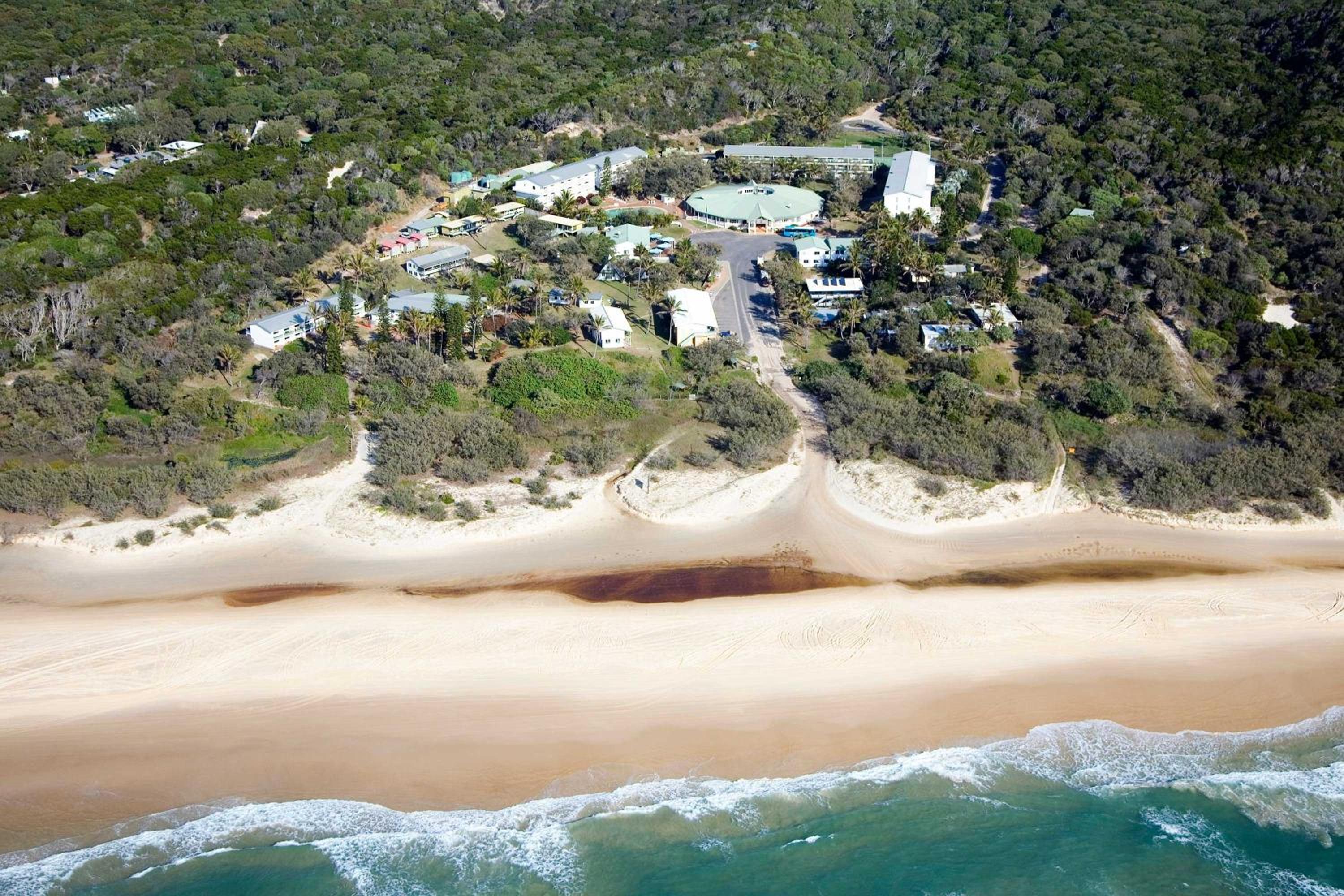
K'gari is the largest sand island on earth, about 120 kilometres of it, and there is not a sealed road anywhere. Everything moves on soft inland tracks and along the beach in a four-wheel drive. Lake McKenzie is perched freshwater over white silica, Lake Wabby sits at the foot of an advancing dune, and Eli Creek is a clear stream you float down. The Maheno, a hospital ship driven ashore by a cyclone in 1935, is still rusting on Seventy-Five Mile Beach.
K'gari is planned as a product rather than as a place. Almost every stay here is two or three nights and hardly any is anything else, a distribution no other Australian destination comes close to, because nearly everyone arrives on a tour that decides the length for them. The trips carrying it are the biggest in the country, running close to two months and fourteen Australian stops.
Come for 2 nights on the ferry from Hervey Bay or Rainbow Beach. August and September are the driest and mildest. Distances mislead badly here, so a short island hop can eat your day. Swim in the lakes and creeks and never in the sea, apart from the Champagne Pools north of Indian Head, and read the dingo rules before you go, because they exist for a reason.
Who K'gari is for
Adventure travellers
Sand driving, dune sandboarding, and camping under zero light pollution are the whole point of the island.
Backpackers on the east coast
The tag-along tour is a rite of passage between Noosa and Hervey Bay, and 2 nights is the standard trip.
Swimmers who want fresh water
The perched lakes are the reason to come, and they are extraordinary.
Wildlife watchers
Indian Head overlooks manta rays, turtles, dolphins, sharks and, in season, humpbacks.
Maybe not for you: anyone with small children, since the dingo rules exist because a child was killed here; anyone unwilling to follow those rules strictly; anyone expecting to swim in the sea; and travellers who want to move independently without a 4WD.
The best time to visit K'gari Fraser Island
Wet season
December to February
Hot, wet and humid, with the inland tracks soft and the beach highway still driveable at low tide. The lakes are warm and the campsites are quiet.
Autumn
March to May
Drying out, mild by April and the island at its most comfortable for the drive and the walks. Easter is the one busy week.
Dry season
June to September
The best of the year: dry, mild and the whales passing Indian Head from June with September the peak. August is the driest month, and the sand tracks are at their firmest.
Spring
October and November
Warming, the rain returning by November and the dingo breeding season over. Good weeks for the lakes before the summer heat.
- January is the month most travellers plan Australia for on Stippl, and K'gari is planned about 97 days ahead. Only 10.3% of K'gari plans are made inside a fortnight; the tours and the vehicle permits are what set that lead.
- Everything on K'gari moves with the tide. The beach is the road, and it is driveable for a few hours either side of low water; the tour operators plan the day around it and a self-drive needs the tide table before the fuel.
- The whales are watched from Indian Head for free from June to November. The humpbacks rest in the bay on the way south and September is the peak; the boat tours from Hervey Bay get closer but the headland gets the same whales.
- Dingoes are wild and the rules are enforced. Food is locked away, children are kept close and the fines are real; a fed dingo is a dead dingo, and the rangers say so on every sign.
Add your K'gari dates and we'll flag the weather
Stippl shows the season, crowds and prices for every stop on your route.
Describe your trip, get a K'gari itinerary in seconds
Everything in this guide is already in Stippl. Tell the planner how long you have and what you like: it builds the route, the days and the travel times, and you edit whatever you want.
Things to do on K'gari
 Photo by Jose Mizrahi via Unsplash
 Photo by Lucas Gruwez via Unsplash
Lake McKenzie
Swim in the perched freshwater lake of white silica sand and startlingly clear water, the most-cited sight on the island. Free with the vehicle permit, and go before ten or after three; the tours arrive at eleven.
Lake Wabby
Walk through the rainforest to the green lake at the foot of a huge advancing sand dune and slide down the dune into it, about forty-five minutes each way. Free, and the walk is hot; carry water.
Eli Creek
Float down the clear freshwater creek to the beach on a ring, which the tours carry, free. The boardwalk to the start is ten minutes and the float five.
The Maheno wreck
Stop on 75 Mile Beach at the World War I hospital ship driven ashore by a cyclone in 1935 and rusting on the sand. Free, and only reachable at low tide.
Indian Head
Climb the headland at the top of the beach, the island's best viewpoint, from which people routinely see rays, turtles, dolphins, sharks and whales. Free, twenty minutes up, and September for the whales.
The Champagne Pools
Swim in the ocean-fed rock pools north of Indian Head, where the surf breaks over the rim, the only place on the island the sea is safe to enter. Free, and low tide.
The neighbourhoods of K'gari
Kingfisher Bay (west)
Resort and ferry arrival from Hervey Bay
The Hervey Bay ferry lands here, at the island's most comfortable base.
75 Mile Beach
The eastern shore, the island's main road and airstrip
The Maheno wreck, on a beach that is both a legal road and an airstrip.
Eurong (east coast)
The main resort settlement, on 75 Mile Beach
The closest base to 75 Mile Beach and the eastern sights.
Happy Valley / Cathedrals
Camps and lodges along the beach north of Eurong
Sleeping on the beach, under a sky with no light pollution at all.
The southern lakes
Lake McKenzie, Lake Birrabeen, Lake Wabby
Lake McKenzie's clear perched water, and Birrabeen a few kilometres on.
The northern headlands
Indian Head, Champagne Pools, Waddy Point
From Indian Head people routinely see rays, turtles, dolphins and whales.
See every K'gari neighbourhood on one map
Save the areas you like and Stippl plots your days so you're not crossing the city twice.
Where to stay in K'gari
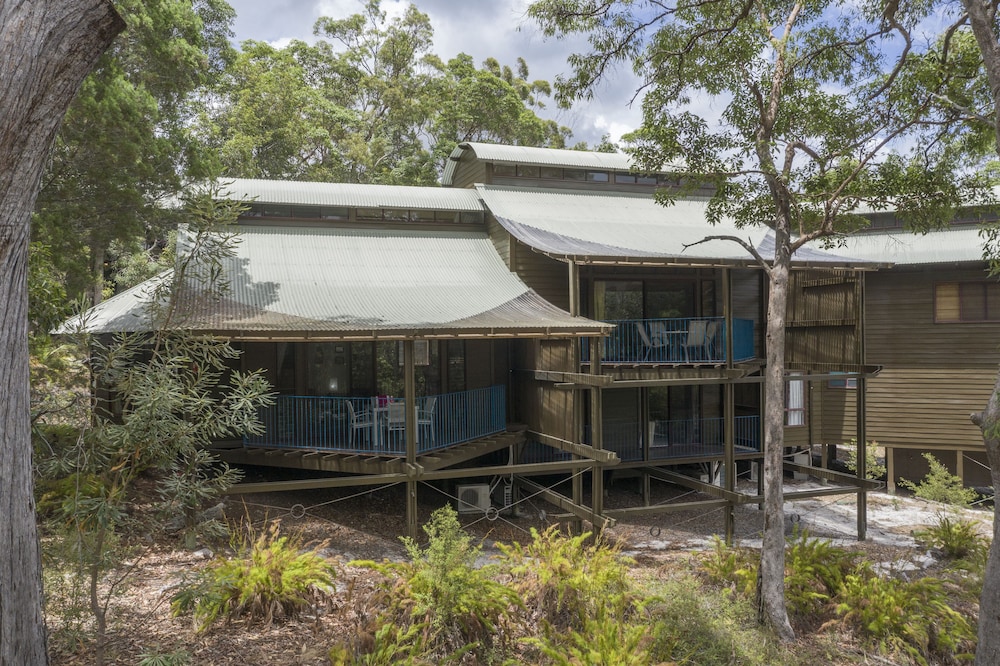
Most visitors sleep on a tour: tent camps for tag-alongs, lodge rooms for the guided truck tours
Kingfisher Bay (west)
Resort and ferry arrival from Hervey Bay
75 Mile Beach
The eastern shore, the island's main road and airstrip
Eurong (east coast)
The main resort settlement, on 75 Mile Beach
Happy Valley / Cathedrals
Camps and lodges along the beach north of Eurong
The southern lakes
Lake McKenzie, Lake Birrabeen, Lake Wabby
The northern headlands
Indian Head, Champagne Pools, Waddy Point


What to eat in K'gari
the island's only restaurants and bars, run by the two resorts
food included and cooked communally at camp
Discover food spots in Stippl
Find restaurants and markets on the map, save them to your itinerary, works offline too.
K'gari customs and what not to do
K'gari is Butchulla country
and the 2023 renaming restored the Butchulla name for the island. Our sources mention the Butchulla only as a historical footnote and carries no protocol at all
Ask who leads the culture
some tours include didgeridoo and boomerang sessions at camp; whether these are Butchulla-led is not stated by any source and should not be assumed
The etiquette is the dingoes
and it is set out under Safety.
Do
- Walk in groups, keep children within arm's reach, carry a stick
- Swim in the lakes and creeks
- Check the tide before driving the beach, and before booking anything for your last day
Don't
- Never run or jog on K'gari
- Never feed a dingo, or leave food and scraps
- Never swim in the sea
What a K'gari Fraser Island trip costs
Track what you actually spend
Set a daily budget per country and log expenses in any currency while you travel.
Fun facts about K'gari
K'gari is the largest sand island on earth, and the only place where tall rainforest grows on sand
The Maheno was a World War I hospital ship, wrecked by a cyclone in 1935 and left where it came ashore
Scenic flights take off and land on the beach itself
The perched lakes sit above sea level on compacted organic matter, holding rainwater rather than groundwater, which is why they are so clear
The island's name means "paradise" in Butchulla
Local tips for K'gari
Do not book the last day
The return ferry is tide-dependent and the time moves; do not book onward transport for the day you leave the island. Stay a night in Rainbow Beach or Hervey Bay instead.
The beach is a road
75 Mile Beach is a legal road with a speed limit and a landing strip, and only a road around low tide. Drive within two hours of low water, and slowly; rollovers have killed visitors.
Inland tracks are soft sand
Half an hour between neighbouring points is normal and an hour across the island. A tagalong tour is the way for anyone who has not driven sand.
How long to stay
Most people give K'gari 2 nights on Stippl, two days of driving between the lakes, the wreck and Indian Head. Self-drive only works out cheaper with a full car.
Dingoes are wild
A child was killed here in 2001 and the rules come from it: walk in groups, keep children within arm's reach, never run, carry a stick outside the fenced areas and never leave food out.
Do not swim in the ocean
Currents, rips and sharks, and no patrol; a backpacker drowned here in 2026. Swim in the lakes and Eli Creek, and in the tidal Champagne Pools at low water.
K'gari questions, answered
As a fixed two or three-day product rather than a place you drift into. Trips that include K'gari run 59 days on Stippl, the longest of any Australian stop, and the tours leave on set departures from Hervey Bay or Rainbow Beach. Put those dates into Stippl first.
Two to three days. Most people give K'gari 2 nights in the plans they build on Stippl, and the spread around it is unusually tight, because almost everyone is on the same fixed-length tour. Three days gets you the northern lakes as well.
Barely any: 19.2% of K'gari stops planned on Stippl run to a single night, and that is barely the ferry and the beach highway. The island is over a hundred kilometres long and everything on it is a slow drive on sand. Two nights is the minimum that makes any sense.
K'gari, officially, which is the Butchulla name and means paradise. The change was made in recent years and it is what the signage, the ferries and the tour operators all use now. Anything still written as Fraser Island throughout is either old or was never updated.
Yes, and this is not a formality: people have been killed. Walk in groups, never run, keep children within arm's reach at all times, carry a stick, and never feed them or leave food out. The rangers are strict about it because habituated animals are the ones that attack.
No. The surf beach has strong currents, sharks and no patrols anywhere along its length. What you swim in are the lakes and creeks inland, Lake McKenzie and Eli Creek above all, and the Champagne Pools on the eastern shore, which are rock pools cut off from the open sea.
Every guide is written by the Stippl editors and checked against the trips our travellers actually plan. Spotted something out of date? Let us know.

Plan K'gari
in Stippl
Day-by-day planning, stays and budget in one app, with every place from this guide already on the map.
Download the app